
1. What Makes the Slewing Drive So Critical in Excavator Design?
Every time an excavator operator swings the upper structure to reposition the boom, a single mechanical assembly carries the full rotational load — the slewing drive planetary gearbox. In a 20-ton to 45-ton excavator working on a Colombian infrastructure project, road cut, or open-pit mine, this component converts hydraulic motor speed (typically 1,200 to 2,500 rpm) into the slow, controlled, high-torque rotation — usually 5 to 20 rpm at the output pinion — that meshes with the slewing ring gear mounted on the undercarriage. The torques involved are not trivial: output values of 15,000 to 80,000 Nm are common in mid- to large-class machines, and peak transient loads during abrupt stops or terrain-induced jolts can spike two to three times higher.
Within the planetary drive, load is shared across three or more planet gears simultaneously, which means no single tooth carries the entire torque impulse. This distributed load architecture is precisely why the planetary configuration outperforms single-pinion helical or worm-gear alternatives in this application. Compactness matters too — the coaxial input-output arrangement keeps the swing motor and gearbox within the tail-swing envelope of the machine, and the high power density of a well-designed planetary gearbox allows a relatively small housing diameter to handle torques that would require a much larger parallel-axis unit.
This guide approaches the subject from the perspective of someone who has spent decades specifying, troubleshooting, and rebuilding these units across dozens of machine platforms and climates. Whether you are an OEM engineer selecting a first-fit gearbox, a workshop supervisor diagnosing an unusual noise pattern, or a procurement officer in Bogotá sourcing replacement units for a road-building fleet — the sections below are written for you.
2. Motion Mode — How the Swing Drive Actually Works
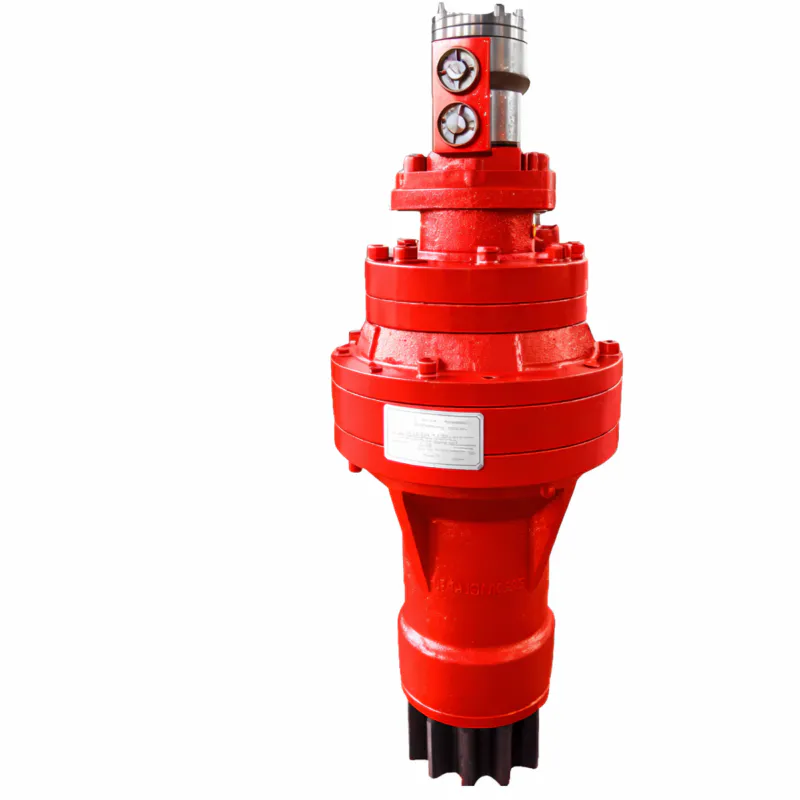
The hydraulic motor shaft (input) connects directly to the sun gear at the center of the first planetary stage. The sun gear meshes with typically three planet gears, which are free to rotate on their own pins while simultaneously orbiting around the sun gear inside a fixed ring gear. The planet carrier — the structural cage holding the planet gear pins — is the output of that stage. In a two-stage unit, this first-stage carrier drives a second sun gear, and the sequence repeats. In a three-stage design, a third stage further multiplies torque before the final output shaft or output flange engages the external pinion gear.
The output pinion meshes with the large-diameter ring gear of the slewing bearing — the structural interface between the machine’s upper structure and its undercarriage tracks. Because the ring gear is fixed to the lower structure, the pinion (and the entire upper body) rotates around it when the motor is energized. Gear ratios for excavator swing drives typically fall in the 9:1 to 35:1 range per stage, with combined ratios of 40:1 to 120:1 being most common in production machines. A typical 21-ton excavator might use a 3-stage planetary with a combined ratio of approximately 78:1, dropping a 1,500-rpm motor to about 19 rpm at the pinion.
The integrated spring-applied, hydraulically released (SAHR) brake — standard on virtually every excavator swing gearbox — engages automatically when hydraulic pressure is removed, holding the upper structure stationary on any slope. This is not merely a convenience feature; it is a primary safety system under ISO and national regulatory frameworks governing construction machinery operation.
Structural Types of Slewing Drive Planetary Gearboxes
Broadly, excavator swing gearboxes fall into three structural categories based on how the planetary stages are arranged relative to the output flange and motor interface:
Inline Coaxial (Standard)
Motor, all planetary stages, and the output pinion shaft share a single axis. Most common in excavators from 6 to 50 tons. Straightforward to install and replace.
Offset / Eccentric Mount
The pinion axis is offset from the motor axis by an adjustable eccentric collar, allowing precise mesh depth adjustment with the slewing ring gear. Used on large excavators and crane swing mechanisms where backlash control is critical.
Integrated Slew Drive (Compact)
The planetary stages, output bearing, and slewing ring are assembled into a single housing. Common in compact excavators, mini-excavators, and aerial work platforms where installation space is severely restricted.
3. Manufacturing Structure — Inside the Assembly
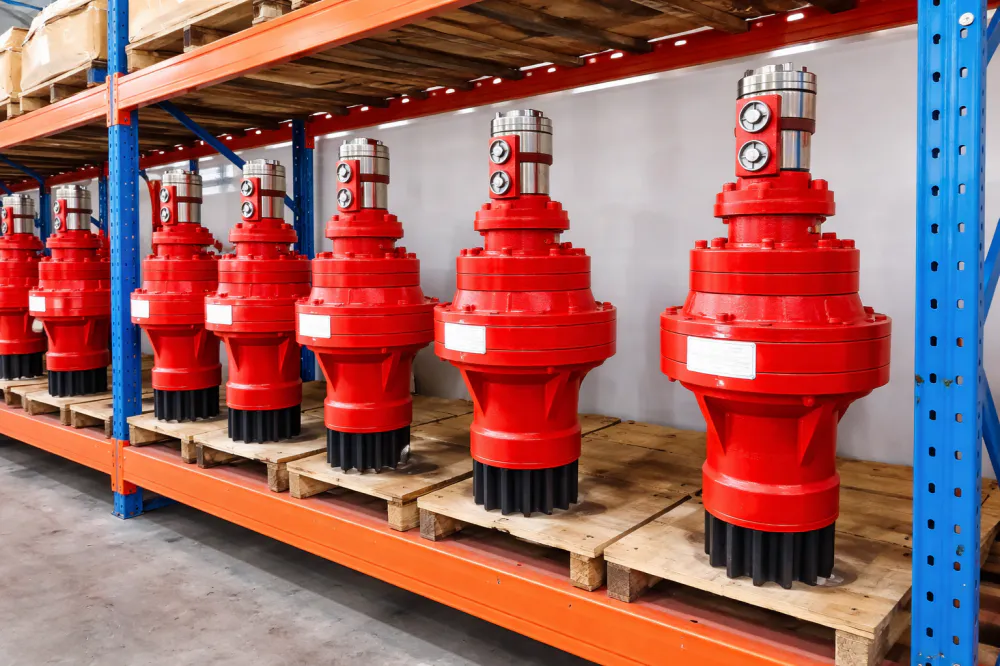
A production-grade excavator swing planetary gearbox is built around several precision-machined sub-assemblies. The gear housing (casing) is typically ductile cast iron (GGG-40 or GGG-50) for large units, or nodular iron with ribbing for thermal dissipation and structural stiffness. The housing must maintain bearing bore alignment under the cyclic tilting moments generated by each swing cycle — tolerances on bearing bore diameters are held to H6/h5 or tighter in quality production. Internal gear (ring gear) teeth may be cut directly into the housing bore on smaller units, or manufactured as a separate insert press-fitted and pinned into the housing on larger versions where replacement of worn ring gear teeth is a service consideration.
Planet gear pins (spindles) are interference-fitted into the carrier and may be hollow to allow lubrication passages. The planet gear-to-pin interface uses a roller or needle bearing, not a plain bearing, in virtually all excavator-grade units — this is a primary quality differentiator between heavy-duty and budget-grade replacements. The sun gear and planet gears are profiled to DIN 3960 / ISO 1328 accuracy class 5 or better, with involute profiles that tolerate moderate deflection without edge loading. Carrier plates are die-forged from alloy steel, not fabricated, to maintain parallelism under high planet gear separating forces.
The output shaft or flange is supported by tapered roller bearings arranged in a preloaded back-to-back (DB) or face-to-face (DF) configuration, providing controlled radial and axial stiffness for the bending loads the pinion transmits back into the shaft. Tapered roller bearings are preferred over deep-groove ball bearings in this position because of their higher radial and combined load rating — an important distinction when evaluating replacement bearing specifications.
4. Material System — Standard vs High-Performance Configuration
The material choices made at the design stage determine whether a gearbox survives 5,000 hours or 15,000+ hours in field conditions. The table below compares typical materials in entry-level and high-performance configurations:
| Component | Standard / Entry Level | High-Performance Grade |
|---|---|---|
| Planet & Sun Gears | 20CrMnTi — case carburized, HRC 56–60 | 18CrNiMo7-6 — case carburized + shot-peened, HRC 58–62 |
| Ring Gear (Internal) | 42CrMo4 — induction hardened | 17CrNiMo6 — case carburized, ground |
| Carrier / Planet Pins | 40Cr — quench & temper | 20CrMo5 — carburized, pin bore precision ground |
| Output Shaft | 42CrMo4 — induction hardened spline | 42CrMo4 VAC-arc remelt — nitrided spline |
| Housing / Casing | GGG-40 ductile iron | GGG-50 ribbed ductile iron, stress-relieved castings |
| Planet Bearings | Needle roller cage assembly | Full-complement cylindrical roller, matched radial clearance C3 |
| Output Bearings | Tapered roller — standard clearance | Tapered roller — preloaded back-to-back, C3/C4 clearance |
5. Surface Treatment — What Happens After Machining
Gear tooth surface treatment is where a great deal of the service-life variance between suppliers originates. The process chain for a quality excavator swing gearbox gear set runs as follows: rough machining → pre-heat-treatment (normalizing or soft annealing) → semi-finish machining → case carburizing at 920–950°C for 8 to 20 hours depending on required case depth → oil quench or press quench to minimize distortion → cryogenic treatment at -80°C (optional but beneficial for retained austenite conversion) → temper at 160–180°C → hard finish grinding of tooth flanks and bores → shot peening of tooth roots to introduce compressive residual stress → phosphating or copper-flash for run-in lubrication. This process produces a surface hardness of HRC 58–62 with a case depth of 0.8 to 1.4 mm, leaving a tough ductile core of HRC 30–38 beneath. The result is a gear that resists contact fatigue (pitting) at the pitch point and bending fatigue at the tooth root simultaneously — both are critical failure modes in high-cycle swing operation.
External housing surfaces receive either an epoxy-polyurethane primer-topcoat system (wet-on-wet, two-component) in RAL 9005 or custom color to a minimum dry film thickness of 80 µm, or electrophoretic (E-coat) primer followed by powder topcoat for higher corrosion resistance. For units destined for tropical or coastal construction sites — a common profile in Colombia’s Pacific and Caribbean coast projects — additional zinc-rich primer or hot-dip galvanized fasteners should be specified. Threaded ports are plugged with stainless-steel plugs rather than mild-steel to avoid galvanic corrosion in humid climates.
Output shaft seal surfaces are ground to Ra 0.4 µm or finer to meet the RWDR (radial wave dynamic seal) seating requirements. Seal materials are NBR (nitrile) for standard temperature, or FKM (Viton) for environments above 100°C or where petroleum-based fluids are replaced with fire-resistant hydraulic fluid — a common requirement on underground or tunnel-boring projects.
6. Technical Parameters — Excavator Slewing Drive Planetary Gearbox
Reference data for mid-range construction class (customizable upon request)
| Parameter | Value / Range | Remarks |
|---|---|---|
| Applicable Machine Class | 6 t – 50 t excavators | Custom designs available |
| Nominal Output Torque | 5,000 – 80,000 Nm | Refer to specific model datasheet |
| Peak Output Torque (2s) | Up to 2.0 × nominal | Limited by brake torque capacity |
| Overall Gear Ratio | 40:1 – 120:1 | Customizable in increments |
| Rated Input Speed | 1,000 – 2,500 rpm | Hydraulic motor dependent |
| Output Speed (at pinion) | 5 – 25 rpm | Machine class dependent |
| Transmission Efficiency | ≥ 95% (per stage ≥ 98.5%) | At rated speed and load |
| Number of Planetary Stages | 2 or 3 | 3-stage for ratio > 60:1 |
| Planet Gears per Stage | 3 (standard) / 4 (heavy-duty) | 4-planet for highest torque density |
| Gear Material | 18CrNiMo7-6 / 20CrMnTi | Case carburized, ground |
| Tooth Surface Hardness | HRC 58 – 62 | Case depth 0.8–1.4 mm |
| Output Bearing Type | Tapered roller — DB preloaded | Meets ISO 76 basic dynamic rating |
| Integrated Brake | SAHR multi-disc brake | Spring-applied, hydraulic release |
| IP Protection Level | IP65 (standard) / IP67 (optional) | Per IEC 60529 |
| Operating Temperature Range | -30°C to +80°C | FKM seals for >80°C ambient |
| Lubricant Specification | ISO VG 220 EP / ISO VG 320 EP | Fill volume per model datasheet |
| Oil Change Interval | First: 500 h / Subsequent: 2,000 h | Shorten in dusty/tropical sites |
| Housing Material | GGG-40 / GGG-50 ductile iron | Stress-relieved after casting |
| Mounting Interface | SAE flange / DIN flange / custom | Motor adapter plates available |
| Design Service Life | ≥ 10,000 operating hours | At rated load, per ISO 6336 |
Note: All specifications above are indicative for the mid-range construction class. Custom models for 6t to 80t excavators are available — contact us with machine platform details for a tailored configuration proposal. You can also explore our full slewing drive gearbox range for standard catalog options.
7. Environmental Rating and Working Conditions
Construction sites in Colombia and across Latin America present some of the most punishing environments any mechanical drive system will face. Andean projects combine thin air, temperature swings of 30°C between day and night, abrasive volcanic-origin soils, and persistent vibration from percussive drilling equipment. Caribbean and Pacific coast projects bring sustained humidity above 85% RH, salt-laden air, and ambient temperatures that can push 38–42°C for months at a stretch. Open-pit coal and gold mines in the Cauca or Cesar departments add highly abrasive silica-rich overburden and water-pH extremes from acid rock drainage.
To survive these conditions, a properly specified excavator slewing drive planetary gearbox must meet at minimum IP65 (total dust exclusion, jet-water resistant) under IEC 60529. For submerged or regularly water-blasted applications, IP67 or IP68 should be specified. Sealing is achieved through a combination of labyrinth pre-seals (non-contact), radial wave dynamic seals (RWDR) on rotating shafts, and static O-ring face seals on all bolted covers. The brake cavity is typically positively pressurized via a breather membrane to prevent moisture ingress during thermal cycling.
At altitude — relevant to Andean mining sites above 3,000 m — hydraulic motor power output decreases due to lower hydraulic fluid viscosity at lower atmospheric pressure and temperature differentials. Gearbox thermal modeling should account for reduced convective cooling at altitude. For sites above 3,500 m, it is worth consulting with the supplier about adjusted lubrication viscosity grades (typically stepping up one ISO VG grade) and confirming the bearing dynamic load ratings are not compromised by the altered viscosity-temperature behavior of the gear oil.
8. Typical Failure Modes — What Field Data Actually Shows
Based on warranty claims analysis and field rebuilds across multiple machine platforms, the most common failure modes in excavator swing planetary gearboxes are distributed as follows — roughly in order of incident frequency:
| Failure Mode | Primary Cause | Diagnosis / Prevention |
|---|---|---|
| Gear tooth pitting and spalling | Lubricant degradation, overloading, contamination | Oil sample analysis every 500 h; stay within rated peak torque |
| Planet bearing fatigue failure | Inadequate lubrication feed to planet pin bores; overload shock | Verify oil splash reaches planet cavities; inspect needle/roller completeness at overhaul |
| Output shaft seal leakage | Seal lip wear, shaft surface damage, housing bore damage | Inspect shaft surface Ra on reinstallation; replace seal at every overhaul regardless of apparent condition |
| Brake disc wear / brake drag | Incorrect brake release pressure; contaminated friction discs | Verify brake release pressure at commissioning; annual brake torque test |
| Housing crack (fatigue) | Casting defects, repeated severe shock loads, improper mounting | Torque mounting bolts to specification; source castings with material certificate |
| Output pinion wear / scuffing | Incorrect mesh depth with slewing ring; lubrication starvation at pinion | Verify backlash at commissioning (0.15–0.30 mm typical); grease pinion per OEM schedule |
It is worth noting that a substantial share of early field failures — particularly seal leaks and bearing overloads — can be traced to installation errors rather than product defects. Improper motor shaft engagement depth, failure to install the required shim stack for bearing preload, or cross-threading of the motor mounting bolts all create problems that show up within the first 200 operating hours and are often misdiagnosed as manufacturing defects.
9. Five Key Product Advantages
High Torque Density in Compact Volume
Multi-stage planetary architecture delivers output torques up to 80,000 Nm from a housing that fits within standard excavator swing cavity dimensions, enabling direct OEM fit without structural modifications.
Multi-load Distribution for Shock Resistance
Three or four planet gears per stage share the torque load simultaneously, reducing per-tooth contact stress by 65–75% compared to single-mesh configurations and significantly extending tooth fatigue life in impact-heavy swing cycles.
Integrated SAHR Brake — Certified Safety
The spring-applied, hydraulically released multi-disc brake is housed within the gearbox body, eliminating the need for an external park brake and meeting the safety requirements of ISO 15817 and CE Machinery Directive 2006/42/EC.
Tropical and High-Altitude Ready
FKM seal options, zinc-rich housing coatings, and viscosity-adapted gear oil fills are available as standard configuration options to handle Colombia’s full range of climatic extremes — from 3,800 m Andean mine sites to coastal tropical construction environments.
Cross-Platform Motor Interface Compatibility
SAE, ISO, and DIN motor mounting flanges, combined with a range of shaft spline options (SAE B, DIN 5480, or custom), allow direct mating with Bosch Rexroth A2FM, Kawasaki MX, Poclain MS, and equivalent hydraulic motor ranges without bespoke adapters.
10. Recommended Configuration by Machine Class
Matching the gearbox to the machine weight class, working duty cycle, and site environment is the most important step in ensuring adequate service life. The following table provides practical starting-point configuration guidance:
| Machine Class | Nominal Output Torque | Ratio Range | Stages | Recommended IP | Notes |
|---|---|---|---|---|---|
| Mini (1–6 t) | 2,000–6,000 Nm | 40:1–70:1 | 2 | IP65 | Compact integrated slew drive preferred |
| Small (6–15 t) | 6,000–18,000 Nm | 55:1–90:1 | 2–3 | IP65 | Standard NBR seals; 20CrMnTi gears acceptable |
| Medium (15–30 t) | 18,000–45,000 Nm | 65:1–100:1 | 3 | IP65/IP67 | 18CrNiMo7-6 gears; preloaded output bearings |
| Large (30–50 t) | 45,000–80,000 Nm | 80:1–120:1 | 3 | IP67 | 4-planet stages; FKM seals; zinc-rich coating |
| Mining / >50 t | 80,000–180,000 Nm | 90:1–150:1 | 3–4 | IP67/IP68 | Full custom design; eccentric mount option |
For specific model selection assistance, including dimensions and interface compatibility checks against your existing machine platform, visit our technical inquiry page and provide machine model, serial number, and any existing gearbox nameplate data.
11. Application Scenarios in Construction Machinery
Road Construction & Earthmoving
In Colombia’s large-scale infrastructure programs — highway widening, tunnel approach cuts, and embankment grading — excavators perform thousands of swing cycles per shift. The slewing drive planetary gearbox must maintain consistent swing speed under variable load as the bucket moves from full-loaded dig position to dump position. Efficient swing drives reduce cycle time, directly impacting project productivity targets. Gearboxes in this duty typically see 1,500 to 2,500 full swing cycles per 10-hour shift.
Open-Pit Mining (Coal, Gold, Copper)
In the Cerrejón coal region and Caucana gold deposits, large-class excavators work 20-hour days moving overburden and loading haul trucks. The slewing drive endures extreme shock loads from hard-rock bucket engagement, abrasive dust, and temperature cycles that stress seals and lubricant. This application demands IP67-rated units with heavy-duty planet configurations and short oil-change intervals relative to standard construction duty.
Port and Harbor Construction
Marine dredging and port infrastructure projects along Colombia’s Atlantic and Pacific coasts combine the challenges of saline air, high humidity, and continuous operation. Excavators fitted with long-reach booms for dredging work place elevated overturning moments on the swing bearing and gearbox. Salt-accelerated corrosion on external surfaces demands zinc-rich primer systems and stainless-steel hardware at all external fastened joints.
Urban Demolition and Recycling
Urban demolition machines frequently use hydraulic shears, grapples, and pulverizing attachments instead of a standard bucket. These tools create significant impact torque spikes during material fracture — events that propagate directly into the swing gearbox through the boom structure. Demolition-duty gearboxes are commonly specified with a service factor of 2.0 applied to the calculated nominal torque, and with high-capacity tapered roller output bearings to handle the increased combined radial and axial loading of these attachment types.
Scrap Handling and Material Processing
Scrap-handling excavators in steel recycling facilities work with electromagnet or clamshell bucket attachments that cycle rapidly, placing continuous high-frequency load reversals on the swing drive. The combination of high cycle frequency and the electromagnetic environment (for magnet-equipped machines) requires that the swing gearbox be designed with non-magnetic housing options in sensitive areas, and with bearing sealing robust enough to exclude fine metallic debris that accumulates in scrap-yard environments.
12. Regulatory Framework — Colombia and International Standards
Any excavator swing drive planetary gearbox supplied into the Colombian market or operated on a construction site in Colombia sits within a layered regulatory environment that spans local labor law, equipment safety standards, and international normative frameworks. Understanding this framework is relevant not just to procurement decisions but to maintenance scheduling and incident-liability management.
Colombia — National Level
The primary occupational safety authority is the Ministerio del Trabajo through the Sistema General de Riesgos Laborales (SGRL). Resolution 4272 of 2021 (and its amendments) establishes minimum technical requirements for lifting and earthmoving equipment operated in Colombian construction and mining environments, including mandatory pre-shift inspection routines that encompass swing drive function verification. The Reglamento Técnico de Instalaciones Eléctricas (RETIE) is relevant for electrically driven swing motors used in hybrid or electric excavator platforms. Colombia is also a member of ICONTEC, which adopts ISO standards as NTC (Norma Técnica Colombiana) equivalents — including NTC-ISO 15817 for hydraulic excavator swing drives.
International Standards Applicable
ISO 15817:2012 — Safety requirements for remote-controlled earth-moving machinery, with specific provisions for swing drive brake systems. ISO 6336 — Calculation of load capacity of spur and helical gears; the primary design standard used for planetary gear tooth sizing. ISO 281 — Rolling bearing dynamic load ratings; governs bearing selection for output shaft bearings. DIN 3960 / ISO 1328 — Gear accuracy standards defining allowable pitch and profile tolerances. IEC 60529 — Ingress protection (IP) rating definitions. CE Machinery Directive 2006/42/EC — Required for equipment supplied into the EU market, adopted by reference in several Andean trade agreements affecting equipment specification language.
Other Relevant Regional Frameworks
In Peru, the Reglamento de Seguridad y Salud Ocupacional en Minería (D.S. 024-2016-EM) mandates brake performance testing on all slewing and lifting drives at commissioning and at annual intervals. In Brazil, NR-12 (Norma Regulamentadora 12) governs machine safety and has specific provisions for rotating machinery guards and interlock systems on construction equipment swing drives. The United States OSHA 29 CFR 1926.1416 requires inspection and maintenance of crane and excavator swing drives as part of pre-operational checks — this framework is often referenced by multinational contractors operating in Latin America as a baseline even where local law is less specific. In Australia, AS 2550.1 and the Code of Practice for Excavation Work include swing drive inspection as a mandatory item in pre-start and periodic inspection regimes.
13. About Our Manufacturing Capability
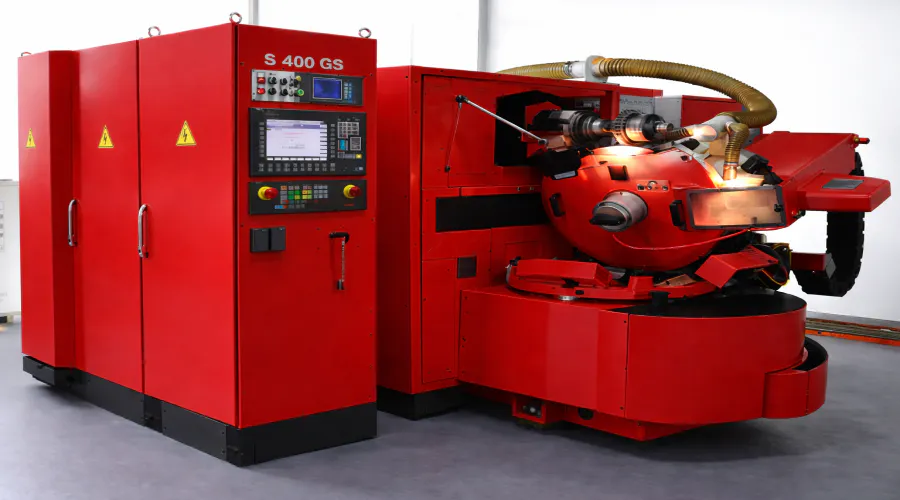
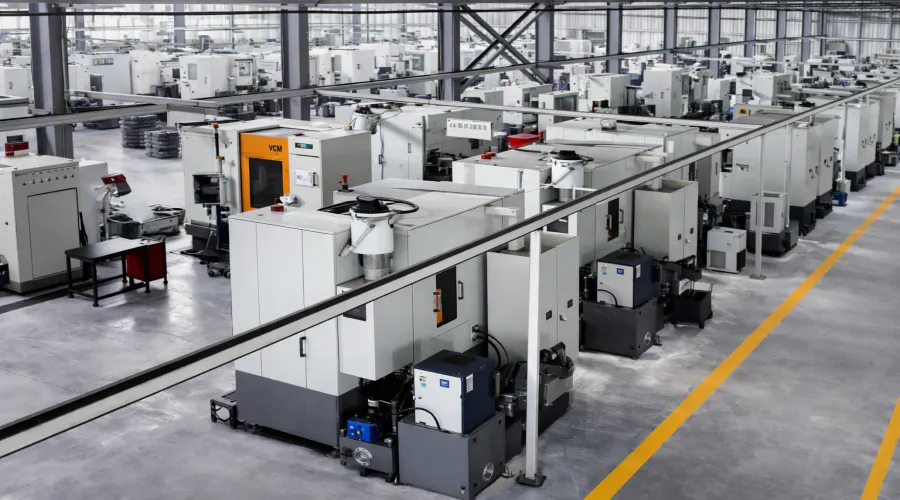
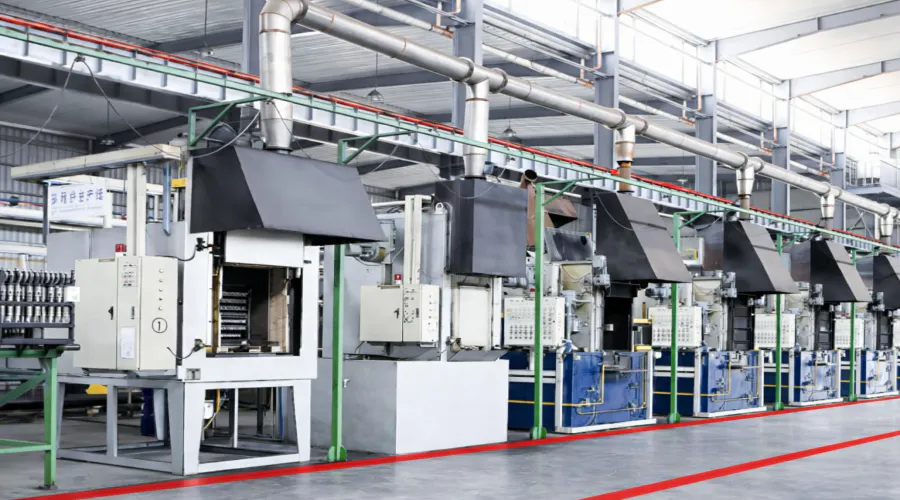
Our production facility is equipped with dedicated gear hobbing, shaping, and grinding machines from top-tier European and Asian toolmakers, all operating within a temperature-controlled precision machining environment. Gear grinding is performed on CNC form-grinding and generating-grinding machines capable of holding ISO 1328 accuracy class 5 on module 3 to module 16 profiles. Tooth-flank measurement is performed on a Zeiss gear CMM with GearPro software after hard finishing, with 100% dimensional records stored digitally against each part serial number.
Heat treatment is conducted in sealed, atmosphere-controlled carburizing furnaces with automatic atmosphere control and data-logged thermal cycles. Quench press fixtures are used for high-distortion-risk gears to maintain geometric tolerances after hardening. Shot peening of tooth roots follows each carburizing run, using defined Almen intensity specifications to ensure consistent compressive residual stress depth.
Workshop

14. Related Products — Complete Swing Drive System
A high-performance slewing drive planetary gearbox works best as part of a matched drivetrain. We also manufacture the hydraulic motors and planetary reducers that complete the swing drive system, offering full compatibility verification and a single source of technical accountability for the entire assembly.

Hydraulic Slew Drive Motor
Matched high-speed, high-pressure hydraulic motors with SAE and ISO flange interfaces, designed to pair directly with our planetary gearbox range. System compatibility pre-verified by our engineering team.

Planetary Speed Reducer
Standalone planetary speed reducers for winch, travel, and auxiliary drives — same material and process standards as our swing gearbox series. One-stop supply simplifies procurement and after-sales support for full machine drivetrain maintenance.
Frequently Asked Questions
Editor: PXY