
Technical Knowledge Series
What Are Planetary Gearboxes and How Do They Work?
A thorough engineering reference covering working principles, structural types, material systems, failure modes, and selection criteria — written from 30 years of hands-on experience with epicyclic transmission systems across industrial, agricultural, and infrastructure applications in Colombia and throughout Latin America.
1. What Is a Planetary Gearbox?
A planetary gearbox — also referred to as an epicyclic gearbox in classical mechanical engineering literature — is a gear transmission system in which one or more outer gears, called planet gears, revolve around a central gear called the sun gear, all contained within an outer ring gear (the annulus). The term “planetary” comes directly from this orbital motion pattern, which mirrors the movement of planets around the sun in the solar system. Unlike conventional parallel-shaft gearboxes where power passes through a simple pair of meshing gears on offset shafts, a planetary gearbox achieves its torque multiplication and speed reduction through multiple simultaneous mesh contacts distributed symmetrically around the central axis.
This architecture gives the planetary gearbox a fundamental mechanical advantage: because the transmitted load is shared across multiple planet gears simultaneously — typically three, four, or five depending on the design — the contact stress at each mesh point is a fraction of what a single-mesh gearbox of equivalent rating would experience. The result is a unit that can deliver high torque in a remarkably compact and lightweight envelope. For Colombian industrial operations where space inside machine frames is limited, or where the combined weight of a gearbox-motor assembly must be minimized for mobile and rotating machinery, this power density advantage is often the deciding factor in specifying an epicyclic gearbox over conventional alternatives.
Understanding how a planetary gearbox works is not merely academic. In practice, the engineer who grasps the kinematic relationships between sun, planet, and ring gear can make better decisions about ratio selection, mounting orientation, input/output configuration, and maintenance scheduling. This guide addresses all of those aspects — from the fundamental gear mathematics through to the specific failure modes that shorten gearbox service life and the configuration recommendations that prevent them. Where specific product data is referenced, values are drawn from current production planetary gearbox series; custom planetary gearbox configurations are available for applications outside standard catalog parameters.

2. Planetary Gearbox Working Principle
The planetary gearbox working principle is governed by the relationship between three coaxial components: the sun gear (S), the planet carrier (C), and the ring gear (R). In any given operating mode, one of these three elements is held stationary (the fixed member), one receives the input power, and the third delivers the output. Changing which element is fixed dramatically changes the gear ratio and the direction of output rotation — this is the kinematic flexibility that makes planetary gearboxes uniquely adaptable to a wide variety of applications.
The most common industrial configuration fixes the ring gear, drives the sun gear as input, and takes output from the planet carrier. In this arrangement, the planet gears — mounted on the carrier and meshing simultaneously with the stationary ring gear and the rotating sun gear — are forced to walk around the inside of the ring gear, rotating the carrier in the same direction as the sun gear but at a reduced speed. The ratio in this configuration is given by the formula: ratio = 1 + (Z_ring / Z_sun), where Z_ring and Z_sun are the tooth counts of the ring and sun gears respectively. A single-stage planetary gearbox with a ring gear tooth count of 72 and a sun gear tooth count of 24, for example, produces a reduction ratio of 1 + (72/24) = 4:1.
For higher ratios, multiple planetary stages can be connected in series — each stage’s planet carrier driving the sun gear of the next stage. Two-stage planetary gearboxes covering ratios in the range of 10:1 to 50:1 are the workhorses of industrial automation; three-stage units reach ratios of 100:1 or beyond while maintaining the same coaxial compactness. How does a planetary gearbox work when operating in reverse or in a speed-increasing direction? Simply by reversing the designation of input and output elements — the same physical gear train produces a speed increase when driven from the planet carrier and taken from the sun gear, which is exploited in wind turbine drivetrains and some power recirculation test rigs where efficiency at high speed is more important than torque multiplication.

3. Structural Types of Planetary Gearboxes
The designation “planetary gearbox” covers a broader family of epicyclic configurations than many engineers initially realize. Each structural variant has specific torque capacity, ratio capability, and application suitability characteristics that make it more or less appropriate for a given drive system. The four primary configurations encountered in industrial practice are outlined below.
The standard coaxial planetary gearbox (described in the previous section) is by far the most common. Input and output shafts share the same rotational axis, which simplifies installation in inline drive arrangements — servo motor to gearbox to lead screw, for example, or conveyor drive head units in Colombian port and mining operations. The right angle planetary gearbox introduces a bevel gear stage at the input to redirect the rotational axis by 90 degrees before the epicyclic reduction stages, allowing it to connect to shaft configurations where motor and output axes are perpendicular — common in packaging machinery, agricultural spreader drives, and the drive systems of mining conveyor tripper cars found in Colombian coal operations in La Guajira and Cesar departments.
The star gear configuration is a variant in which the planet carrier is held fixed and the ring gear rotates as output — producing higher ratios than the standard configuration at equivalent tooth count, and a reversed output rotation direction. This configuration is less common in general industrial use but appears in certain hydraulic planetary gearbox final drive applications. The differential epicyclic arrangement allows two of the three elements to be connected to independent inputs, with the third acting as a differential output — this is the fundamental mechanism in automotive automatic transmissions and in continuously variable ratio drives. Which cars use planetary gears? Virtually all vehicles with automatic or dual-clutch transmissions — including the majority of modern passenger cars — rely on compound epicyclic gear trains derived from the same fundamental planetary gear principles covered here.
4. Typical Technical Parameters — Industrial Planetary Gearbox Reference Data
The following reference table presents 20 technical parameters typical of precision industrial planetary gearboxes in current production, covering the single-stage and multi-stage configurations most frequently specified in Colombian industrial automation, mining auxiliary drives, and agricultural machinery. Custom planetary gearbox configurations outside these standard ranges are available on request; consult the engineering team with your specific torque, ratio, mounting, and environmental requirements.
| Parameter | Typical Value / Range |
|---|---|
| Gear Arrangement | Single-stage, two-stage, or three-stage epicyclic (coaxial) |
| Standard Planetary Gearbox Ratio Range (single stage) | 3:1 to 10:1 per stage |
| Multi-Stage Ratio Range | Up to 512:1 (three-stage) or custom per specification |
| Rated Output Torque | 5 Nm to 50,000 Nm (depending on frame size) |
| Peak Torque (2× rated, max. 1,000 cycles) | Up to 2× rated output torque |
| Rated Input Speed | 1,500 to 5,000 RPM (model dependent) |
| Maximum No-Load Input Speed | Up to 8,000 RPM (precision series) |
| Backlash (precision grade) | ≤ 3 arcmin (standard); ≤ 1 arcmin (zero-backlash series) |
| Torsional Rigidity | 8 to 120 Nm/arcmin (frame size dependent) |
| Transmission Efficiency (per stage) | 97% to 99% (helical tooth, lubricated) |
| Number of Planet Gears | 3 (standard) / 4–5 (high-torque series) |
| Housing Material | Aluminum alloy (compact series) / Ductile cast iron GGG40 (heavy series) |
| Gear Material | 20CrMnTi alloy steel — carburized, case-hardened, ground |
| Tooth Form | Helical or spur (full helical preferred for noise and load capacity) |
| Operating Temperature Range | -25°C to +90°C (standard); -40°C to +120°C (extended option) |
| IP Protection Rating | IP65 (standard) / IP67 (sealed wash-down option) |
| Lubrication | Lifetime grease (compact); mineral or synthetic oil bath (heavy-duty) |
| Bearing Type | Angular contact (output) / Deep groove ball (intermediate); tapered roller (heavy series) |
| Output Shaft Options | Solid keyed shaft / Hollow shaft / Splined hollow / Flange output |
| Service Life (L10 bearing rated) | ≥ 20,000 hours at rated load and speed |
5. Manufacturing Structure & Production Quality Factors
The mechanical performance of a planetary gearbox is inseparable from the precision of its manufacturing processes. Unlike parallel-shaft gearboxes where shaft center distance tolerances primarily govern mesh quality, a planetary gearbox requires simultaneous precision control of four distinct dimensional relationships: sun gear pitch diameter, planet gear pitch diameter, ring gear pitch diameter, and planet carrier bore position. All four must satisfy the assembly condition — the requirement that the tooth counts and gear geometries allow all planet gears to mesh simultaneously with the sun and ring gears at evenly spaced angular positions. If the carrier bore positions deviate from their theoretical locations by even a few microns, unequal load sharing across the planet gears results, and the most heavily loaded planet will fail prematurely regardless of the material specification.
Gear tooth manufacturing typically proceeds through: rough gear hobbing or milling, followed by heat treatment (carburizing, quenching, and tempering for alloy steel gears), then finish grinding of the tooth flanks to the required DIN accuracy grade. For precision servo planetary gearboxes where backlash must be held below 3 arcmin, gear grinding achieves DIN quality class 5 or better — a tolerance standard that requires temperature-controlled machining environments and frequent calibration of the grinding machine’s dressing systems. The planet carrier — often the most structurally complex component, requiring multiple precision-bored bearing housings in a single castings — is machined on multi-axis CNC machining centers with fixture designs that maintain bore position accuracy throughout the machining cycle. Assembly is performed in controlled cleanliness environments to prevent contamination of the gear oil or grease during the critical first hours of operation, when new gear tooth surfaces are undergoing micro-contact smoothing.

6. Material Systems — Standard vs. High-Performance Planetary Gearbox
Not all planetary gearboxes are built to the same material standard. The comparison below highlights the differences between a commodity planetary gear box and a precision-grade, high-performance unit — a distinction that matters enormously in continuous-duty industrial applications operating in the demanding climate and altitude conditions encountered across Colombia’s diverse industrial geography.
Standard Commodity Planetary Gearbox
Housing: gray cast iron or low-grade aluminum with no surface treatment; susceptible to corrosion in humid tropical environments. Gear material: medium-carbon steel, induction-hardened, with tooth profiles ground to DIN quality class 8 or worse — adequate for low-duty-cycle applications but prone to micropitting and progressive tooth flank fatigue under continuous load. Planet carrier: single-piece gray iron casting with bores machined to H8 tolerance; unequal load sharing across planets is typical at rated torque. Bearings: standard single-row deep-groove ball bearings on all shaft positions, which provide adequate axial load capacity for low-speed output applications but become marginal in high-speed or combined-load scenarios. Lubrication: general-purpose mineral gear oil with drain intervals of 1,000–2,000 hours; no provision for monitoring oil condition. Shaft seals: single-lip NBR, adequate for static or slow-rotation sealing but prone to leakage at higher output shaft speeds or when subjected to pressure-wash cleaning common in food processing and agricultural equipment.
High-Performance Precision Planetary Gearbox
Housing: ductile cast iron GGG40 or high-strength aluminum alloy A356-T6, with hard anodizing (aluminum) or epoxy-polyester powder coat (iron) providing corrosion resistance suitable for IP65/IP67 environments — relevant for the high-humidity conditions of Colombia’s Pacific coast industrial zones and the corrosive atmospheres of cement plants in Antioquia and Valle del Cauca. Gear material: 20CrMnTi or 17CrNiMo6 alloy steel, fully carburized and case-hardened to a surface hardness of HRC 58–62 with a DIN quality class 5 or better tooth grind — providing a contact fatigue life multiple orders of magnitude longer than induction-hardened alternatives. Planet carrier: precision-machined alloy steel with bore positions held to within ±5 microns, ensuring equal load sharing across all planet gears throughout the service life. Bearings: angular contact bearings on output (for combined radial and axial load capacity), with tapered rollers in heavy-series units; bearing selection is L10-life rated at ≥ 20,000 hours at rated load. Lubrication: lifetime synthetic grease (compact series) or high-performance PAO synthetic oil with 5,000-hour drain intervals in heavy-series units. Shaft seals: dual-lip FKM (Viton) seals for high-temperature and chemical-resistance applications; standard NBR dual-lip for general industrial use.
7. Surface Treatment & Environmental Protection
Surface treatment selection for a planetary gearbox housing directly determines its corrosion performance across the operating lifetime — a factor that carries particular weight in Colombia’s varied industrial environments, which range from the arid conditions of the Caribbean coast near Barranquilla and Cartagena to the high-humidity cloud forest altitudes of the coffee-growing region (Eje Cafetero) and the corrosive industrial atmospheres of petrochemical facilities in Barrancabermeja and the Llanos oil fields.
For aluminum housings, hard anodizing (Type III, per MIL-A-8625) produces a dense aluminum oxide layer 25–75 microns thick that is integrated with the base material and provides excellent resistance to abrasion, chemical attack, and salt spray — the latter being relevant for coastal Colombian industrial facilities. Aluminum housings can also be clear or pigmented anodized for lighter duty applications, or powder coated over a chromate conversion primer for a combination of aesthetic finish and moderate corrosion protection. Cast iron and ductile iron housings are typically treated with epoxy primer plus polyester topcoat (2-coat system) or 2-pack epoxy-polyurethane (for heavy corrosion duty). For applications in food and beverage processing — common in Colombia’s significant processed food export industry — stainless steel housings or NSF H1-compliant coatings may be required to meet food contact regulations. Gear tooth surfaces receive no external coating after grinding; their corrosion protection during storage and transport comes from rust-inhibiting oil applied at final assembly, which is displaced by the operating lubricant when the gearbox is commissioned.
8. Environmental Grade & Operating Conditions
The IEC 60529 IP (Ingress Protection) rating system provides the primary reference for specifying a planetary gearbox’s resistance to solid particle and liquid ingress. For general industrial indoor environments — machine tool rooms, warehouse automation, and controlled production environments — IP54 (dust-protected, splash-proof) is typically adequate. Colombian industrial operations in more exposed environments require higher ratings: IP65 (dust-tight, water jet resistant) is the standard specification for outdoor mining auxiliary drives, agricultural machinery, and processing equipment operated with wash-down cleaning procedures; IP67 (dust-tight, temporary immersion resistant) is specified for equipment operating in regular wash-down environments such as sugar mills (of which Colombia’s Cauca Valley is a major concentration), poultry processing plants, and hydro-turbine auxiliary drives in the country’s extensive hydropower sector.
9. Five Engineering Advantages of the Planetary Gearbox Architecture
Understanding these five structural advantages helps explain why epicyclic gearboxes have displaced conventional parallel-shaft gearboxes across a growing range of industrial, automation, and mobile machinery applications over the past three decades.
1. Highest Torque Density in its Class
Because the transmitted load is shared across multiple planet gear mesh points simultaneously — typically three in standard industrial designs — the contact stress at each mesh is proportionally reduced. A three-planet arrangement divides the load into thirds at each tooth contact, allowing the gearbox to transmit three times the torque of a single-mesh helical gearbox of equivalent gear size, within the same radial envelope. In practical terms, this means a small planetary gearbox can deliver output torque values that would require a substantially larger parallel-shaft unit, which is a critical advantage in servo drive systems, robotics, and compact automation machinery where installation space is a primary design constraint. This is the defining reason why planetary gearboxes have become the standard in industries from packaging automation in Bogotá’s industrial parks to the wheel drive motors of underground mining equipment in Colombia’s coal and gold mining sectors.
2. Coaxial Input and Output — Simplified Drive Layout
The coaxial arrangement of input and output shafts in a planetary gearbox eliminates the offset between shaft centrelines that parallel-shaft helical gearboxes require, greatly simplifying the design of compact drive assemblies. Motor flanges can be attached directly to the gearbox input face using standard IEC or NEMA adapter flanges, creating motor-gearbox combinations with minimal overall length and no exposed coupling hardware. This inline configuration also produces a purely axial reaction force at the gearbox mounting flange rather than the moment couples generated by offset gearboxes, which simplifies structural design of the machine frame and reduces vibration transmission. For Colombian machine builders designing compact drive units for the expanding automation of agricultural processing, textiles, and pharmaceutical manufacturing, the inline planetary gearbox architecture offers a genuine engineering simplification compared to right-angle or shaft-offset alternatives.
3. High Transmission Efficiency — Low Energy Loss per Stage
A well-designed planetary gearbox stage with helical gears and proper lubrication achieves 97–99% transmission efficiency — higher than worm gearboxes (commonly 60–85%), and competitive with the best parallel-shaft helical designs. In multi-stage configurations, stage efficiency compounds: a two-stage planetary gearbox with 98% efficiency per stage delivers 96% overall efficiency, compared to a worm-helical compound gearbox covering the same ratio at 70–80% overall efficiency. For industrial operations in Colombia where electricity tariffs and energy consumption are significant operating cost factors — as they are in the mining, cement, and steel sectors — the difference between a 70% and 98% efficient drive system at a motor output of 22 kW translates directly to measurable energy savings and reduced cooling requirements for enclosed machinery rooms.
4. Low Backlash — Precision Position Control
Precision planetary gearboxes achieve backlash values of 3 arcmin or less in standard configurations, and 1 arcmin or less in zero-backlash variants using preloaded twin planet gear sets or anti-backlash spring-loaded gear arrangements. This level of positional accuracy — unachievable in worm or conventional helical gearboxes of equivalent torque capacity — is what makes the planetary gearbox the transmission of choice for servo motor drives in CNC machine tools, robotic articulation joints, automated assembly equipment, and the motion axes of laser cutting systems. The growing automation of Colombia’s manufacturing sector, particularly in the automotive parts, electronics assembly, and medical device manufacturing industries concentrated in Bogotá’s Fontibón and Puente Aranda industrial zones, is driving increasing demand for servo planetary gearboxes in the 10–200 Nm output torque class.
5. Configurable Ratio and Mounting Flexibility
The modular staging architecture of planetary gearboxes allows a very wide ratio range to be covered from a small number of standard component modules. A manufacturer offering single-stage ratios of 3, 4, 5, 7, and 10 can produce two-stage units covering 9, 12, 15, 20, 25, 28, 35, 49, 50, 70, and 100:1 by combining those same modules — all within the same housing series, mounting flange dimensions, and output shaft geometry. This modularity also extends to mounting: the same epicyclic gearbox stage can be configured as a shaft-mounted unit with torque arm, a foot-mounted unit, a flange-mounted IEC/NEMA adapter unit, or a hollow-shaft direct-fit unit. Custom planetary gearbox configurations combining non-standard ratios with specific shaft dimensions, non-standard mounting flanges, or extended environmental protection are available for applications that fall outside standard catalog parameters.
10. Operating Characteristics & Duty Considerations
Planetary gearboxes exhibit several operating characteristics that distinguish them from other transmission types and that should be understood when specifying or diagnosing these units in service. Thermal behavior is the first and most practically important: because the epicyclic gear train is inherently more compact than a parallel-shaft design of equivalent rating, the surface area available for heat dissipation is proportionally smaller. Under continuous high-load operation — particularly at high reduction ratios where the internal tooth speeds remain elevated relative to the low output shaft speed — oil temperature in a heavy-duty planetary gearbox can reach 80–95°C during summer operation at high ambient temperatures. Operators at Colombian facilities in warm lowland environments (Cali, Barranquilla, coastal Cartagena) should monitor oil temperature during commissioning of new planetary gearbox installations and consider synthetic lubricants or auxiliary oil cooling if sump temperatures approach the seal elastomer’s upper limit rating.
Radiated noise from a well-maintained planetary gearbox is generally low — typically 65–75 dB(A) at one meter from the housing for standard industrial units — significantly lower than equivalent worm gearboxes. However, certain operating conditions can produce elevated noise or vibration signatures that serve as useful diagnostic indicators. Gear whine at a fixed pitch is a sign of tooth form error or wear; irregular knocking at the planet passing frequency (input speed multiplied by number of planets divided by the ring gear tooth count) typically indicates a failed planet bearing; and periodic low-frequency rumble from the output end suggests output bearing degradation. Colombian maintenance engineers trained to recognize these acoustic signatures can identify developing faults early and schedule planned maintenance before catastrophic failure occurs.
11. Typical Failure Modes — Diagnosis and Prevention
Understanding the failure modes of planetary gearboxes helps maintenance teams distinguish between faults that can be corrected through operational changes versus those requiring component replacement, and guides the implementation of condition monitoring programs that prevent unplanned production shutdowns — a priority in Colombian industrial operations where supply chain access to spare parts may involve significant lead times for imports.
Gear tooth pitting and spalling — the fatigue-driven formation of small surface craters on the gear tooth flanks — is the most common long-term wear failure mode. It develops from accumulated Hertzian contact cycles at the tooth surface and is accelerated by marginal lubrication, excessive operating temperature, and surface contamination. Early-stage pitting produces a characteristic roughening of the tooth surface visible under magnification during inspection, but causes no immediate performance change; advanced pitting removes material from the tooth profile and generates metallic debris in the oil, which in turn accelerates abrasive wear of all rotating surfaces. The primary preventive measure is rigorous adherence to oil change intervals — removing pitting debris before it recirculates — combined with using a gear oil with appropriate anti-wear additive packages and viscosity grade for the operating temperature.
Planet bearing failure is the second most common failure mode in planetary gearboxes, and the one most likely to produce sudden, complete drive loss rather than a gradual performance degradation. Planet bearings operate under continuous rotating load — unlike output shaft bearings, which experience a fixed load direction — and the combination of high rotational speed, compressive radial loading from gear mesh forces, and limited access for lubrication creates demanding conditions. Bearings in heavily loaded slow-speed planetary gearboxes can develop false brinelling from vibration during storage or transport; those in high-speed units are susceptible to lubricant starvation if the grease in pre-packed units migrates away from the bearing during the run-in period. Vibration spectrum analysis monitoring the planet-bearing characteristic defect frequencies provides early warning 200–500 hours before bearing failure typically occurs, allowing planned replacement during a maintenance window. This monitoring approach is particularly valuable for Colombian mining and cement operations where continuous production is critical and unplanned downtime carries significant economic consequences.
Shaft seal failure and the resulting lubricant loss is a failure mode that leads directly to secondary damage — bearing and gear degradation — if not detected promptly. Seal failure in the field typically results from shaft surface damage (scoring or fretting under the seal lip), thermal degradation of the elastomer after repeated high-temperature events, or hardening and cracking of NBR seals exposed to certain hydraulic fluids or petrochemical environments. Replacing the seal alone when lubricant leakage is detected is insufficient if the shaft running surface is scored; the seal will simply fail again at the same location. Re-sleeving the shaft with a hardened stainless steel sleeve and replacing the seal simultaneously restores the running surface and eliminates the cause of the original failure.
12. Recommended Configuration Guide — Matching Planetary Gearbox to Application
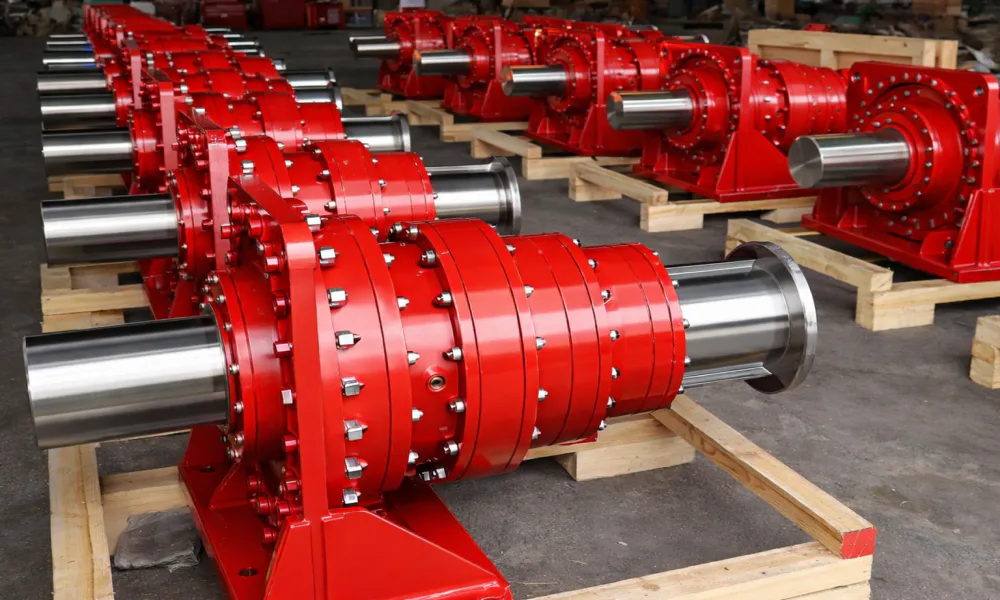
Selecting the right planetary gearbox configuration for a given application involves more than simply matching the ratio and torque. The following practical configuration guidance is drawn from experience across the spectrum of Colombian industrial applications, from precision servo drives in Bogotá’s automation sector to the high-torque, low-speed requirements of conveyors and agitators in the country’s significant mining and agri-processing industries.
For servo motor drives in precision motion control applications (CNC axes, robotics, pick-and-place systems), specify a precision planetary gearbox with backlash ≤ 3 arcmin, helical tooth form, angular contact output bearing, and a torsional rigidity rating appropriate to the dynamic stiffness requirement of the motion control loop. Input flanges should match the IEC frame size of the servo motor being coupled. The ratio should be selected to reflect the motor’s inertia and the load inertia back to the motor shaft — the ideal reflected inertia ratio for servo applications is typically 1:1 to 5:1; if this ratio exceeds 10:1 with the available standard ratios, reconsider either the motor selection or the mechanical system design before specifying a higher ratio gearbox.
For heavy-duty conveyor, mixer, or mill drive applications (common in Colombian cement, sugar, and mineral processing operations), specify a heavy-series planetary gearbox with GGG40 cast iron housing, tapered roller output bearing for combined load capacity, oil bath lubrication with synthetic oil for extended drain intervals, and IP65 or IP67 sealing. Ensure the gearbox service factor — the ratio of the gearbox’s rated torque to the application’s calculated peak torque — is at least 1.25 for smooth loads, 1.5 for moderate shock loads, and 2.0 or higher for severe shock duty. For hydraulic planetary gearbox applications in mobile equipment (wheel drives, winches, slew drives), confirm that the hydraulic motor’s case drain pressure is within the gearbox input seal’s rated back-pressure limit to prevent seal failure from internal pressure buildup.
A useful internal reference for current precision servo and industrial planetary gearbox series is available at gearboxplanetary.com, where engineering specifications, mounting dimensions, and torque-speed curves are available for standard catalog models. For configurations outside catalog parameters — special ratios, extended temperature ranges, non-standard mounting flanges, or specific surface treatment requirements — a custom planetary gearbox can be engineered to the application’s requirements.
13. Application Scenarios — Where Planetary Gearboxes Excel
The following scenarios represent the primary industrial and infrastructure contexts where the planetary gearbox architecture’s combination of torque density, coaxial layout, and ratio flexibility provides clear engineering advantages over alternative gearbox types.
Industrial Automation & Servo Drive Systems — Bogotá & Medellín Manufacturing
Colombia’s expanding manufacturing sector — particularly in automotive components, consumer electronics assembly, and pharmaceutical production — increasingly relies on servo-driven precision motion axes where the planetary gearbox serves as the matching transmission between high-speed AC servo motors and the lead screw, rack, or rotary actuator carrying the mechanical load. A typical example: a linear positioning axis on an automated assembly station uses a servo motor rated at 400 W, 3,000 RPM maximum, connected via a 2-stage precision planetary gearbox with a 16:1 ratio and 3 arcmin backlash to a 16 mm pitch recirculating ball screw. The gearbox steps the motor speed down to 187.5 RPM at the screw while multiplying the motor’s 1.3 Nm rated torque to 19 Nm at the screw nut — providing the thrust force required for assembly press-fit operations without requiring a larger motor.
Mining Conveyor & Hoist Drives — Cerrejón, El Cerrejón & Gold Mining Regions
Colombia’s coal mining operations in La Guajira and Cesar departments, along with gold and silver mining in Antioquia and Chocó, rely heavily on belt conveyor systems and shaft hoists where high torque at low output speed is required continuously for extended periods. In these applications, multi-stage planetary gearboxes in the 50,000–500,000 Nm output torque range are connected directly to the drum shaft of the conveyor head pulley or hoist drum, driven by high-power AC motors through fluid couplings or direct-on-line starters. The planetary arrangement’s compact axial length is particularly advantageous here, as it minimizes the overhang moment on the drive pulley shaft — a critical structural consideration in large-diameter conveyor pulley designs where shaft fatigue failure is a documented failure mode in undermaintained installations.
Sugar Mill Drives — Cauca Valley & Andean Processing Zones
Colombia’s sugar industry, concentrated in the Cauca Valley with major mills in Palmira, Candelaria, and Jamundí, operates some of the most demanding drive applications for heavy-duty planetary gearboxes. Sugarcane juice extraction mills use three-roll extraction tandem configurations where each roll is driven through a high-torque planetary gearbox rated for continuous duty, seasonal operating schedules of 22–24 hours per day, and the severe shock loads generated when oversized cane billets jam between the extraction rolls. The wash-down cleaning requirements of the hygienic zones within sugar mills also demand IP65/IP67 sealed gearboxes with corrosion-resistant coatings — specifications that standard industrial planetary gearboxes meet, but that undersized or undertreated units routinely fail to maintain over multiple harvest seasons.
Wind Energy & Renewable Power Infrastructure — Guajira Wind Corridor
Colombia’s renewable energy expansion — particularly the wind farm development in the La Guajira peninsula, which has some of the strongest and most consistent wind resources in South America — represents a growing market for large-scale planetary gearboxes in wind turbine drivetrains. Modern multi-MW wind turbines use epicyclic gear trains as the primary speed-increasing stage between the slow-turning rotor (typically 10–20 RPM) and the generator shaft (1,500–1,800 RPM). The planetary stage provides the highest torque multiplication in the smallest possible nacelle volume — a critical constraint given the structural and logistical challenges of transporting and installing nacelle components at the remote, elevated locations typical of Colombian wind farm sites.
Mobile Equipment & Hydraulic Final Drives — Construction & Agriculture
Hydraulic planetary gearbox final drive units are the standard transmission choice for the wheel or track motors of mobile construction equipment — excavators, wheel loaders, compact track loaders — and for the wheel drives of large self-propelled agricultural sprayers and combine harvesters. In Colombia, the construction boom associated with the government’s 4G and 5G highway concession programs, as well as the mechanization of large-scale African palm (palma aceitera) plantations in the Llanos and Caribbean coast regions, has significantly increased the installed base of mobile equipment with hydraulic planetary final drives. These units experience both high cyclic loading from terrain variation and significant thermal cycling from the hydraulic circuit; selecting the right seal material and lubricant specification for the local operating temperature range is essential for achieving design service life in these applications.
14. Regulatory Framework & Standards Applicable to Planetary Gearboxes
Planetary gearboxes and the machinery systems in which they operate are subject to regulatory oversight at multiple levels — national regulations in Colombia, regional Andean Community standards, and international technical standards that govern design, performance verification, and safe use.
Colombia — ICONTEC & MinTrabajo: The Instituto Colombiano de Normas Técnicas y Certificación (ICONTEC) is Colombia’s national standards body and the Colombian member of ISO and IEC. ICONTEC adopts and adapts international ISO standards for use as NTC (Norma Técnica Colombiana) standards. For mechanical power transmission components, NTC ISO 6336 (gear strength rating), NTC ISO 1328 (gear accuracy), and NTC ISO 281 (bearing life rating) are the primary technical references. Workplace safety requirements for machinery with exposed rotating components — including gearbox shafts and couplings — are governed by Resolución 2400 de 1979 (Estatuto de Seguridad Industrial) and the more recent Sistema General de Riesgos Laborales framework administered by the Ministerio del Trabajo. Colombian employers using planetary gearboxes in production machinery must ensure that all rotating shaft sections accessible to personnel are guarded in accordance with these requirements, and that maintenance procedures comply with LOTO (Lockout/Tagout) standards referenced in NTC OHSAS 18001 and its successor ISO 45001.
Andean Community (CAN) — Decision 584: The Comunidad Andina (CAN), of which Colombia is a member alongside Ecuador, Peru, and Bolivia, applies Decision 584 (Instrumento Andino de Seguridad y Salud en el Trabajo) as the regional framework for occupational safety in machinery operation. Decision 584 establishes minimum safety requirements that member state legislation must meet or exceed, which in Colombia’s case is implemented through the national Sistema General de Riesgos Laborales.
ISO Standards (International): ISO 1328-1 and ISO 1328-2 define gear accuracy grading from quality class 1 (most precise) to 12 (least precise). ISO 6336 parts 1–6 provide the calculation methodology for gear tooth bending and contact strength rating under dynamic load conditions — the basis for certifiable gearbox torque ratings. ISO 281 governs the calculation of bearing basic rating life, which determines the L10 life hours quoted in planetary gearbox catalogs. ISO 9283 addresses robot arm performance including the contribution of gearbox backlash to positional accuracy in industrial robot joints. For planetary gearboxes used in potentially explosive atmospheres (ATEX zones), IEC 60079-0 and the ATEX Directive 2014/34/EU (or its equivalent ISO/IEC requirements) apply — relevant for Colombian petrochemical facilities and certain mining environments where explosive gas or dust atmospheres may be present.
European Union (for imported equipment): Machinery incorporating planetary gearboxes and exported to the EU market must comply with the Machinery Directive 2006/42/EC (to be replaced by Machinery Regulation EU 2023/1230 from January 2027). CE marking requires a Declaration of Conformity citing the applicable essential health and safety requirements and referencing the harmonized standards used to demonstrate compliance — including EN ISO 4413 (hydraulic fluid power) for hydraulic planetary gearbox applications. Colombian machinery exporters targeting EU markets should ensure their gearbox suppliers can provide full CE technical documentation as part of the machinery’s technical construction file.
15. About Our Engineering & Manufacturing Capability
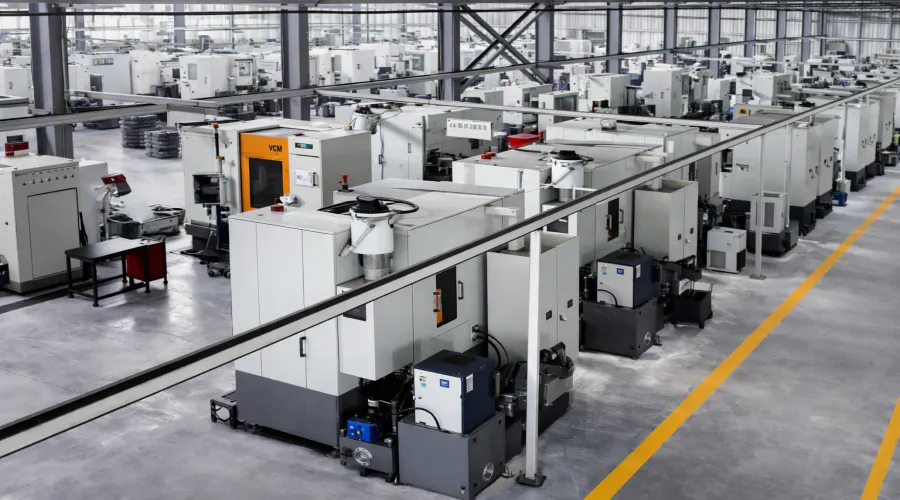
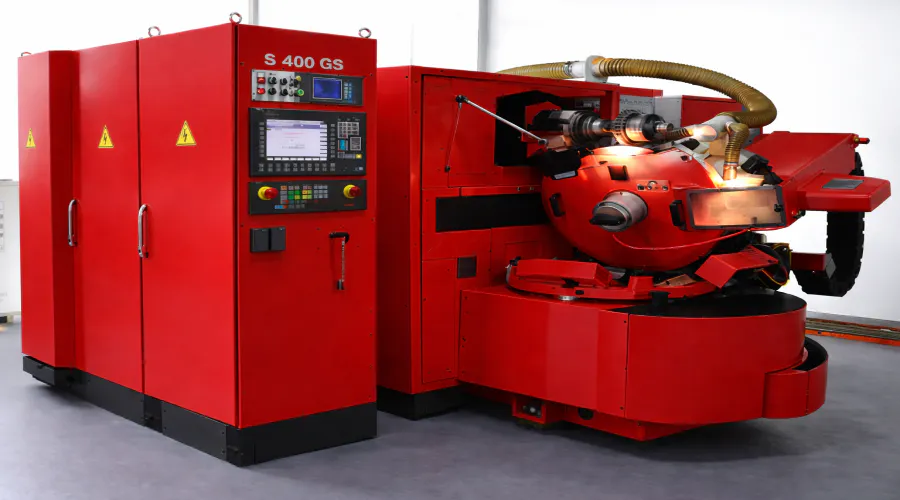
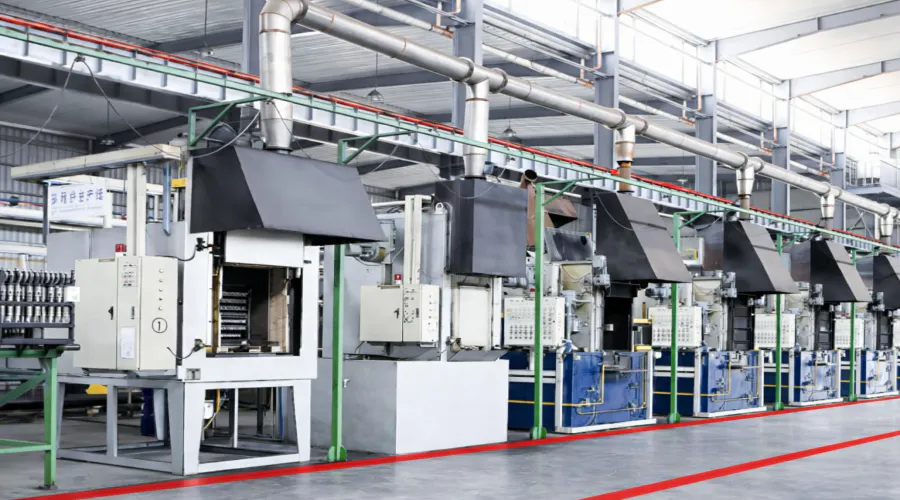
We design and manufacture a complete range of planetary gearboxes — from compact precision servo units in the 5–200 Nm output torque class through to heavy-duty industrial epicyclic gearboxes rated for continuous duty at output torques exceeding 50,000 Nm. Our production facility is equipped with dedicated gear hobbing and grinding centers, heat treatment furnaces for carburizing and case-hardening of gear components, multi-axis CNC machining centers for housing and carrier precision machining, and a final assembly area with controlled cleanliness conditions and calibrated dimensional inspection equipment.
Workshop
16. Related Products — Complete Drive System Supply
A planetary gearbox operates as part of a complete drive system. We supply matching drive system components to enable full system procurement from a single source — reducing compatibility uncertainty, simplifying documentation for machinery certification, and providing one point of technical accountability for the complete drivetrain.
Gear Reducers — Helical & Helical-Bevel Series
Where coaxial inline layout is not required, or where extremely high reduction ratios are needed that exceed practical planetary gearbox staging limits, our range of parallel-shaft helical and right-angle helical-bevel gear reducers provides a complementary solution within the same drive system framework. Helical reducers are available in foot-mount, flange-mount, and shaft-mount configurations covering output torques from 100 Nm to over 100,000 Nm, with ratios from 3.15:1 to 400:1 in standard catalog sizes. All reducer series share the same IEC motor flange adaptor system as our planetary gearbox range, ensuring full intermixability within mixed-type drive system designs. For Colombian industrial applications requiring a combination of a planetary stage for high torque density at the output with a helical stage for fine ratio adjustment, compound planetary-helical configurations are available.

Electric Motors — IEC-Frame AC Servo & Induction Series
Our motor range covers IEC-frame AC induction motors for variable frequency drive (VFD) applications in the 0.75 kW to 75 kW output range, matched to the standard planetary gearbox input flange dimensions of our catalog series. For servo motion control applications, we supply AC servo motors with encoder feedback in incremental, absolute single-turn, and absolute multi-turn encoder configurations. Specifying the motor and planetary gearbox together from a single source ensures that the motor shaft diameter, key dimensions, and flange concentricity are verified compatible before dispatch, eliminating the alignment and coupling problems that sometimes arise when motors and gearboxes are sourced separately from different manufacturers. This complete drive system supply capability is particularly valued by Colombian machine builders managing complex procurement logistics for multi-axis machine designs.

Frequently Asked Questions
Q1. What is a planetary gearbox, and how is it different from a regular helical gearbox used in Colombian industrial machinery?
A planetary gearbox — also called an epicyclic gearbox — uses multiple planet gears that orbit around a central sun gear inside an outer ring gear, all sharing the same rotational axis as the input and output shafts. A conventional helical gearbox transmits power between two offset parallel shafts through a single gear mesh. The planetary arrangement divides the load across multiple simultaneous mesh contacts, which allows it to transmit significantly more torque within the same physical size, and the coaxial input-output layout makes it more compact and easier to integrate into inline drive assemblies. These advantages make planetary gearboxes preferable to standard helical units in applications where installation space is limited or where high torque density is the primary design requirement.
Q2. How does a planetary gearbox work step by step, and what determines the output gear ratio in a fixed ring gear configuration?
In the most common configuration, the ring gear is fixed to the housing (non-rotating), the sun gear receives the input power from the motor shaft, and the planet carrier delivers the output. As the sun gear rotates, it drives the planet gears; because the planet gears are meshed against the stationary ring gear, they cannot simply spin in place — they must walk around the inside of the ring gear, which rotates the carrier in the same direction as the sun gear but at reduced speed. The ratio is calculated as: Ratio = 1 + (Z_ring / Z_sun), where Z_ring and Z_sun are the number of teeth on the ring gear and sun gear respectively. For a ring gear with 60 teeth and a sun gear with 20 teeth, the ratio = 1 + (60/20) = 4:1.
Q3. What are the most common signs that a planetary gearbox needs maintenance or replacement, and how should a Colombian maintenance engineer respond?
The four most commonly observed warning signs of a planetary gearbox approaching failure are: (1) increased operating noise — gear whine at fixed frequency (tooth wear or damage), irregular knocking at planet-passing frequency (planet bearing defect), or low-frequency rumble from the output end (output bearing degradation); (2) oil leakage from shaft seals or housing joints — indicating seal failure or housing seal surface damage; (3) elevated output temperature compared to established baseline — indicating lubricant degradation, overloading, or increased internal friction from wear; and (4) increased backlash observed at the output shaft — indicating gear tooth wear or bearing clearance increase. Any of these signs warrants immediate investigation. Vibration spectrum analysis, oil analysis (checking for metallic particle content and viscosity change), and visual inspection of oil condition and housing surfaces will identify the specific root cause and guide the appropriate maintenance response.
Q4. What are the four main types of gearboxes used in industrial applications, and when should a Colombian engineer choose a planetary gearbox over the alternatives?
The four primary gearbox types in industrial use are: (1) parallel-shaft helical gearboxes — efficient, widely available, suitable for moderate ratios; (2) bevel-helical gearboxes — for 90-degree shaft angle changes at moderate torque; (3) worm gearboxes — high ratios in a compact package, but low efficiency (60–85%) unsuitable for continuous high-power duty; and (4) planetary (epicyclic) gearboxes — highest torque density, coaxial layout, highest efficiency, low backlash. Choose a planetary gearbox when: installation space is the primary constraint; high torque-to-weight ratio is needed (mobile equipment, robot joints, servo axes); backlash below 5 arcmin is required for precision positioning; or continuous high-power operation demands efficiency above 95% to minimize thermal loading and energy costs.
Q5. When specifying a small planetary gearbox for a robotics application at a Colombian automotive parts manufacturer, what performance parameters matter most?
For robotics and servo axis applications in Colombian automotive component manufacturing — a sector growing in Bogotá, Medellín, and Bucaramanga — the critical planetary gearbox parameters in order of importance are: (1) backlash — should be ≤ 3 arcmin for standard automation, ≤ 1 arcmin for high-precision path following or assembly applications; (2) torsional rigidity — determines the dynamic stiffness of the position control loop; higher rigidity allows higher servo gains and faster settling time; (3) output torque-to-weight ratio — important for robot arm joint gearboxes where added mass reduces dynamic performance; (4) input speed range — must accommodate the servo motor’s maximum no-load speed without exceeding the gearbox’s rated maximum input speed; (5) service life — L10 bearing life rated at the application’s actual duty cycle load and speed, verified against the application’s required maintenance-free interval. All of these parameters should be requested in writing from the supplier, with values stated for the specific load and speed point of the application rather than general catalog maximums.
Q6. What planetary gearbox ratio should I specify for a servo motor drive on a CNC milling machine axis operating in Medellín’s manufacturing district?
The optimal planetary gearbox ratio for a CNC servo axis depends on three factors: the required load inertia reflection back to the motor, the required axis travel speed at the motor’s maximum rated RPM, and the required output torque versus the motor’s rated torque. For a ball-screw driven linear axis, the ideal reflected inertia ratio is between 1:1 and 5:1 (load reflected inertia to motor inertia). Calculate the ratio that brings the reflected inertia closest to the motor’s inertia, then verify that the output torque at that ratio meets the required cutting force with an appropriate service factor. Common planetary gearbox ratio values for CNC servo axes range from 3:1 to 20:1; the most frequently specified for linear ball-screw axes are 4:1 and 5:1 (single stage) or 10:1 and 16:1 (two stage).
Q7. Which planetary gearbox models are suitable for food-grade or wash-down applications in Colombian sugar and beverage processing facilities?
Food processing and beverage applications in Colombia’s Cauca Valley sugar mills, Bogotá beverage plants, and agro-industrial processing facilities require planetary gearboxes that meet specific hygiene and wash-down resistance criteria. Key requirements include: IP67 or higher sealing (for full wash-down resistance); housing coating in NSF H1-compliant paint or stainless steel housing construction; FKM (Viton) shaft seals rather than standard NBR for resistance to cleaning chemical exposure; NSF H1-registered lubricants if incidental food contact is possible; and smooth external housing profile without horizontal recesses that retain water. Our hygienic-series planetary gearboxes are designed for these requirements and are available in a range of torque capacities suitable for conveyor, mixer, and filling machine drive applications. Contact our applications team with your specific hygiene zone classification for the appropriate product recommendation.
Q8. How does operating at high altitude in Bogotá or Andean Colombia affect planetary gearbox performance, and what adjustments should maintenance engineers make?
High-altitude operation affects planetary gearboxes primarily through reduced convective cooling — lower air density at 2,000–3,000 meters means less heat is removed from the housing surface per unit time compared to sea-level operation at identical load and speed. The practical effect is an increase in steady-state oil sump temperature of approximately 8–15°C at 2,500 meters altitude compared to sea-level performance. Recommended adjustments: (1) specify synthetic PAO gear oil rather than standard mineral oil to maintain adequate viscosity at elevated operating temperatures; (2) verify that the expected steady-state temperature (catalog value plus altitude correction) remains below the shaft seal elastomer’s rated maximum (100°C for NBR, 200°C for FKM); (3) consider FKM seals as standard for altitude installations where episodic overload conditions could temporarily spike oil temperature above 100°C. Electric motor derating for altitude should also be applied to the drive motor, which will typically require a larger frame size at altitudes above 1,000 meters.
Editor: PXY