
Construction Machinery / Engineering Reference
Track Drive Planetary Gearbox
A field engineer’s technical reference for tracked vehicle final drives — covering planetary gear mechanics, housing construction, material selection, failure diagnosis, and configuration guidance for bulldozers, crawler excavators, and heavy tracked machinery.
1. Why the Track Drive Planetary Gearbox Is the Most Demanding Component on Any Crawler Machine
Of all the power transmission assemblies fitted to a tracked machine, none operates under a more hostile combination of conditions than the track drive planetary gearbox — also referred to as the final drive gearbox or travel drive reducer. In a 20-ton crawler excavator, the hydraulic travel motor spins at 2,000 to 3,000 rpm. By the time that rotational energy reaches the drive sprocket at the end of the undercarriage, it has been slowed to 25 to 60 rpm, and the torque has been multiplied to values that routinely exceed 100,000 Nm. That entire transformation happens inside a cast iron housing roughly the size of a large bucket, permanently immersed in gear oil, pressed up against the running gear of the machine, and subjected to shock loading every time the track link climbs a rock, crosses a concrete edge, or engages with the drive sprocket under a full push load.
In Colombia, where tracked machinery is deployed across an unusually diverse range of environments — from the coal and gold open-pit mines of the Cesar, Cauca, and Bolívar departments, to the road and tunnel construction projects cutting through the Andean cordilleras, to the riverine earthmoving operations along the Magdalena and Meta rivers — the track drive gearbox faces environmental stresses that many standard designs were never intended to sustain continuously. High-altitude mine sites above 3,000 meters alter lubricant viscosity behavior. Humid lowland sites accelerate seal degradation. Abrasive silica-rich overburden destroys any seal not properly rated. Understanding how the planetary track drive is built, what materials make it last, and how to specify correctly for the site is not an academic exercise — it is the difference between a 12,000-hour service life and a catastrophic failure at 3,000 hours that grounds a machine for weeks.
This guide approaches the subject from a practitioner’s standpoint, walking through each technical layer of the track drive planetary gearbox from the inside out: gear geometry, carrier structure, material and heat treatment, sealing, braking, failure diagnosis, and recommended configurations for different machine classes and Colombian field conditions.
2. Motion Mode — How a Track Drive Planetary Gearbox Propels a Crawler Machine
The hydraulic travel motor — an axial piston unit in virtually all modern crawlers — delivers high-speed, low-torque rotation at its output shaft. This shaft engages directly with the sun gear at the center of the first planetary stage inside the track drive gearbox. The sun gear meshes with a set of planet gears — typically three in compact and light-class machines, four in medium and heavy machines — which are mounted on pins in the planet carrier. Because the ring gear (the internally toothed outer gear) is fixed to the stationary housing, the planet gears cannot orbit without also rotating the carrier, and it is this carrier rotation that constitutes the reduced-speed output of the first stage. In a two-stage unit, the first carrier drives a second sun gear, and the sequence repeats. Three-stage units provide ratios reaching 500:1 for extremely high-torque applications such as drilling rig undercarriages.
The output of the final stage is transmitted to a rotating outer hub — in most track drive designs the housing itself rotates — which carries the drive sprocket. When the motor runs in one direction, the sprocket turns, pulling the track chain around the undercarriage and propelling the machine forward. Reversing the motor reverses the sprocket direction, and independent speed control on left and right travel motors achieves steering. Gradual speed differential produces a gentle arc; running one motor while the other brakes produces a pivot turn with the stationary track as the pivot point. This steering mode places the maximum load impulse on the stationary-side track drive gearbox, as it must absorb the full machine weight and any ground reaction force entirely through its final drive output bearing.
The integrated spring-applied, hydraulically released (SAHR) parking brake — housed inside the planetary gearbox assembly — engages the moment hydraulic travel pressure is removed, holding the machine stationary on any gradient. On steep terrain, which is common on Andean road construction projects or access ramps in Colombian open-pit mines, this brake is not a convenience: it is a primary safety system under multiple national and international regulatory frameworks.
Structural Types
Track drive planetary gearboxes for crawler machinery are produced in several structural configurations, each suited to different machine platforms and installation constraints:
The planetary stages are enclosed within a housing that rotates relative to the fixed motor/inner shaft assembly. The sprocket bolts directly to the rotating outer housing. Most common for excavators and bulldozers. Compact, sealed, and easily replaced as a complete unit.
The housing is fixed to the undercarriage frame and the output shaft connects to a separate sprocket hub. Common in older bulldozer designs and large crawler cranes. Easier to service individual components but larger in overall envelope.
The hydraulic travel motor and planetary gearbox are delivered as a single sealed assembly. Dominant in modern production excavators from 1.5 tons to 80 tons. Simplifies installation, eliminates inter-component seal joints, and allows motor and gearbox parameters to be co-optimized.
The drive sprocket and final drive are elevated above the ground plane, producing a triangular track path. Used on modern large dozers and compact track loaders. Isolates the gearbox from ground-level mud and debris immersion, improving seal longevity on wet construction sites.
3. Manufacturing Structure — Internal Construction Details
The mechanical architecture of a production-grade track drive planetary gearbox begins with the ring gear, which in most modern designs is an integral part of the outer housing — machined directly into the bore of a forged or cast housing rather than pressed in as a separate insert. This monolithic approach eliminates the press-fit interface failure that can allow the ring gear to spin under severe shock loads in lesser designs. The ring gear teeth are hobbed and then induction hardened or, in higher-specification units, carburized and ground to ISO 1328 class 5 accuracy.
Planet carriers — the cages that hold the planet gear pin assemblies — are die-forged from alloy steel. Forging is essential rather than fabrication because the carrier must maintain precise parallelism between its two side plates under the enormous separating forces generated when the planet gears transmit peak torque. Carrier bore concentricity tolerances are held to H6/h5 or tighter on quality production units. Planet gear pins are interference-fitted into the carrier and are typically hollow, with oil passages bored through the pin center to feed lubricant to the planet bearing interface under centrifugal force. The planet bearings themselves are full-complement or caged cylindrical roller bearings — needle roller cages are found only on compact and light-class drives where radial space is critically limited.
The floating face seal — sometimes called a duo-cone seal or toric seal — is the most critical sealing element in a rotating-housing track drive gearbox. It consists of two matched metal toric sealing rings, each seated in an elastomeric ring, pressed together face-to-face at the rotating/stationary housing interface. The lapped metal contact faces, when properly bedded in, form a fluid-tight interface that survives rock particles, mud under pressure, and continuous immersion that would destroy a conventional lip seal within hours. This sealing concept was specifically developed for excavator and bulldozer track drives, and its correct installation — including matching the elastomeric ring shore hardness to the operating temperature range — is one of the most common sources of premature field failure when drives are rebuilt in facilities lacking the appropriate tooling.
4. Material System — Standard vs High-Performance Track Drive Gearbox
Material selection is where long service life is either secured or forfeited. The comparison below shows how entry-level and high-specification configurations differ across each key component:
| Component | Standard / Entry-Level | High-Performance Grade |
|---|---|---|
| Sun Gear | 20CrMnTi — carburized, HRC 56–60 | 18CrNiMo7-6 — carburized + shot-peened, HRC 58–62 |
| Planet Gears | 20CrMnTi — carburized, HRC 56–60 | 18CrNiMo7-6 — carburized, tooth-root shot-peened |
| Ring Gear (Internal) | 42CrMo4 — induction hardened, HRC 52–56 | 17CrNiMo6 — case carburized and ground |
| Planet Carrier | 42Cr — quench and temper, forged | 20CrMo5 — carburized, carrier bores precision ground |
| Planet Pin (Spindle) | GCr15 bearing steel — through hardened | GCr15SiMn — through hardened, hollow oil-feed bore |
| Housing / Casing | GGG-40 ductile iron | GGG-50 ribbed ductile iron, stress-relieved |
| Output Bearing | Tapered roller — standard clearance | Large-bore tapered roller — preloaded DB pair, C3 clearance |
| Planet Bearing | Needle roller cage | Full-complement cylindrical roller |
| Face Seal (Floating) | Standard toric — NBR elastomeric ring | Lapped duo-cone — FKM elastomeric ring for >80°C |

5. Surface Treatment — What the Machining Process Leaves Behind
Gear tooth surface quality in a track drive planetary gearbox is established through a carefully sequenced thermochemical and mechanical process that cannot be shortcut without degrading service life. The standard process chain for a quality sun or planet gear runs as follows: rough turning → semi-finish hobbing → pre-heat-treatment normalization → finish hobbing → case carburizing at 900–950°C in a controlled-atmosphere furnace with carbon potential precisely regulated to achieve a 0.8–1.5 mm case depth → oil or press quench to minimize distortion → sub-zero treatment at -70 to -80°C (for retained austenite conversion in demanding applications) → temper at 160–180°C → hard finish grinding of tooth flanks and bearing bores → shot peening of tooth root fillets to a defined Almen intensity → manganese phosphate coating (Parkerizing) or copper flash for assembly lubrication during run-in. The resulting tooth flank surface hardness of HRC 58–62 with a tough ductile core of HRC 32–38 provides resistance to both contact fatigue (pitting and spalling at the pitch line) and bending fatigue (root cracking under cyclic shock load).
External housing surfaces for track drive gearboxes destined for Colombian construction and mining environments require more protection than a standard industrial gearbox application. The combination of abrasive soil contact, mud immersion, tropical humidity, and UV exposure demands a primer-topcoat system with a minimum dry film thickness of 120 µm. Preferred systems use a zinc-rich epoxy primer for galvanic protection, followed by an aliphatic polyurethane topcoat for UV and abrasion resistance. Fasteners at all external joints should be stainless-steel or hot-dip galvanized to prevent galvanic accelerated corrosion in the clayey, iron-oxide-rich soils common in Colombian mine overburden. Breather assemblies — which regulate internal pressure during thermal cycles — are fitted with hydrophobic membrane elements that exclude liquid water while allowing vapor exchange.
The floating face seal metal rings are lapped in matched pairs during manufacture to achieve a contact face flatness within 0.0006 mm (0.6 µm). This flatness, maintained at the rotating interface, is the mechanism by which the seal excludes fine abrasive particles even under the pressure differential that occurs when the machine descends a steep gradient with the track drive fully loaded. Any abrasive contamination on the seal faces — from improper handling during installation, or from housing bore damage during dis-assembly — immediately compromises this geometry and results in early leakage. This is why professional rebuilders invest in dedicated seal installation tooling rather than improvising with shop-made fixtures.

6. Technical Parameters — Track Drive Planetary Gearbox Reference Data
Indicative specifications for mid-range crawler excavator and bulldozer class. Custom configurations available on request.
| Parameter | Value / Range | Notes |
|---|---|---|
| Machine Weight Class | 1.5 t – 80 t tracked machines | Custom designs for mining rigs beyond 80 t |
| Nominal Output Torque | 1,000 – 450,000 Nm | Per individual model selection |
| Peak Output Torque (transient) | Up to 2.5 × nominal | Service factor must be applied during specification |
| Overall Gear Ratio | i = 5.3 – 500 | Most excavator drives: 40:1–100:1 |
| Rated Input Speed | 800 – 3,500 rpm | Hydraulic motor dependent |
| Output Hub Speed (sprocket) | 10 – 80 rpm | Machine class and terrain dependent |
| Transmission Efficiency | ≥ 94% overall (≥ 98% per stage) | At rated speed and nominal torque |
| Number of Planetary Stages | 1, 2, or 3 | 3 stages for ratio > 100:1 |
| Planet Gears per Stage | 3 (standard) / 4 (heavy class) | 4-planet for highest torque density |
| Gear Tooth Surface Hardness | HRC 58 – 62 | Case depth 0.8–1.5 mm |
| Planet Bearing Type | Full-complement cylindrical roller | Oil-fed through hollow pin bore |
| Output (Hub) Bearing Type | Large-bore tapered roller | Handles combined radial + axial + moment loads |
| Integrated Parking Brake | SAHR multi-disc (standard) | Spring-applied, hydraulic release |
| IP Protection Rating | IP67 (standard) / IP68 (heavy mining) | Per IEC 60529 |
| Operating Temperature Range | -40°C to +90°C | FKM seals required above +80°C ambient |
| Gear Oil Specification | ISO VG 220 EP / ISO VG 320 EP | First change at 500 h; subsequent at 1,000–2,000 h |
| Motor Mounting Interface | Plug-in (splined), SAE, or DIN flange | Direct fit for Rexroth A6VM, Kawasaki M2X, Sauer |
| Face Seal Type | Floating duo-cone, lapped metal faces | NBR or FKM elastomeric ring options |
| Housing Material | GGG-40 / GGG-50 ductile iron | Ring gear integral to housing bore |
| Design Service Life | ≥ 10,000 operating hours | At nominal load per ISO 6336 / DIN 3990 |
Specifications above cover the mid-range construction class. We can customize track drive planetary gearboxes for any machine platform — including non-standard ratios, modified flange patterns, and special lubricant fills for high-altitude or tropical sites. See our track drive gearbox product range for standard catalog models.
7. Environmental Rating and Working Conditions
Track drive gearboxes on crawler machines occupy the single most hostile installation position of any power transmission component: at ground level, in direct contact with the running gear, continuously exposed to mud, rock, water, and abrasive material thrown up by the track chain. This is why the IP rating for track drives is IP67 as a baseline — temporary submersion to one meter for 30 minutes — rather than the IP65 used for most industrial gearboxes. In flooding conditions at Colombian river-plain construction sites, or in quarry sump areas where excavators regularly operate in standing water, IP68 (continuous submersion beyond one meter) should be the specified minimum.
Temperature management is a site-specific concern in Colombia. At altitude sites above 3,000 meters — such as those in the Boyacá or Nariño departments where mining and road construction activities are growing — ambient temperatures can drop below -10°C overnight, causing gear oil to thicken significantly in an un-warmed gearbox. ISO VG 220 EP oil, which flows reasonably at -20°C, becomes sluggish near its pour point and can starve planet bearings during a cold-start travel cycle if the machine is moved immediately after startup. At these elevations, a step-up to ISO VG 320 EP or a synthetic ISO VG 220 EP with a broad viscosity index is the practical answer. At tropical lowland sites — Cesar, Magdalena, La Guajira, or the Pacific coast departments — sustained ambient temperatures of 38–42°C combined with long operating days push the gearbox oil toward the upper end of its operating envelope. At these sites, oil analysis at the 500-hour interval is recommended regardless of the standard change schedule.
Abrasion from fine silica and mineral particles is the primary long-term driver of floating face seal wear in mining applications. The metal faces of the duo-cone seal tolerate abrasive contamination on their outer surfaces — mud, fine gravel, and process slurry — as long as the faces themselves remain unscratched. This depends entirely on proper installation: the elastomeric rings must be correctly seated, the faces must not contact each other before final assembly into the housing, and the installation tool must align both rings concentrically before compression. Sites that experience the worst seal wear are typically those where machine operators wash down undercarriages with high-pressure water jets — a practice that is beneficial if the jet pressure is below 60 bar and the nozzle is kept at least 300 mm from the seal, but destructive if these limits are exceeded. This issue is worth noting in site-level PM procedures.
8. Working Condition Characteristics — What the Gearbox Actually Experiences
Classifying the duty cycle correctly is the first step in selecting the right planetary track drive. Unlike a gearbox on a conveyor belt or pump — where load is relatively constant — the track drive on a crawler machine sees a highly variable load profile. During tramming (traveling between work positions on flat ground), the gearbox operates at relatively moderate torque — perhaps 40–60% of rated capacity. During push loading on a bulldozer (the dozer blade working against a full load of material on a grade), the gearbox operates at or beyond rated continuous torque, and the frequent stops and direction reversals add cyclic bending fatigue to the tooth contact fatigue already accumulating from the main load. On rocky ground, each time the track link drops over a rock and slaps the ground, the sprocket shock-loads the final drive output bearing and the planet carrier in a millisecond impulse that can reach 2.5 to 3 times the steady-state torque.
Pivot turns — single-track steering at zero radius — are among the highest instantaneous loads the gearbox experiences. The stationary-side track drive must react the full machine mass and the torque being applied by the moving-side drive. This condition is particularly important for the output hub bearing selection: the bearing must handle not just radial load from the sprocket weight and chain tension, but a substantial combined moment load from the offset between the sprocket load line and the bearing support. Tapered roller bearings in a back-to-back arrangement handle this combination better than angular contact ball bearings, which is why all serious track drive designs use tapered roller output stages.
For Colombian infrastructure projects — particularly the Concesiones de Cuarta Generación (4G) road program and the expanding mining concessions — excavators and bulldozers often work back-to-back shifts with minimal cool-down periods. This continuous-duty profile raises gearbox oil temperature to the upper operational range and accelerates thermal cycling of the seals. Specifying a gearbox with a higher thermal rating than the nominal output torque requires is not over-engineering; it is a practical service-life investment, particularly when the machine is remote-sited and a gearbox failure means days of delay waiting for parts.
9. Five Key Product Advantages
Exceptional Torque Density for Compact Undercarriage Dimensions
Multi-stage planetary architecture achieves output torques from 1,000 to over 450,000 Nm within the tight radial envelope of tracked undercarriage installations — 3 to 5 times the torque density of equivalent parallel-shaft reducers at the same housing diameter.
Duo-Cone Floating Face Seal — Field-Proven Ground-Level Protection
The lapped-metal toric seal pair provides IP67-rated protection against abrasive mud, fine silica, and water pressure that would destroy any conventional lip seal configuration within weeks in construction or mining environments. Available with FKM elastomeric rings for high-temperature Colombian lowland sites.
Integrated SAHR Brake — Grade-Holding Safety on Andean Terrain
The spring-applied, hydraulically released multi-disc parking brake integrated into the gearbox body holds the machine on any gradient when hydraulic travel pressure is removed, meeting ISO 15817, CE 2006/42/EC, and Colombian SGRL Resolution 4272 safety requirements.
Direct Interchangeability with Major OEM Drive Configurations
Installation dimensions and motor interfaces compatible with Bosch Rexroth GFT series, Bonfiglioli 700C series, and equivalent OEM track drives from Komatsu, Hitachi, Volvo, Liebherr, and Caterpillar platforms — validated via dimensional comparison prior to shipment.
High-Altitude and Tropical Climate Pre-Configuration
Gearboxes for Colombian sites can be pre-configured with altitude-adjusted ISO VG 320 EP gear oil fill, FKM face seal rings, hydrophobic breather membranes, and zinc-rich housing primer — all specified for the site before leaving the factory, eliminating field conversion errors.
10. Typical Failure Modes — What the Data from the Field Shows
Track drive planetary gearbox failures rarely have a single cause. They are almost always the result of a process — an initial insult (contamination, overload, improper installation) that the unit tolerates for hundreds of hours before a secondary failure mechanism progresses to a terminal state. Understanding the chain helps prevent it from starting.
| Failure Mode | Root Cause | Field Diagnosis / Prevention |
|---|---|---|
| Floating face seal leakage — oil out, debris in | Improper installation, excessive wash-down pressure, O-ring hardening from heat | Inspect seal face geometry and elastomeric ring hardness at every overhaul; use dedicated installation tooling; limit wash-down pressure to <60 bar, nozzle >300 mm from seal |
| Planet bearing fatigue (spalling) | Oil contamination from seal failure; oil starvation from blocked pin bore; overload shock cycles | Oil sample at 500 h intervals; confirm hollow pin bore is clear during assembly; verify service factor in design |
| Gear tooth pitting and micropitting | Lubricant degradation, marginal oil film at low-speed / high-load; abrasive contamination | Oil analysis particle count; maintain ISO cleanliness class 18/16/13 or better; shorten change interval in abrasive environments |
| Output hub bearing failure (sudden) | Incorrect bearing preload at assembly; shock load from pivot turn on hard rock surface | Verify and record bearing preload with calibrated tool at assembly; confirm preload specification matches bearing supplier data |
| Ring gear spinning in housing | Casting defect in housing bore; ring gear insert press-fit loss under shock; incorrect assembly torque | Source housings with material certificate; confirm ring gear is machined integral to bore, not a press-fit insert, in heavy-duty specifications |
| Brake disc wear / brake slippage on grade | Contaminated friction discs (from seal failure); incorrect spring preload; hydraulic release pressure too low | Annual brake torque test per ISO 15817; verify hydraulic release pressure at commissioning; inspect discs when any seal is replaced |
11. Recommended Configuration by Machine Class and Application
The single most common specification error with track drive planetary gearboxes is selecting on nominal torque alone without applying a service factor for the actual duty cycle. A 20-ton excavator doing general earthmoving at a construction site has a very different duty profile from a 20-ton excavator working as a compaction assistant on a pipeline trench where it pivots repeatedly on stony ground. The table below provides starting-point configuration guidance that accounts for machine class, duty severity, and site environment:
| Machine Class | Nominal Output Torque | Ratio Range | Stages | IP Rating | Service Factor |
|---|---|---|---|---|---|
| Mini excavator (1.5–6 t) | 1,000–8,000 Nm | 40:1–80:1 | 2 | IP67 | 1.3–1.5 (earthwork) |
| Small excavator (6–15 t) | 8,000–30,000 Nm | 50:1–90:1 | 2 | IP67 | 1.5 (standard), 2.0 (rock) |
| Medium excavator (15–35 t) | 30,000–100,000 Nm | 60:1–100:1 | 2–3 | IP67 | 1.5–2.0 |
| Large excavator (35–80 t) | 100,000–250,000 Nm | 80:1–150:1 | 3 | IP67/IP68 | 2.0–2.5 (mining) |
| Bulldozer (D6 – D11 class) | 20,000–180,000 Nm | 50:1–120:1 | 2–3 | IP67 | 2.0 (push loading on grade) |
| Mining & drilling rig (>80 t) | 200,000–450,000 Nm | 100:1–500:1 | 3 | IP68 | 2.5 (full custom design) |
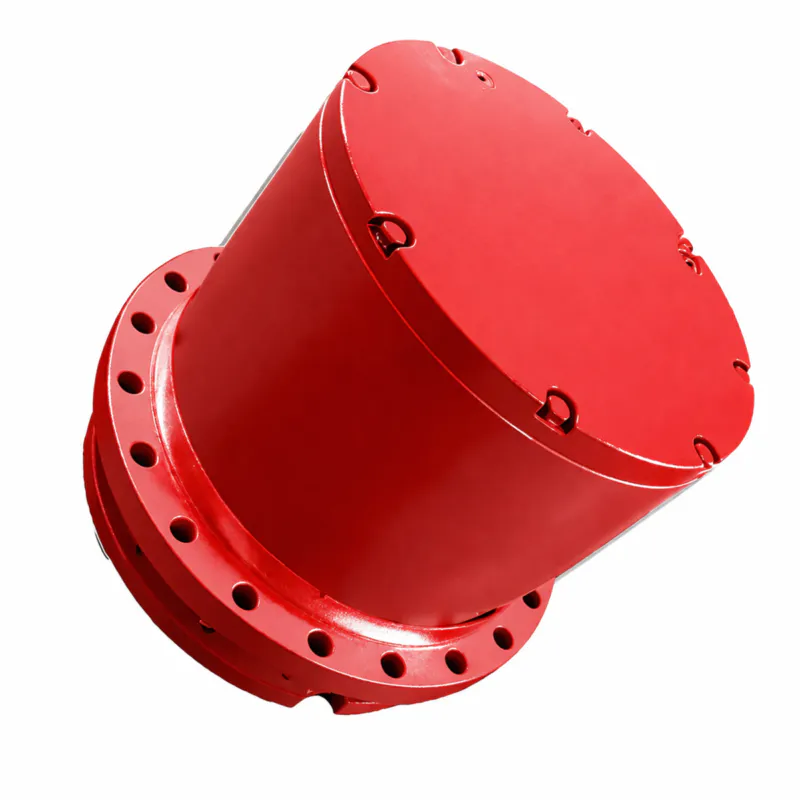
For direct dimension-matching to your existing machine platform — including flange pattern, shaft spline, and motor interface verification
12. Application Scenarios — Where Track Drive Planetary Gearboxes Are Deployed
On Colombia’s expanding 4G highway and regional road network, crawler excavators are the primary earthmoving tool for slope cutting, trench excavation, and drainage installation. The planetary track drive must sustain thousands of travel cycles per shift — advancing the machine between cut faces — while absorbing the shock of bucket engagement and the gradient loads of working on slope. Excavators in this application typically operate 2 to 3 shifts per day, 6 days per week, making gear oil condition management and face seal integrity the key maintenance priorities. Units from 15 to 35 tons are most common in this role.
Large bulldozers in the Cesar coal basin and the Antioquia gold and copper mines work in push-dozing cycles that place the track drive under sustained near-maximum load for minutes at a time, followed by brief reverse and reposition cycles. The track drive gearbox on the grade-descending side experiences the highest combined torque and braking load. At these sites, service factors of 2.0 to 2.5 are applied during gearbox selection, 3-stage units are standard for machines above 35 tons, and oil change intervals are shortened to 1,000 hours based on site-specific oil analysis programs.
Crawler-mounted blast-hole drills and foundation rotary drilling rigs use track drive planetary gearboxes to position the machine between drill points on uneven, rocky terrain. The combination of very low tramming speed, high gradient capability, and the additional vertical load from the mast and drill string places unusually high static radial loads on the output hub bearing. This application typically uses the highest available gear ratio within the product range — 150:1 to 500:1 — and demands the most robust hub bearing configuration, often a double-row tapered roller arrangement rather than the single-row standard.
Crawler cranes used in Colombia’s port construction, bridge erection, and industrial facility installation rely on track drive planetary gearboxes for positioning on prepared crane mats. While tramming speeds are lower than excavators, the machine weight — commonly 150 to 600 tons including counterweight and boom — means that even modest grades require very high output torques. Crawler crane track drives are often custom-engineered for each machine model and are typically supplied as an integrated motor-gearbox assembly to simplify installation on the job site.
Compact track loaders (CTLs) use smaller track drive planetary gearboxes optimized for the high-frequency direction reversals and zero-radius turns characteristic of urban construction, landscaping, and agricultural land preparation. These machines make hundreds of pivot turns per day, and the instantaneous torque spikes during each pivot directly load the planet carrier. CTL track drives are typically 2-stage units in the 3,000 to 12,000 Nm output range, with the high-drive configuration being standard on modern platforms because it elevates the gearbox above the main zone of mud and debris accumulation.
13. Regulatory Framework — Colombia and International Standards
The track drive planetary gearbox, as a safety-critical component of mobile construction machinery, is addressed by regulatory requirements at both the national level in Colombia and through international technical standards that are adopted by reference or by contractual requirement across the industry. Engineers specifying track drives for Colombian projects, and procurement officers sourcing from international suppliers, should be familiar with the following framework.
Colombia — National Regulatory Environment
The Ministerio del Trabajo, through the Sistema General de Riesgos Laborales, sets mandatory occupational safety requirements for construction and mining machinery operations. Resolution 4272 of 2021 establishes minimum pre-operational and periodic inspection requirements for earthmoving and lifting equipment in Colombia, specifically including travel system function verification — brake holding, track drive response, and absence of fluid leakage — as a required pre-shift check. The Ministerio de Minas y Energía, through Decreto 1886 of 2015 and subsequent amendments (Reglamento de Seguridad en las Labores Mineras Subterráneas), requires certified braking system performance for tracked equipment operating in underground or near-surface mine environments. The Instituto Colombiano de Normas Técnicas y Certificación (ICONTEC) adopts ISO standards as NTC equivalents; ISO 15817 (safety requirements for remote-controlled earth-moving machinery) is therefore applicable as NTC-ISO 15817 in Colombia.
Key International Standards
ISO 15817 covers the safety requirements for remote-controlled earthmoving machines, with specific provisions for travel brake systems. ISO 6336 and DIN 3990 govern the load capacity calculation of gear teeth, forming the basis for gear sizing in track drive design. ISO 281 covers rolling bearing dynamic load ratings and governs bearing selection for planet and output hub positions. IEC 60529 defines the IP ingress protection classification. ISO 11684 covers safety signs and markings on construction equipment. CE Machinery Directive 2006/42/EC — required for equipment imported into EU-member states — is commonly referenced in OEM procurement specifications globally, including by multinational contractors operating in Latin America.
Other Regional Frameworks of Relevance
In Peru, D.S. 024-2016-EM (Reglamento de Seguridad y Salud Ocupacional en Minería) mandates annual brake performance certification for all tracked machinery in mining operations — a requirement directly relevant to the integrated SAHR brake in the track drive gearbox. In Brazil, NR-12 (Norma Regulamentadora 12 — Segurança no Trabalho em Máquinas e Equipamentos) requires documented safety assessments for all self-propelled construction machinery, covering travel drive brake function. Australia’s AS 2550 series and the associated Code of Practice for Excavation include track drive inspection as a mandatory pre-start item. The United States OSHA 29 CFR 1926 Subpart O — applicable on projects managed by US contractors operating internationally — specifies inspection and maintenance documentation for crawler equipment. All of these frameworks converge on the same practical requirements: a functioning, properly specified, and well-maintained track drive with documented brake performance.
14. About Our Manufacturing Capability
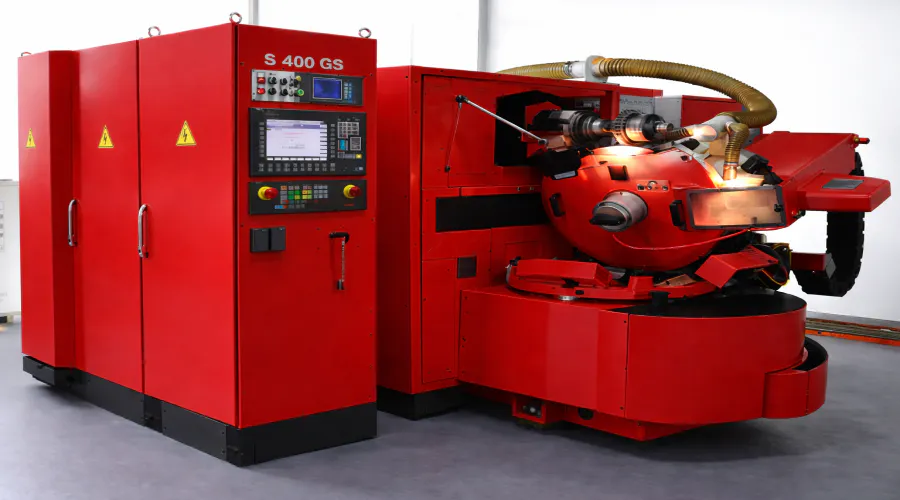
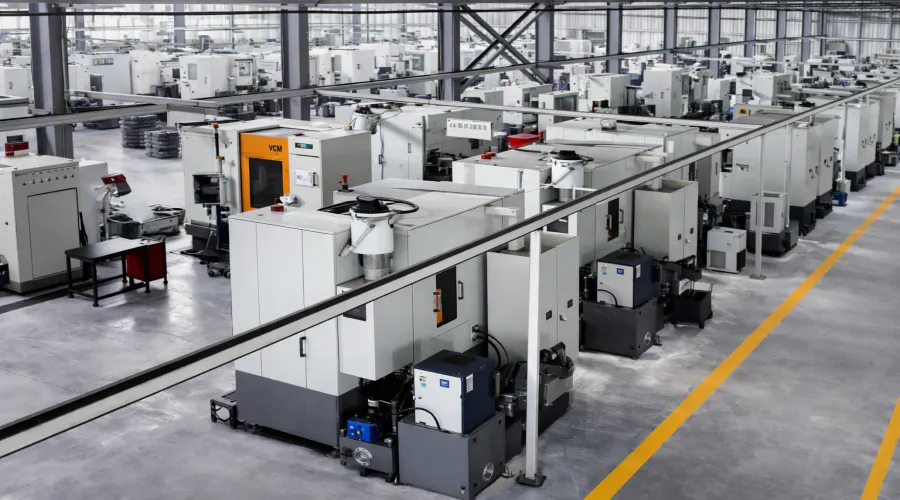
Our production facility maintains a dedicated track drive manufacturing cell equipped with multi-axis CNC turning and machining centers for housing bore production, planetary carrier machining, and ring gear hobbing. All gear tooth finishing is performed on computer-controlled generating-grinding machines, with 100% CMM measurement of finished profiles against DIN 3960 / ISO 1328 class 5 tolerances. Each gear carries a laser-etched serial number linked to its material heat number, machining record, and heat treatment data log — providing full traceability from raw material to finished assembly.
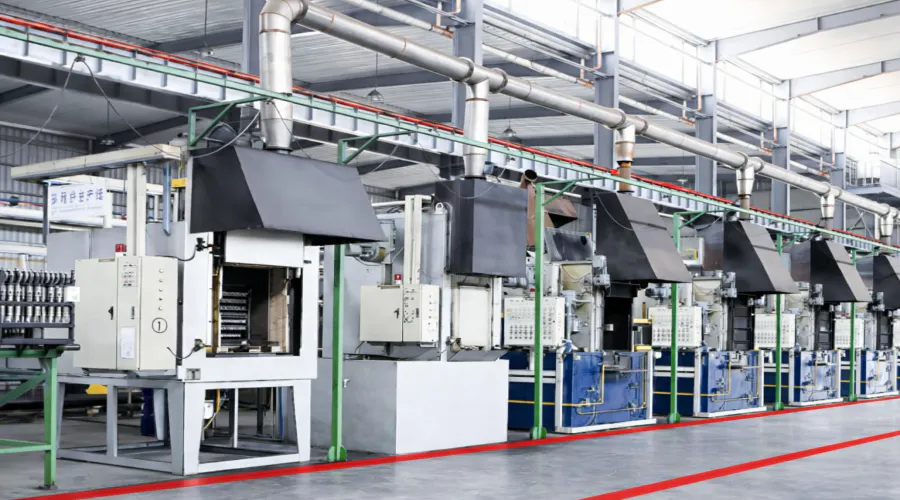
Heat treatment is conducted in sealed, atmosphere-controlled retort furnaces with automated carbon potential control and full thermal cycle data logging. Press quench fixtures are used for planet gears and sun gears where distortion control after carburizing is critical to maintaining tooth form accuracy into the hard-finished state. Shot peening of tooth root fillets follows each carburizing batch, with Almen strip intensity verification after each machine setup. Floating face seals are sourced from certified suppliers with matched-pair lapping records, and are stored in controlled humidity prior to assembly to prevent elastomeric ring hardening.
Each completed track drive gearbox undergoes a no-load run-in test at rated input speed for 30 minutes, followed by a loaded test at 25%, 50%, and 100% of rated output torque. Vibration signature, oil temperature rise, and noise level are recorded and compared against model-specific acceptance criteria. Brake holding torque is verified against specification before release. Complete test data accompanies every unit shipped.
Workshop
15. Related Products — Complete Track Drive System Supply
A track drive planetary gearbox performs best as part of a matched, co-specified drivetrain. We also manufacture hydraulic travel motors and planetary speed reducers that complement the track drive gearbox range, covering the full power transmission chain from the hydraulic circuit to the drive sprocket. Sourcing motor, reducer, and gearbox from a single supplier eliminates compatibility uncertainty, simplifies documentation for warranty claims, and reduces the number of technical contacts required during commissioning or field troubleshooting.

Hydraulic Travel Motor
Matched hydraulic travel motors with plug-in splined shaft and SAE/ISO flange patterns for direct integration with our track drive gearbox range. System parameters pre-verified for compatibility — torque, displacement, and pressure rating are confirmed against gearbox specification before shipping.

Planetary Speed Reducer
Standalone planetary speed reducers for winch, slewing, and auxiliary circuit drives on the same machine platform — same material and process standards as the track drive gearbox series. One-stop supply for the full machine drivetrain simplifies both procurement and after-sales service for Colombia-based fleet operators.
Frequently Asked Questions
Editor: PXY