
1. Overview: Pitch Drive Planetary Gearbox in Wind Energy
A pitch drive planetary gearbox sits at the root of each rotor blade in a variable-pitch wind turbine, serving as the mechanical bridge between the pitch motor and the blade-bearing ring gear. When wind speed shifts, the control system commands the pitch motor to rotate the blade to an optimal angle — typically between 0° (full power capture) and 90° (feathered, for turbine shutdown or storm protection). The gearbox must translate that motor output into slow, precisely controlled, high-torque rotation, reliably over a design life that routinely exceeds 20 years.
Unlike the main drivetrain gearbox, the pitch drive gearbox operates in a cyclic, oscillatory regime rather than continuous rotation. It must handle thousands of load reversals per year, start-stop sequences during grid events, and emergency feathering cycles where peak torques can surge to two or three times the rated value. These demands make planetary gear architecture the clear engineering choice: the load-sharing arrangement of multiple planet gears distributes peak stress across the tooth contact area far more effectively than any parallel-shaft design of comparable size.
For wind energy markets in Colombia — especially the booming La Guajira corridor, where sustained trade winds average 9.8 m/s and capacity factors approach 65% — the pitch drive planetary gearbox must also contend with high ambient temperatures, coastal humidity, salt-laden air, and abrasive dust. Understanding the structural, material, and operational details of this component is therefore critical for any procurement engineer or plant maintenance team working in the region.
2. Working Principle
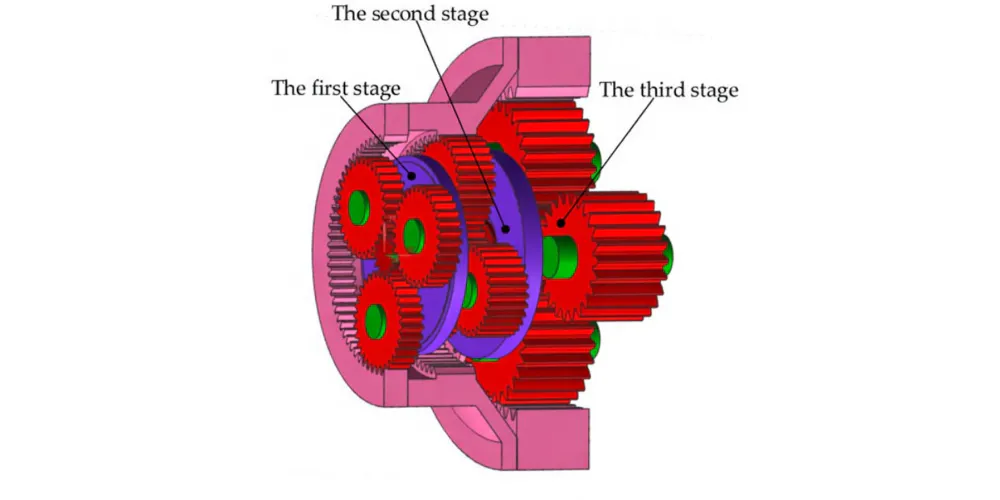
The pitch drive planetary gearbox operates on the epicyclic gear principle. At its core, a sun gear — connected to the pitch motor shaft — meshes with three or four evenly spaced planet gears. These planets orbit the sun gear while simultaneously engaging the internal teeth of a fixed ring gear (annulus). The planet carrier, which holds the planet-gear axles, constitutes the output member and drives the blade-bearing pinion gear. This arrangement delivers a significant speed reduction in a compact radial envelope.
Because multiple planet gears share the torque load simultaneously, the pitch drive planetary gearbox achieves a power density far superior to conventional single-mesh configurations. Each tooth-contact event displaces a fraction of the total torque, reducing instantaneous Hertzian contact stress and improving fatigue life. In a 3-planet arrangement, each gear mesh carries roughly one-third of the total output torque. Four-planet designs divide the load further, though manufacturing tolerances must be tighter to ensure equal load sharing among the planets.
During normal turbine operation, the pitch system makes slow angular corrections — typically ±5° to adjust for fluctuating wind conditions. During emergency stop, the same gearbox must feather the blade from an operating angle to 90° within a few seconds while the pitch motor draws current from the turbine’s backup battery or capacitor system. This dual-duty cycle — slow precise control plus rapid emergency actuation — defines the unique operating demands that every pitch drive planetary gearbox for wind turbine applications must accommodate.
3. Motion Mode · Structure Type · Manufacturing Method
Motion Mode
The gearbox transmits intermittent oscillatory rotation, not continuous unidirectional torque. During normal operation, the output shaft rotates within a limited angular range (typically ±90°). Emergency actuation demands rapid, high-torque angular displacement in one direction. The transmission must handle both micro-adjustment movements at very low speed (under 1 rpm) and faster emergency drives (up to 6–8 rpm output). The input shaft (sun gear side) runs at motor speeds — generally 1,000 to 1,500 rpm — requiring a large reduction ratio that the multi-stage planetary arrangement provides within a tight radial space dictated by the nacelle hub geometry.
Structure Type
Standard configurations are 2-stage or 3-stage inline planetary gear trains, often combined with a final spur or helical pinion to interface with the blade-bearing ring gear. The coaxial layout of the sun gear, planet gears, ring gear, and output carrier shaft keeps the assembly compact and perfectly balanced — essential for the limited space at each blade root. Some designs integrate a slewing-ring output for direct blade actuation, eliminating the separate pinion stage. Hollow-shaft output configurations are also common, allowing the pitch motor cable or locking pin to pass through the gearbox center axis without external routing hardware.
Manufacturing Method
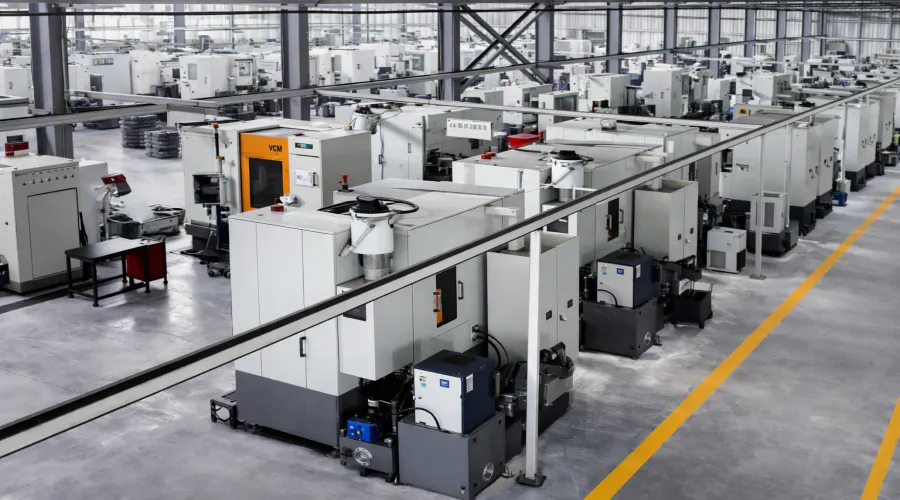
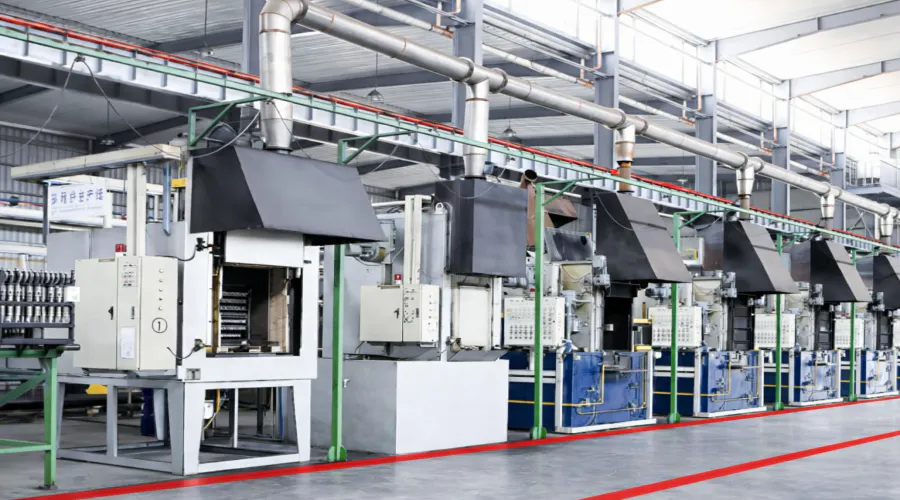
High-quality pitch drive gearboxes are manufactured via precision hobbing and profile grinding for all load-bearing tooth flanks. Gear blanks are typically forged — not cast — to achieve fine-grained microstructure and higher fatigue limits. Planet carriers are machined from solid steel billets or precision castings and then jig-bored to micron-level bore alignment. Assembly is performed in temperature-controlled environments, with gear lapping or running-in cycles to ensure smooth meshing before shipment. Full-load acceptance testing on dedicated test benches — measuring torque, vibration signature, temperature rise, and oil leakage — is standard practice for wind-grade components.
4. Material System · Surface Treatment · Environmental Grade
Material System
Sun gears and planet gears are commonly produced from 18CrNiMo7-6 or 20MnCr5 case-hardening steel, both recognized in ISO 6336 and AGMA standards as high-capacity gear materials. Ring gears are typically made from 42CrMo4 through-hardened alloy steel, valued for its dimensional stability under cyclical loading. Planet carriers and output flanges are machined from EN-GJS-700-2 ductile iron or forged structural steel (S355J2 / 42CrMo4), offering the impact toughness needed during emergency feathering. Bearings are exclusively from premium manufacturers (SKF, Schaeffler, NSK, or equivalent), specified to ISO class P5 or better for the planetary positions most prone to wear.
Surface Treatment
Tooth flanks of sun and planet gears receive case carburizing and case hardening (CHD 0.8–1.4 mm typical), followed by precision profile grinding to achieve surface roughness Ra ≤ 0.8 µm. This process delivers a surface hardness of 58–62 HRC with a tough, lower-hardness core. For offshore or coastal deployments — conditions directly relevant to La Guajira, Colombia — the external housing and carrier faces receive zinc phosphate conversion coating plus epoxy primer and two-coat polyurethane topcoat (minimum 240 µm DFT), meeting ISO 12944 corrosion category C4/C5-M. Exposed fasteners are hot-dip galvanized or stainless steel. Bearing seats are treated with anti-fretting compound on assembly.
Environmental Grade
The pitch drive gearbox housing must achieve at minimum IP65, with IP66 or IP67 preferred for coastal installations. Sealing solutions typically combine radial lip seals at shaft exits with static O-ring face seals at cover joints, plus breather valves equipped with moisture-absorbing desiccant cartridges to handle internal pressure cycling. For cold-climate variants (relevant for high-altitude Andean installations or northern markets), low-temperature bearings with cold-rated synthetic lubricant are specified, enabling reliable cold-start down to –40°C. For hot-climate Colombia deployments, the thermal design is validated at sustained ambient temperatures up to +50°C without exceeding the 90°C oil sump limit. The complete assembly meets IEC 61400-4 environmental durability requirements.
5. Operating Conditions for Pitch Drive Gearboxes
The operating environment of a pitch drive planetary gearbox is among the harshest of any mechanical power transmission device. Inside the hub of a modern multi-megawatt wind turbine, temperatures fluctuate seasonally and diurnally, vibration is ever-present from aerodynamic blade forces, and the entire assembly rotates with the rotor. The gearbox must cope with asymmetric loading from blade gravity bending moments, gyroscopic forces from yaw maneuvers, and the shock torque of grid faults or emergency stops.
Load Reversal Frequency
Thousands of direction-change cycles per year from wind gusts and active pitch regulation
Peak Torque Events
Emergency feathering can impose 2–3× rated torque for 1–5 seconds; design must accommodate without tooth damage
Temperature Swing
Hub internal temperatures may range –20°C to +70°C depending on geography and season
Lubrication Regime
Low-speed high-load mixed to elastohydrodynamic lubrication; oil film thickness critical at tooth contact
Vibration & Shock
IEC 61400-4 defines specific vibratory load spectra; housing and mount points must damp resonant excitation
6. Technical Parameters — Pitch Drive Planetary Gearbox (Reference Specification)
The table below presents representative technical parameters for a typical pitch drive planetary gearbox applied in a 2–6 MW class wind turbine. Specific values vary with rated turbine power, blade diameter, and site conditions. Custom configurations are available on request to match project-specific requirements.
7. Five Key Product Advantages
01 · High Torque Density
The multi-planet load-sharing design concentrates substantial output torque within a housing footprint small enough to fit the constrained hub space at the blade root — without sacrificing fatigue life or reliability. Compared with a parallel-shaft reducer of equivalent output torque, the planetary configuration is typically 30–40% lighter and 25–35% more compact in radial profile.
02 · Fatigue Life Optimized for Cyclic Loading
Every gear tooth is carburized, hardened, and precision-ground to minimize stress concentrations. The load spectrum used in design calculations follows IEC 61400-4 Annex D, ensuring the tooth root and flank fatigue lives are validated against the actual load distribution a pitch gearbox experiences across a 20-year site mission — not generic industrial duty cycles.
03 · All-Climate Adaptability
Configurations spanning –40°C to +80°C operating ranges cover onshore Colombia’s tropical coast, the hot deserts of the Caribbean, the cold highlands of the Andes, and equally diverse international sites. The multi-tier sealing architecture and IP66-rated housing with anti-corrosion coatings protect against salt spray, dust ingress, and humidity — validated against ISO 12944 C5-M corrosion category.
04 · Precision Angular Control
With backlash as low as 3 arcmin in the precision configuration and torsional stiffness up to 6,500 Nm/arcmin, the gearbox ensures that blade position commands from the turbine controller are executed with negligible angular error. This directly translates to tighter power curve tracking, reduced blade fatigue loads from over-pitching, and improved annual energy production for the wind farm operator.
05 · Long Service Interval & Serviceability
Extended oil change intervals — up to 36 months in service with condition-monitoring oil analysis — reduce technician climbs and lower total cost of ownership. The modular housing design allows bearing replacement without removing the gearbox from the blade hub, a significant advantage when working at hub height. All wear-critical parts — sun gear, planet gears, ring gear — are available as stocked spare components, ensuring rapid turn-around for pitch drive gearbox repair service in Colombia and across the region.
8. Typical Failure Modes & Root Causes
Understanding how pitch drive gearboxes fail in the field is as important as specifying the correct unit initially. Real-world failure data collected across multiple wind farms — including studies from European and Latin American installations — identifies the following as the most frequently encountered failure modes in wind turbine pitch gearboxes. Addressing these through proper specification, installation, and maintenance is the foundation of a reliable wind turbine pitch gearbox replacement strategy.
9. Recommended Configuration
Selecting the right pitch drive planetary gearbox involves balancing gear ratio, torque rating, environmental protection class, output interface geometry, and service strategy. The following configuration recommendations are intended as a starting framework for wind turbine OEMs, EPC contractors, and O&M procurement teams — particularly those working on onshore projects in Colombia’s La Guajira region, where combination of high wind loads, coastal humidity, and high ambient temperatures creates a particularly demanding envelope.
For 2–3 MW Class Turbines
Recommended: 3-stage planetary gearbox, gear ratio i = 36:1 to 64:1, rated output torque 20,000–60,000 Nm, IP66 housing, synthetic PAO ISO VG 320, hollow-shaft output with integrated pinion stub. Bearing brand: ISO class P5, C3 clearance. Anti-corrosion coating per ISO 12944 C4. Suitable for onshore La Guajira installations.
For 4–6 MW Class Turbines
Recommended: 3-stage planetary gearbox with integrated slewing-ring output, gear ratio i = 64:1 to 80:1, rated output torque 60,000–130,000 Nm, IP67 housing with N₂ purge capability for condensation control. Premium synthetic oil with water contamination sensor. Bolt-on brake module for static blade-hold in extreme gusts. All carbon steel parts hot-dip galvanized or coated per C5-M. Custom configurations available for specific OEM nacelle envelopes.
Retrofit / Replacement Scenario
For wind turbine pitch gearbox replacement Colombia operations on aging turbines (5–15 year old fleet), a direct-fit replacement gearbox matching the original OEM bolt pattern and output pinion module is the most cost-effective solution. Upgrading to a higher IP rating and improved seal design during replacement is strongly recommended to extend the mean time between maintenance events. Full technical data exchange and 3D envelope drawings facilitate seamless swap-out.

10. Application Scenarios in the Wind Power Industry
Onshore Variable-Pitch Wind Turbines
The most widespread application for pitch drive planetary gearboxes. Each turbine blade requires one dedicated gearbox-motor assembly. Onshore turbines in Colombia’s La Guajira peninsula — operating under sustained high-velocity trade winds and tropical coastal conditions — benefit from gearboxes designed with reinforced corrosion protection and extended oil maintenance intervals. The pitch drive planetary gearbox here acts as the primary safety component: if the blades cannot feather, the turbine cannot shut down safely in over-speed events, making reliability the non-negotiable design criterion.
Offshore Wind Turbines (Caribbean Coast)
Colombia’s offshore wind resource potential along the Caribbean coastline — estimated at 109 GW, with approximately 50 GW concentrated in La Guajira — is beginning to attract OEM and EPC investment following the government’s 2023 Offshore Wind Round. Offshore pitch drive gearboxes face more demanding environmental conditions than their onshore counterparts: continuous salt-laden spray, limited maintenance access, and longer intervals between service visits. IP67/IP68 housings, stainless steel fasteners, and integrated remote oil condition monitoring are standard requirements for offshore pitch drive planetary gearbox for wind turbine configurations in these environments.
Wind Farm Repowering Projects
As Colombia’s original demonstration wind farm (Jepírachi, installed in 2004) has reached end-of-life, and as the first generation of commercial wind projects enters their second decade, repowering — replacing aging turbines with modern, higher-capacity machines — is becoming a growing market segment. Repowering often uses new-generation turbines with larger blades and higher rated power, requiring updated pitch drive gearboxes with higher torque ratings and more advanced sealing. Pitch drive gearbox spare parts La Guajira sourcing and supply chain logistics are a key consideration for repowering project planners.
O&M / MRO Services
Wind farms operating for 10 or more years accumulate wear on pitch system components. The pitch drive gearbox is among the components most frequently flagged during condition-monitoring reviews, where vibration analysis (typically via IEC 61400-21 or AGMA 6006 diagnostic criteria) detects gear mesh degradation or bearing defect signatures. A structured pitch gearbox overhaul contractor Colombia service capability — including on-site disassembly, inspection, component replacement, and re-assembly with proper torque sequences and lubrication refill — extends turbine operating life and defers the cost of full replacement.
High-Altitude Andean Wind Projects
While La Guajira dominates Colombia’s current wind energy pipeline, Andean ridgeline and plateau sites in departments such as Boyacá, Cundinamarca, and Nariño present additional wind resource opportunities. At elevations above 3,000 m, reduced air density requires blade pitch adjustment to operate efficiently across a wider angle range, placing additional duty cycles on the pitch drive gearbox. Lower ambient temperatures also require verified cold-start capability. Custom pitch drive planetary gearbox configurations for these sites combine cold-climate bearing specifications with the high-torque output needed for longer, heavier blades designed for low-density air conditions.
11. Regulatory Framework: Colombia & International Standards
Wind turbine components — including pitch drive planetary gearboxes — are subject to multiple layers of regulation and certification requirements. These span national energy legislation, technical design standards, and equipment certification protocols. Engineers and procurement teams in Colombia must navigate this landscape carefully to ensure that gearbox specifications are compliant with all applicable frameworks, particularly as the regulatory environment for renewable energy continues to evolve rapidly.
Colombia — National Legislation
Law 1715 of 2014: The foundational framework for non-conventional renewable energy in Colombia. Establishes the regulatory basis for promoting solar, wind, and other renewables. Equipment used in certified renewable energy projects may qualify for income tax deductions, VAT exemptions, and customs duty relief on imported components not locally produced — a significant cost advantage for wind turbine pitch gearbox replacement Colombia projects using imported precision gearboxes.
Law 2099 of 2021 (Energy Transition Law): Extends and strengthens the incentives of Law 1715. Income tax deductions of up to 50% of total investment value over 15 years (Art. 11). VAT exemption for eligible equipment (regulated by UPME Resolution 319 of 2022). Accelerated depreciation up to 33.33% annually. These provisions directly reduce the total cost of deploying wind turbines with premium-specification pitch drive components.
Law 2294 of 2023: Increases the mandatory energy transfer payments from projects located in high-wind-speed areas (average speed >4 m/s at 10 m height), which includes all of La Guajira. Projects over 10 MW must transfer 1% of gross energy sales to project-area municipalities and communities (rising over time). Proper turbine reliability — supported by high-quality pitch gearboxes — directly impacts the financial performance underlying these transfer obligations.
CREG Resolution 75 of 2021 & UPME Resolution 528 of 2021: New generation projects must submit connection and physical availability studies to UPME. Reliability and certified equipment specifications are reviewed as part of these studies.
International Technical Standards
IEC 61400-4:2012 — Wind Turbines, Part 4: Design Requirements for Wind Turbine Gearboxes: The primary international standard governing the design, manufacturing, inspection, and documentation of all gearbox types used in wind turbines, including pitch drives. Specifies load case calculations, material requirements, fatigue analysis methods, and quality assurance procedures. Compliance with IEC 61400-4 is expected by all major wind turbine OEMs and is frequently mandated by project lenders and certification bodies.
ISO 6336:2019 — Calculation of Load Capacity of Spur and Helical Gears: The underlying gear strength calculation standard referenced in IEC 61400-4. Methods B and C of ISO 6336 are used to verify tooth root bending fatigue life and flank surface durability for all planetary gear meshes.
AGMA 6006-A03 (American Gear Manufacturers Association): US companion standard for wind turbine gearbox design. Widely referenced by North and South American project developers and OEMs, including those entering Colombia’s emerging offshore wind market.
DNV-GL (now DNV) Certification: Global type certification authority for wind turbines. DNV’s certification process includes audit of gearbox manufacturing facilities and design review. A pitch drive planetary gearbox with DNV-GL certification provides additional assurance to project finance providers and insurance underwriters.
ISO 12944 — Corrosion Protection of Steel Structures: Governs the anti-corrosion coating system for gearbox external surfaces. Category C4 applies to most onshore La Guajira installations; C5-M covers coastal or near-offshore environments.
IEC 60529: Defines IP protection levels for enclosures. All pitch drive gearboxes for wind turbines should meet at minimum IP65; IP66 or higher is recommended for coastal and offshore Colombian applications.
12. About Us
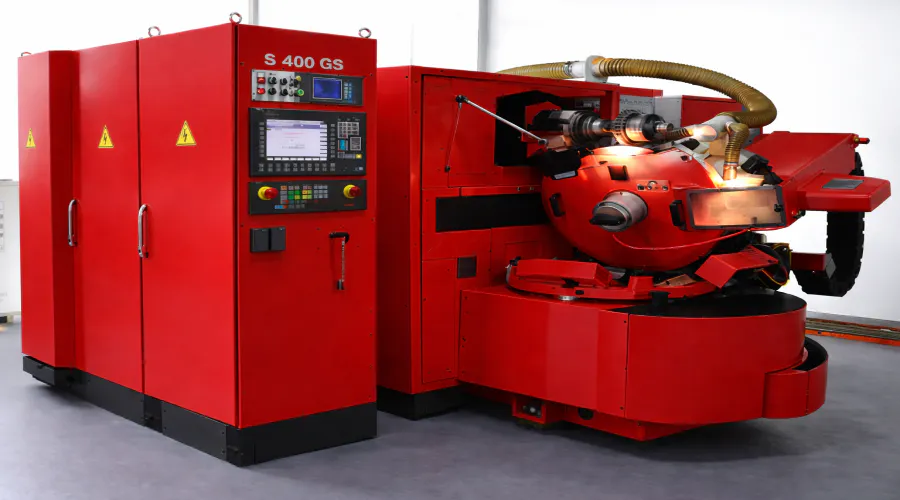
We are a specialized manufacturer of precision planetary gearboxes serving the renewable energy, industrial automation, and heavy equipment sectors. With decades of engineering experience in gear transmission technology, our production facilities are equipped with high-precision CNC gear hobbing and grinding machines, coordinate measuring systems, and dedicated test benches capable of full-load acceptance testing at rated torque and speed. Our quality management system is certified to ISO 9001, and our products are engineered in compliance with IEC 61400-4, ISO 6336, and AGMA 6006 requirements for wind turbine applications.
Our pitch drive planetary gearbox series for wind power covers output torques from 8,000 Nm to over 160,000 Nm, accommodating turbines from 1 MW to beyond 6 MW in rated capacity.
Workshop
13. Related Products: Complete Pitch Drive System
The pitch drive planetary gearbox performs best as part of a matched drive system. We also manufacture precision reducers and pitch motors engineered specifically for wind turbine blade control, ensuring full mechanical and electrical compatibility within the same assembly envelope. Sourcing the complete pitch drive system from a single supplier eliminates interface-compatibility uncertainties, simplifies spare-parts logistics, and provides a single point of accountability for system-level performance guarantees.


Frequently Asked Questions
Editor: PXY