
Product Description
Product Description
| Ratio : | 3:1—-10000:1 | Backlash : | up to 6 arcmin |
| Output : | up to 2950N.m | Frame : | IB/IBR042-220 |
Output: Straight Tooth Integrated Output Shaft
Double support of deep groove ball bearing
IBR core feature
Structural feature
Reducer output planetary frame adopts integrated nut to eliminate axial clearance design, the front and back tapered roller bearing large span distribution and the whole box, forming a super integrated structure, to ensure the improvement of torsional rigidity and has a super strong radial bearing capacity and axial bearing capacity, using a processing process to complete, to ensure a very high coaxiality.
Gear ring of reducer adopts integral structure design.
Reducer gear ring, planetary frame, input shaft are made of 40Cr high-quality structural steel, hot forging process, so as to obtain higher material density, than the use of casting box, round steel, with higher strength, rigidity, toughness.
Gear characteristics
Real hard face spur gear, gear material is 20CrMnTi high quality alloy steel, after carburizing – grinding process processing, hardness up to HRC62, compared with ordinary steel 40Cr, 38CrMnTi surface nitriding treatment of gear has higher hardness, rigidity, toughness, wear resistance. The design and analysis technology of 3DSimulation is adopted to modify the tooth shape, tooth direction and follow the trimming, respectively, in order to reduce the noise of gear meshing and increase the service life of the gear train.
Application characteristics
Long span tapered roller bearing arrangement output integral planetary architecture, so that the product has strong radial bearing capacity and excellent axial bearing capacity, and has high rigidity. High precision applications, frequent start-stop and load changes are outstanding.
Installation Instructions
Precision planetary reducer – about installation
| Application: | Motor, Electric Cars, Machinery, Agricultural Machinery |
|---|---|
| Hardness: | Hardened Tooth Surface |
| Installation: | Vertical Type |
| Layout: | Coaxial |
| Gear Shape: | Conical – Cylindrical Gear |
| Step: | Single-Step |
| Samples: | US$ 195/Piece 1 Piece(Min.Order) | |
|---|
| Customization: | 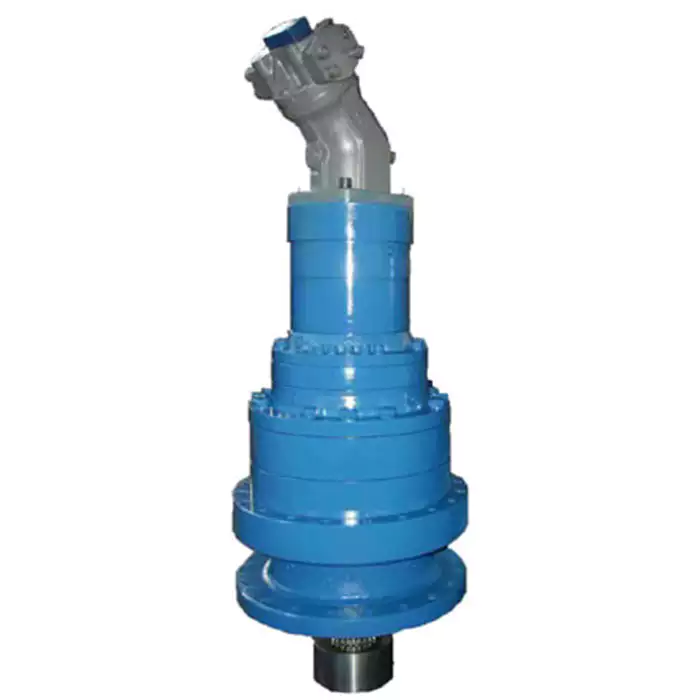 Challenges in Achieving High Gear Ratios with Compactness in Planetary GearboxesDesigning planetary gearboxes with high gear ratios while maintaining a compact form factor poses several challenges due to the intricate arrangement of gears and the need to balance various factors: Space Constraints: Increasing the gear ratio typically requires adding more planetary stages, resulting in additional gears and components. However, limited available space can make it challenging to fit these additional components without compromising the compactness of the gearbox. Efficiency: As the number of planetary stages increases to achieve higher gear ratios, there can be a trade-off in terms of efficiency. Additional gear meshings and friction losses can lead to decreased overall efficiency, impacting the gearbox’s performance. Load Distribution: The distribution of loads across multiple stages becomes critical when designing high gear ratio planetary gearboxes. Proper load distribution ensures that each stage shares the load proportionally, preventing premature wear and ensuring reliable operation. Bearing Arrangement: Accommodating multiple stages of planetary gears requires an effective bearing arrangement to support the rotating components. Improper bearing selection or arrangement can lead to increased friction, reduced efficiency, and potential failures. Manufacturing Tolerances: Achieving high gear ratios demands tight manufacturing tolerances to ensure accurate gear tooth profiles and precise gear meshing. Any deviations can result in noise, vibration, and reduced performance. Lubrication: Adequate lubrication becomes crucial in maintaining smooth operation and reducing friction as gear ratios increase. However, proper lubrication distribution across multiple stages can be challenging, impacting efficiency and longevity. Noise and Vibration: The complexity of high gear ratio planetary gearboxes can lead to increased noise and vibration levels due to the higher number of gear meshing interactions. Managing noise and vibration becomes essential for ensuring acceptable performance and user comfort. To address these challenges, engineers employ advanced design techniques, high-precision manufacturing processes, specialized materials, innovative bearing arrangements, and optimized lubrication strategies. Achieving the right balance between high gear ratios and compactness involves careful consideration of these factors to ensure the gearbox’s reliability, efficiency, and performance. Available | Customized Request |
|---|
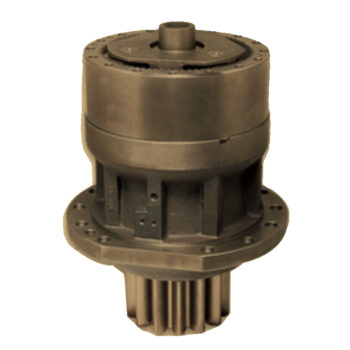
Common Applications and Industries of Planetary Gearboxes
Planetary gearboxes are widely utilized across various industries and applications due to their unique design and performance characteristics. Some common applications and industries where planetary gearboxes are commonly used include:
- Automotive Industry: Planetary gearboxes are found in automatic transmissions, hybrid vehicle systems, and powertrains. They provide efficient torque conversion and variable gear ratios.
- Robotics: Planetary gearboxes are used in robotic joints and manipulators, providing compact and high-torque solutions for precise movement.
- Industrial Machinery: They are employed in conveyors, cranes, pumps, mixers, and various heavy-duty machinery where high torque and compact design are essential.
- Aerospace: Aerospace applications include aircraft actuation systems, landing gear mechanisms, and satellite deployment mechanisms.
- Material Handling: Planetary gearboxes are used in equipment like forklifts and pallet jacks to provide controlled movement and high lifting capabilities.
- Renewable Energy: Wind turbines use planetary gearboxes to convert low-speed, high-torque rotational motion of the blades into higher-speed rotational motion for power generation.
- Medical Devices: Planetary gearboxes find applications in medical imaging equipment, prosthetics, and surgical robots for precise and controlled motion.
- Mining and Construction: Planetary gearboxes are used in heavy equipment like excavators, loaders, and bulldozers to handle heavy loads and provide controlled movement.
- Marine Industry: They are employed in marine propulsion systems, winches, and steering mechanisms, benefiting from their compact design and high torque capabilities.
The versatility of planetary gearboxes makes them suitable for applications that require compact size, high torque density, and efficient power transmission. Their ability to handle varying torque loads, offer high gear ratios, and maintain consistent performance has led to their widespread adoption across numerous industries.


editor by CX 2023-08-17