
In the metallurgical industry, strip gauge accuracy defines everything downstream. Whether a hot strip mill is producing structural steel coil for Colombian construction markets or a cold reversing mill is rolling electrical sheet for transformer lamination, the gap between the upper and lower work rolls — the roll gap — must be controlled to within fractions of a millimeter at rolling forces that can exceed 30 MN. The mechanical system responsible for adjusting and locking that gap is the screw-down mechanism, and at the center of every modern screw-down drive sits a right angle planetary gearbox that has to translate motor torque into massive axial thrust on the adjustment screw with minimal backlash and maximum structural rigidity.
This article examines the role of the right angle planetary gearbox specifically within rolling mill screw-down applications: how the gearbox is mechanically integrated into the mill housing, what demands the screw-down duty cycle places on its components, which failure modes are most commonly encountered in service, and how a well-specified unit is configured to achieve the service life that steelmaking economics demand. The content is relevant to mechanical engineers at steel plants, rolling mill OEM designers, and procurement engineers evaluating right angle planetary gearbox supplier Colombia options for new mill installations or rehabilitation projects on existing stands.
Product data referenced draws on precision gearbox specifications from the industrial drive market. Where standard catalogue dimensions do not cover a specific rolling mill requirement, custom-engineered configurations are available — a practical reality in an industry where no two mill stands are dimensionally identical and where the consequences of a wrong specification are measured in unplanned shutdown hours costing thousands of dollars per hour of lost production.
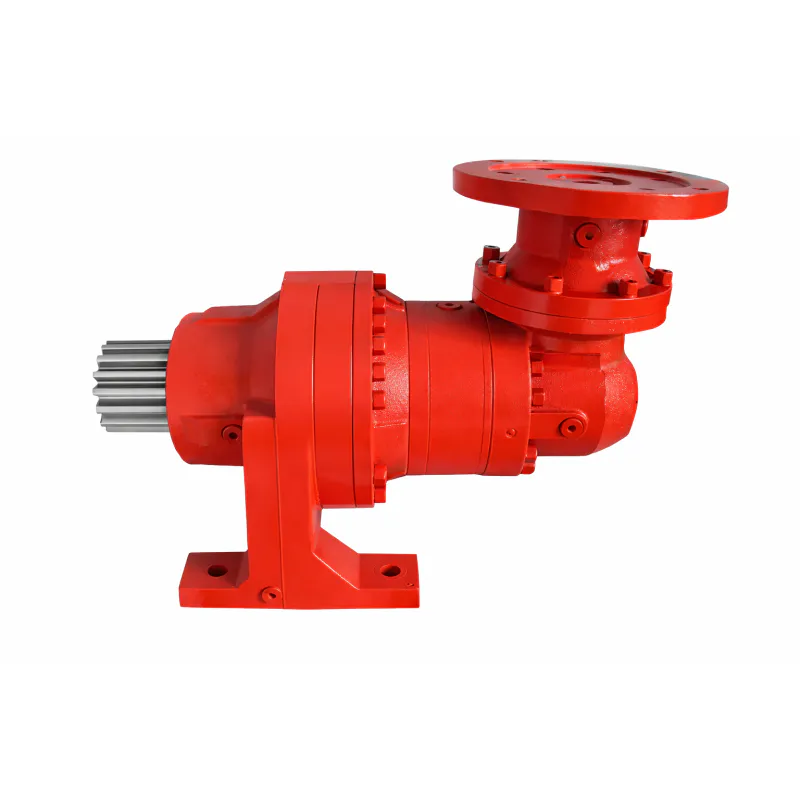
1. Application Context: Rolling Mill Screw-Down Mechanism
The screw-down mechanism in a flat rolling mill serves two distinct functions: coarse position adjustment during pass schedule setup and fine dynamic correction during rolling. In electromechanical screw-down systems — which have largely replaced the hydraulic capsule systems in new-build roughing stands and many finishing stands — a pair of screw-down units, one on the operator side and one on the drive side of the mill, each drive a vertical adjustment screw that raises and lowers the upper work roll chock. The screws are large-diameter, steep-pitch acme or trapezoidal thread forms in the 180 to 400 mm diameter range, designed to convert rotary input into the axial thrust needed to overcome the full rolling force plus the weight of the upper roll assembly.
The drive motor is mounted horizontally on the mill housing side structure — a deliberate layout decision that frees the overhead space above the mill stand for the overhead crane that performs work roll changes. Between the horizontal motor shaft and the vertical screw shaft sits the right angle planetary gearbox, providing both the 90-degree direction change and the speed reduction ratio required to match motor speed to screw drive speed. In most hot strip mill finishing stands, the screw-down motor runs at 600 to 1,500 RPM while the screw requires only 2 to 15 RPM for adjustment, implying overall drive ratios in the 50:1 to 200:1 range. A two-stage right angle planetary gearbox satisfying both the space constraint and the torque amplification requirement is the standard engineering solution for this application.
The importance of this drive system to production continuity is not abstract: a screw-down gearbox failure on a finishing stand in a continuous hot strip mill stops the entire rolling line. Recovery time, including crane operations to access the gearbox mounting, disassembly of the coupling to the screw, and installation of a replacement unit, typically runs 8 to 16 hours at minimum — a shutdown interval that in a high-production plant represents a very significant financial impact. This context explains why mill operators specify gearboxes with large torque safety margins, conservative service factors, and material quality standards substantially above what would be adequate for general industrial applications.
2. Motion Architecture: How the Right Angle Planetary Gearbox Works in Screw-Down Service
Power enters the gearbox through the input flange, which is coupled to the screw-down motor via a flexible disc or gear coupling that accommodates the thermal expansion misalignment inherent in a hot rolling environment. The input shaft drives the sun gear of the first planetary reduction stage. Three or four planet gears, symmetrically arranged and each engaging both the sun gear and a fixed internal ring gear, rotate on their axis pins while orbiting the sun on the planet carrier. For a first stage with a 5:1 ratio, an input speed of 1,200 RPM produces a carrier output of 240 RPM. The load sharing across three or four simultaneous mesh points is the key torque density advantage of planetary geometry — each planet gear carries approximately one-third or one-quarter of the total torque, keeping tooth contact stress within the material fatigue limit at a fraction of the housing volume that a parallel-axis equivalent would require.
The second planetary stage, if present, further reduces the 240 RPM carrier output to the final pre-bevel speed. A second 5:1 stage brings the speed to 48 RPM entering the bevel gear head. The spiral bevel pinion and ring gear pair at the output redirects this rotation through 90 degrees onto the vertical output shaft, which connects directly to the screw-down adjustment screw via a flanged coupling or a splined engagement. In a 2:1 bevel stage, the final output is 24 RPM — within the typical screw drive speed range for hot strip mill finishing stands.
What makes this duty cycle particularly demanding on the right angle gear drive is the nature of the loading. During actual rolling, the screw-down screws are locked against rotation while carrying the full rolling force reaction. The gearbox is therefore subjected to prolonged static torque loading — far exceeding what a typical duty cycle analysis based on running hours would indicate. During dynamic gap corrections, the gearbox must transition from static lock to controlled rotation and back within fractions of a second, generating impact torque transients at the bevel gear mesh and at the planet carrier pin bearings that can reach 3 to 4 times the rated torque for brief durations. Specifying the right angle planetary gearbox to the sustained torque only — without accounting for these impact peaks — is the single most common specification error in screw-down drive engineering.
3. Structural Types for Rolling Mill Screw-Down Service
Two-Stage Planetary + Spiral Bevel Output
The standard configuration for most rolling mill screw-down applications. Two planetary reduction stages provide the bulk of the ratio, with a spiral bevel output stage providing the 90-degree direction change. The spiral bevel is preferred over hypoid geometry in screw-down service because the zero-offset bevel mesh generates lower axial thrust on the bevel pinion shaft bearings under the shock loading typical of screw reversal events. Suitable for hot and cold strip mill finishing stands in the 2,000 to 4,500 mm strip width range.
Three-Stage Planetary + Bevel for High-Ratio Applications
When the required overall ratio exceeds approximately 100:1 and the input speed is above 1,200 RPM — common in roughing stand screw-down drives where the motor runs at full speed for fast pass gap changes — a three-stage planetary arrangement before the bevel head achieves ratios up to 400:1 within an acceptable housing envelope. The additional planetary stage increases the torsional stiffness of the drive, which benefits screw position accuracy during dynamic gap corrections in closed-loop automatic gauge control systems.
Heavy-Duty Forged Steel Housing Configuration
For the largest rolling mill applications — plate mill screw-down drives, heavy section mill stands, and roughing mill screw-down drives where the axial thrust force on the screw can exceed 15 MN — the standard aluminium or ductile iron housing is replaced by a fabricated or forged steel housing. These units are essentially bespoke engineered assemblies rather than catalogue products. The forged steel housing provides the housing wall stiffness needed to maintain bearing alignment under the reaction moments generated when the screw contacts the roll chock at an angular offset — a condition that occurs routinely in worn mill housings.
4. Technical Working Principle: Torque Path and Axial Thrust Generation
Understanding the complete torque and force path through a screw-down right angle planetary gearbox requires tracking not just the rotary power flow but also the reaction forces generated at each mesh point and bearing location. In a rolling mill environment, these reaction forces are substantial and are the root cause of most premature component failures when the gearbox is incorrectly specified or maintained.
At the input, the motor applies a torque T_input at the sun gear. The planet gears convert this into a torque at the carrier equal to T_input multiplied by the stage ratio, minus the small friction losses at the gear teeth and planet pin bearings. At full rated load, the tangential force at the planet gear tooth face generates a radial reaction force on each planet pin that must be carried by the needle roller or cylindrical roller bearing on that pin. In a correctly designed heavy-duty screw-down gearbox, these planet pin bearings are designed for a dynamic rating life (L10h) of at least 50,000 hours under the rated load — substantially more than the 20,000 hours typical in lighter-duty servo applications.
At the bevel output stage, the spiral bevel mesh generates three force components simultaneously: tangential force driving the output shaft, axial thrust force along the pinion shaft axis, and radial separating force perpendicular to both. The axial thrust on the bevel pinion shaft is reacted by a pair of preloaded angular contact ball bearings or tapered roller bearings — the selection depends on the ratio of axial to radial load at the operating point. In screw-down service with intermittent shock loading, tapered roller bearings in an X or O arrangement are generally preferred because their line contact geometry distributes shock loads more effectively than point-contact angular contact ball bearings, and their preload can be restored in the field by shim adjustment without bearing replacement.
The output shaft of the gearbox connects to the screw-down adjustment screw through a floating-type flanged coupling that accommodates axial thermal growth of the screw (which can reach 15 to 25 mm on a hot strip mill in full production) without transmitting bending moments back into the gearbox output shaft. This coupling design detail is frequently overlooked in retrofit installations where an existing coupling is reused, and the resulting bending load on the output shaft is a significant contributor to output shaft seal failure and output bearing fatigue.
5. Technical Performance Parameters — Right Angle Planetary Gearbox (Rolling Mill Screw-Down Series)
The following 22 parameters reflect typical specification values for a right angle planetary gearbox configured for rolling mill screw-down duty in the medium to heavy category. Values correspond to a two-stage planetary plus bevel unit in the 200 to 320 mm housing size range. Custom configurations outside these parameters are available on request.
| Parameter | Specification / Value |
|---|---|
| Housing Size Range | 200 / 250 / 320 / 400 mm (output flange diameter) |
| Overall Ratio Range (i) | 50:1 – 400:1 (two to three planetary stages + bevel) |
| Rated Output Torque | 8,000 – 85,000 Nm (size dependent) |
| Peak Torque (emergency stop / jam) | 3.0 – 3.5 × rated torque (5-second duration) |
| Rated Input Speed | 600 – 1,500 RPM (motor dependent) |
| Output Shaft Speed (screw drive) | 2 – 20 RPM (ratio and motor speed dependent) |
| Transmission Efficiency (overall) | ≥ 90% (two-stage + bevel, rated load) |
| Backlash (angular play at output) | ≤ 15 arcmin standard; ≤ 8 arcmin precision option |
| Torsional Stiffness | 80 – 600 Nm/arcmin (size dependent) |
| Output Shaft Radial Load (max) | 15,000 – 80,000 N (size dependent) |
| Output Shaft Axial Load (max) | 8,000 – 45,000 N (size dependent) |
| Output Shaft Dimensions | Ø80 × 140 mm to Ø160 × 280 mm (keyed or splined) |
| Housing Material | Ductile iron GGG-50 (standard); forged steel (heavy duty) |
| Gear Material | 18CrNiMo7-6 / 20CrMnTi alloy steel, carburized and ground |
| Gear Surface Hardness | HRC 58 – 62 (tooth face); HRC 35 – 42 (core) |
| Planet Pin Bearings | Full needle roller or cylindrical roller, L10h ≥ 50,000 hr |
| Bevel Output Bearings | Preloaded tapered roller (X or O arrangement) |
| Lubrication System | Forced oil circulation (standard); oil bath with splash for smaller units |
| Lubricant Specification | ISO-L-CKD 220 / 320 synthetic gear oil (EP additive) |
| Operating Temperature Range | −5°C to +110°C continuous (oil cooling option above +70°C ambient) |
| Protection Class (IP) | IP65 standard; IP67 option for water and scale spray environments |
| Service Life (design) | ≥ 50,000 hours at rated load; ≥ 10 years in standard rolling mill duty |
All configurations listed can be produced as custom-engineered solutions. If your mill stand requires non-standard housing dimensions, a specific screw shaft interface, or an output braking arrangement integrated into the gearbox assembly, contact our engineering team for a tailored specification and quotation.
6. Manufacturing Structure & Quality Standards
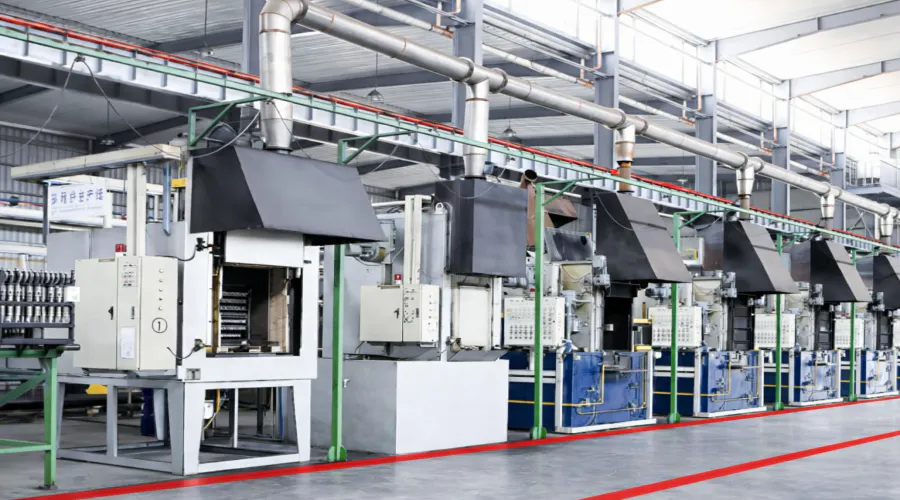
Rolling mill gearbox manufacturing differs from standard industrial gearbox production in the scale of components and the severity of the qualification testing required. Gear blanks for screw-down planetary gearboxes start as forgings — not castings and not bar stock — because the structural integrity of the finished gear tooth under the shock loading of screw reversal events requires the continuous grain structure that only hot forging can guarantee. Blanks are forged from 18CrNiMo7-6 or 20CrMnTi alloy steel billets, then normalized and stress-relieved before rough machining to bring residual stresses in the forging to acceptable levels before final machining operations.
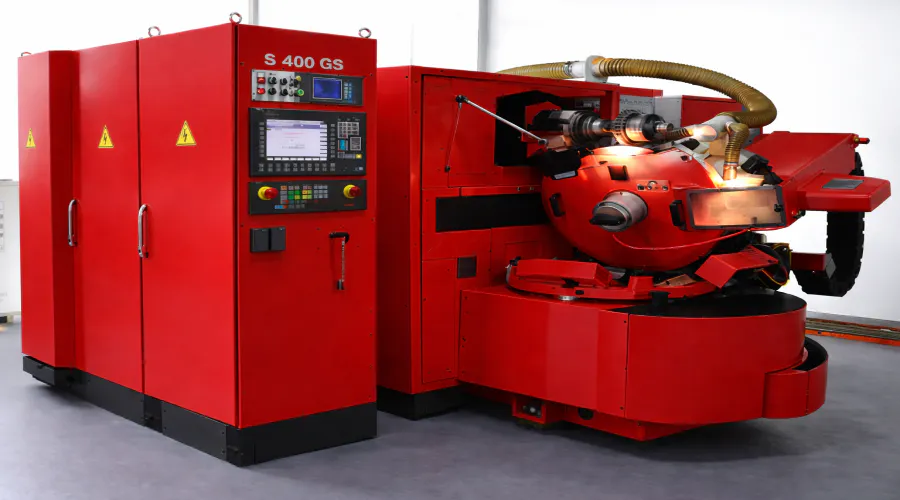
Gear cutting proceeds through hobbing or grinding, depending on the tooth module. Large-module planet and ring gears (module 8 to 16, typical for this application range) are hobbed to a preliminary form and then finish-ground on a CNC gear grinding machine after carburizing and hardening. The grinding operation is critical: distortion from the carburizing cycle can produce profile and pitch errors at the 10 to 20 micron level before grinding, which must be reduced to the 3 to 5 micron range to meet ISO 1328 Grade 5 or Grade 4 accuracy required for low-noise, long-life heavy-duty service. Bevel gear sets are ground as matched pairs and then lap-tested to verify contact pattern coverage and noise level before being accepted for assembly.
Planet carrier bores are machined on a dedicated coordinate boring machine after the carrier is heat-treated and artificially aged. The positional tolerance for planet pin holes on a heavy-duty carrier — typically ±0.005 mm on 250 mm bolt circle diameters — cannot be achieved on standard machining centers and requires the thermal stability of a temperature-controlled precision boring environment. Final assembly is conducted in a controlled area, and every completed screw-down gearbox undergoes a full-load test run at a test bench that can simulate the actual screw torque and reversal shock conditions before the unit is released for shipment. Test records including vibration signature, temperature rise, oil pressure (in forced lubrication systems), and backlash measurement are provided with each unit as part of the delivery documentation package.
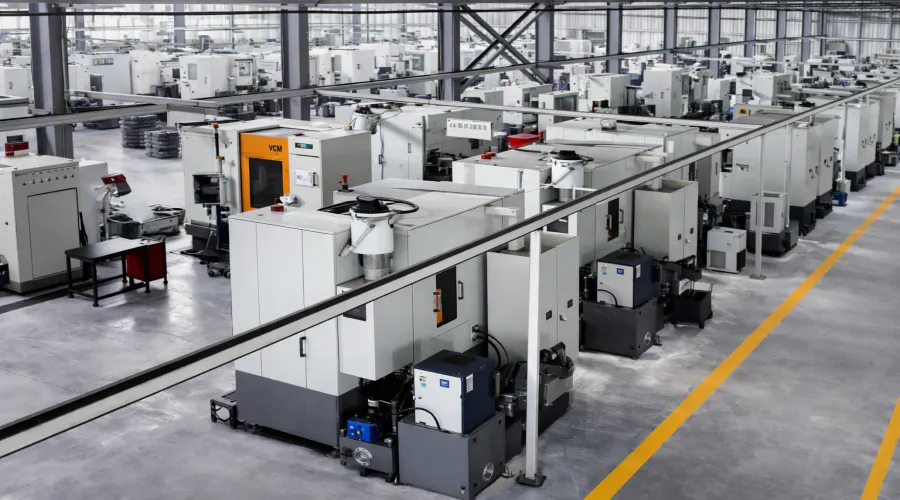
7. Material System: Standard Industrial vs. High-Performance Rolling Mill Grade
| Component | Standard Industrial Gearbox | Rolling Mill Screw-Down Grade |
|---|---|---|
| Housing | Grey cast iron GG-25, as-cast bearing bores | Ductile iron GGG-50 or forged steel; all bores precision-bored post heat treatment |
| Sun Gear | 40Cr induction hardened, hobbed to Grade 8 | 18CrNiMo7-6 forged blank, carburized, ground to Grade 4–5; module ≥ 8 |
| Planet Gears | 42CrMo, hobbed, moderate case depth | 18CrNiMo7-6, forged, carburized to 1.0–1.5 mm case depth, ground; set-matched |
| Ring Gear | 42CrMo, broached, no post-hardening grind | 42CrMo or 20CrMnTi, through hardened or carburized, internal tooth profile ground |
| Bevel Gear Set | Cast steel, spiral cut, not lapped as pair | 18CrNiMo7-6 forged, carburized, ground and lapped as matched pair; contact pattern verified |
| Planet Carrier | Cast iron, standard tolerance pin bores | Forged steel or ductile iron; pin bores jig-bored to ±0.005 mm after heat treatment |
| Planet Pin Bearings | Deep groove ball bearings, standard clearance | Full complement cylindrical roller or heavy-duty needle roller; inner race integral with pin |
| Output Shaft | 45# carbon steel, standard tolerance | 34CrNiMo6 alloy steel; normalized and tempered; ground bearing seats to IT5 tolerance |
| Output Shaft Seal | NBR lip seal, single lip | FKM (Viton) double-lip seal with steel garter spring; labyrinth groove backup in housing |
| Fasteners | Grade 8.8 zinc-plated bolts | Grade 10.9 or 12.9 alloy steel bolts; zinc-nickel plated; torque-certified on assembly |
8. Surface Treatment for Hot Rolling Mill Environments
The external environment of a hot rolling mill is arguably the most hostile combination of corrosion drivers that any industrial gearbox faces: high-temperature water scale spray used for descaling passes, steam generated at the work roll water-cooling headers, iron oxide scale particles of sub-100 micron size carried in the water and air flow, and lubricating oil mist from the roll bearing lubrication system. Any external surface treatment applied to a screw-down gearbox must perform against all of these simultaneously for the service intervals between planned maintenance shutdowns — which in continuous casting and rolling operations can extend to six months or longer.
The standard external finish for ductile iron screw-down gearbox housings is a two-coat system: a zinc-rich epoxy primer applied to a blast-cleaned surface profile of Sa 2.5 per ISO 8501-1, followed by a high-build polyurethane or epoxy topcoat. The total dry film thickness target is 200 to 250 microns, providing salt-spray resistance above 1,000 hours per ASTM B117 — substantially more than the 500-hour specification used for standard industrial equipment. For forged steel housings, the primer is supplemented with a phosphate conversion coating on the bare steel surface before priming, which provides a corrosion inhibiting base layer that the primer alone does not deliver.
Oil seals in hot rolling environments must contend with elevated ambient temperatures ranging from 50°C to 90°C near the mill stand, combined with water spray. FKM (Viton) elastomers retain their elastic properties and sealing lip geometry up to 200°C continuous service temperature, compared to the 100°C practical limit of NBR. The double-lip seal design with an internal labyrinth groove adds a secondary barrier against water ingress when the gearbox housing temperature cycles below the dewpoint during mill shutdowns — a condition that drives moisture directly past a single-lip seal under the vacuum created by thermal contraction of the internal gas volume.
Internal gear surfaces receive a manganese phosphate conversion coating after all machining operations are complete and before assembly. This treatment serves as a break-in wear surface that prevents adhesive scoring during the initial lubrication film establishment period — particularly important in forced-circulation oil systems where full oil film pressure takes several seconds to build after a cold start following an extended planned shutdown.
9. Environmental Rating & Operating Conditions
IP65 is the minimum practical ingress protection specification for any screw-down gearbox in a hot strip mill environment. The dust rating (first digit 6 = fully dust-tight) addresses the fine iron oxide scale and refractory dust generated by the rolling process. The water rating (second digit 5 = protected against water jets from any direction) is the minimum needed for the high-pressure descaling spray that typically operates at 150 to 250 bar and generates a significant water mist cloud around the mill stand during descaling passes. In some hot strip mill configurations where water rundown from the mill housing top structure reaches the screw-down area, IP67 (temporary immersion resistant) is specified.
The thermal environment in hot rolling is characterized by high ambient radiant heat rather than the convective heat typical of enclosed plant rooms. The gearbox housing surface exposed to the rolled strip and work roll area can reach 60 to 80°C by radiation even when the gearbox internal temperature is maintained at acceptable levels by the forced oil cooling system. For this reason, the oil cooling circuit specification must be based on the peak ambient radiant heat condition — typically end-of-summer or high-capacity rolling campaigns — rather than on the average yearly ambient temperature. At a Colombian steel facility operating in lowland areas where ambient air temperatures reach 35°C, the effective thermal environment near a hot strip mill finishing stand can exceed 70°C local ambient, driving the need for an oil-to-water cooler on the gearbox lubrication circuit to maintain oil viscosity within specification.
10. Five Key Advantages for Rolling Mill Screw-Down Drive Service
1. Extreme Torque Density in Constrained Mill Frame Space
The planetary staging of a high torque right angle planetary gearbox delivers 8,000 to 85,000 Nm output torque within housing envelopes that would be impossible to achieve with parallel-axis gear trains. In a rolling mill housing where the screw-down gearbox must fit between the mill housing columns without obstructing the roll change path, this compactness directly enables the side-mounted motor arrangement that modern mill designs rely on.
2. 90-Degree Output Frees Overhead Crane Access
The 90-degree gear transmission arrangement allows the drive motor to mount horizontally on the mill housing side while the output shaft drives the vertical screw. This is not a convenience feature — it is a prerequisite of mill operations. The overhead crane that services work rolls must have unobstructed vertical access to the roll chocks. Any drive arrangement that places components above the mill stand centerline is operationally unacceptable in a production environment.
3. High Torsional Stiffness for Precise Gauge Control
Automatic gauge control (AGC) systems on modern rolling mills operate with position correction cycles in the 20 to 50 millisecond range. The drive system compliance — which includes gearbox torsional stiffness — appears as a dead band in the AGC feedback loop. A right angle planetary gearbox with torsional stiffness of 200 to 600 Nm/arcmin achieves a compliance contribution small enough that the AGC system can operate at its designed correction bandwidth without drive train compliance degrading strip gauge accuracy.
4. Forced Oil Circulation for Thermal Stability
At output torques above 20,000 Nm, heat generation within the gearbox during extended rolling campaigns exceeds what convective cooling of the housing exterior can manage. Integrated forced oil circulation — with an external oil-to-water cooler — maintains sump temperature within the viscosity specification of the gear oil throughout the rolling campaign, preventing the viscosity reduction that leads to thin film lubrication, elevated contact temperature, and accelerated gear tooth pitting in the high-load zone of the screw-down duty cycle.
5. Compatibility with Existing Mill Drive Standards
Rolling mill rehabilitation projects — particularly common in Colombian and Latin American steel plants upgrading older imported mill stands — require replacement gearboxes that match the existing screw-thread interface geometry, housing mounting bolt pattern, and motor coupling flange dimensions of the original equipment. Our engineering team works from dimensional drawings of the existing gearbox to develop replacement units that are dimensionally interchangeable without modifications to the mill housing structure, reducing the installation time during planned maintenance shutdowns to the minimum achievable.
11. Operating Condition Characteristics in Screw-Down Service
Screw-down duty is fundamentally different from continuous running applications and from even the cyclic duty of paper transport or conveyor drives. The gearbox alternates between three distinct mechanical states within a single rolling pass sequence. In the first state — before rolling contact — the screw is repositioned at high speed (maximum output RPM) to set the pass schedule gap, with the gearbox operating at rated torque or below. In the second state — during the rolling pass — the screw is locked stationary while carrying the full rolling force axial reaction through the screw thread and into the gearbox output shaft. In this state, the gearbox internal components carry static torque at a level that may equal or exceed the rated torque, with zero rotation, for the duration of the rolling pass — which in a roughing mill can be 30 to 90 seconds per pass.
The third state — the dynamic correction during active AGC operation in finishing stands — is the most mechanically demanding. The gearbox transitions from the second state to a controlled rotation, corrects the screw position by a fraction of a turn, and returns to the locked state, all within milliseconds. The acceleration torque during this transition generates the 3× to 4× peak torque multiples that the gearbox design must accommodate. The frequency of these transitions over a production campaign — potentially thousands per hour in a high-speed finishing stand — determines the fatigue loading that planet pin bearings and bevel gear teeth must sustain over the design service life.
The combination of prolonged static loading, high-cycle shock loading during AGC corrections, and the corrosive thermal environment places screw-down service firmly in the category of severe-duty applications that require service factors of 2.0 to 2.5 applied to the calculated torque when selecting gearbox rating. A gearbox specified at a service factor of 1.5 — adequate for many industrial applications — will typically exhibit premature planet pin bearing fatigue within 3 to 5 years of service in active AGC finishing stand service, compared to the 10-year or longer service life achievable with a properly derated specification.
12. Typical Failure Modes and Diagnostic Indicators
Planet Pin Bearing Fatigue
The most common failure mode in under-rated screw-down gearboxes. The combination of static loading during rolling passes and high-frequency impact loading during AGC corrections subjects planet pin bearings to a complex fatigue cycle that static bearing life calculations based on continuously rotating load underestimate significantly. Early symptoms include a subtle periodic noise at the planet rotation frequency during screw traversal — often masked by mill process noise and therefore diagnosed late. Confirmation requires vibration analysis at the planet carrier frequency during a controlled no-load traverse test. When roller surface spalling begins, metallic particles appear in the oil filter element within days.
Bevel Gear Flank Pitting
Bevel gear tooth pitting in screw-down service typically initiates at the tooth root of the bevel ring gear, on the coast-side flank — the side loaded during the deceleration phase of AGC corrections. The impact torque reversal from driven to coast condition at the gear mesh creates a brief period of involuntary double-sided loading that exceeds the tooth root stress limit if the bevel set is operating at or near its nominal torque rating during the correction event. Detection via ferrographic oil analysis showing angular bevel tooth fragments, combined with a distinctive broadband noise increase at the bevel mesh frequency, allows intervention before catastrophic tooth failure.
Output Shaft Seal Failure and Lubricant Loss
In hot rolling environments, FKM output shaft seals degrade faster than their design life when the sealing lip contacts water contamination in the oil — a condition caused by mill cooling water reaching the gearbox output shaft entry point through defective water deflectors on the screw housing. Water-contaminated oil forms an emulsion that disrupts the hydrodynamic film at the seal lip, causing accelerated groove wear on the shaft surface. Once a wear groove is established, even a new seal fails within weeks. The solution is both seal replacement and shaft journal restoration via thermal spray or hard chrome plating followed by precision grinding — a repair best scheduled during a planned roll change rather than as an emergency response.
Housing Bore Fretting and Bearing Seat Wear
In older mill stands where housing structural stiffness has degraded due to fatigue micro-cracking in the mill housing columns, the reaction moment from the screw axial load is transmitted to the gearbox housing via the mounting flanges in a cyclic manner that causes micro-slip at the outer bearing race seating bores. This fretting generates a fine oxide powder that accelerates the bore growth, eventually allowing the bearing outer race to spin — a failure mode that destroys the housing bore and the bearing simultaneously. Periodic inspection of bearing outer race seating torque (checked by attempting to rotate the outer race with a torque wrench during planned shutdowns) provides early warning of fretting progression.
Ring Gear-to-Housing Fit Loosening
The ring gear in a screw-down planetary gearbox is typically pressed and pinned into the housing bore. Under the cyclic tangential force reversals of AGC operation — particularly in the presence of housing bore fretting — the interference fit can relax over time. Ring gear micro-rotation generates a distinctive grinding noise at the ring gear pitch frequency, distinct from planet or bevel mesh noise, and is detectable by placing a dial indicator on the ring gear during a controlled reversal test. Restoration requires disassembly, bore line-boring to true, and fitting of an oversized ring gear with restored interference — a workshop repair that requires 3 to 5 days of planned downtime.
13. Regulatory Framework: Metallurgical Equipment Standards by Region
Steel plant machinery, including rolling mill screw-down drive systems, operates within a layered regulatory environment that spans occupational safety law, machinery design standards, and environmental management requirements. For Colombian steel producers importing gearboxes or retrofitting drive systems, understanding which standards apply at which stage of procurement avoids compliance delays and limits liability exposure during accident investigations.
Colombia (ICONTEC / Ministry of Labour Resolution 0312 / NTC Standards): Colombia’s Resolution 0312 of 2019, which establishes minimum occupational health and safety standards, applies to industrial machinery operation in steelmaking facilities. For power transmission equipment, the applicable Colombian technical standards include NTC 981 (mechanical transmission components — general safety requirements) and NTC 2050 (electrical code for industrial installations, relevant to gearbox-associated motor drives). Rolling mill machinery imported into Colombia must be accompanied by conformity documentation that confirms the equipment meets the safety requirements of the machinery directive or equivalent; CE marking from EU-manufactured equipment is the most commonly accepted credential. ICONTEC’s alignment with ISO standards means that gearboxes designed to ISO 6336 (gear strength), ISO 281 (bearing life), and ISO 9001 (quality management) are generally accepted as meeting Colombian technical requirements.
European Union (CE / Machinery Directive 2006/42/EC / ATEX where applicable): Rolling mill gearboxes placed on the EU market as part of a complete machine assembly require CE marking of the complete machine under the Machinery Directive. The relevant harmonized standards for heavy industrial gearboxes in this context are EN ISO 12100 (risk assessment and risk reduction), EN 61000 series (electromagnetic compatibility for associated drives), and AGMA/ISO gear design standards referenced in the technical file. For installations in areas classified under ATEX Directive 2014/34/EU — relevant in facilities where combustible gas or dust is present alongside the rolling equipment — gearbox housings and associated equipment must meet the appropriate equipment category and zone classification.
United States (OSHA / AGMA Standards): OSHA 29 CFR 1910.217 and 1910.212 govern guarding requirements for mechanical power transmission in production environments. For rolling mill gearbox specification, the AGMA 6014 standard (gear power ratings for cylindrical shell and trunnion supported equipment) and AGMA 6013 (standard for industrial enclosed gear drives) provide the gear design and rating basis most widely used by North American mill builders. AGMA quality grades 10 through 12 correspond to ISO 1328 accuracy Grade 4 through Grade 5, providing a translation reference when evaluating gearbox quality specifications.
Brazil (ABNT / NR-12): Brazil’s Norma Regulamentadora NR-12 (safety of machinery and equipment) is the primary workplace safety compliance requirement for rolling mill installations in Brazilian steelworks. NR-12 mandates risk assessment documentation, safeguarding of all power transmission components, and emergency stop system requirements. ABNT NBR 14153 (safety of machinery — distances for guarding) and ABNT NBR ISO 13857 provide the specific technical criteria for guarding design. For Colombian steel producers exporting equipment to Brazil or procuring Brazilian-built equipment, NR-12 compliance documentation from the equipment manufacturer is a requirement of the purchase contract in most institutional procurement frameworks.
ISO International Standards: ISO 6336 (calculation of load capacity of spur and helical gears) and ISO 10300 (calculation of load capacity of bevel gears) are the calculation standards most directly applicable to gearbox gear design verification in rolling mill service. ISO 281 governs bearing rating life calculation. ISO 11328-1 defines gear accuracy grades for cylindrical gears; ISO 17485 covers bevel gear accuracy. ISO 9001:2015 quality management certification from the gearbox manufacturer is the baseline quality assurance credential expected by all major steel producers in procurement audits.
14. Recommended Configuration for Rolling Mill Screw-Down Applications
Service Factor and Torque Rating
Apply a service factor of 2.0 to 2.5 to the calculated sustained torque to arrive at the gearbox rated torque for specification purposes. For finishing stands with active AGC, use 2.5. For roughing stands with infrequent gap changes and no dynamic corrections, 2.0 is generally adequate. This is not over-specification — it is the service factor required to achieve the 10-year service life that rolling mill economics demand between major rebuilds.
Lubrication System Selection
For output torques above 20,000 Nm: specify forced oil circulation with an external oil-to-water cooler sized for the peak heat rejection at maximum AGC cycle frequency. For smaller units below 20,000 Nm in roughing stand service: splash lubrication with an oversized oil volume (1.5× the minimum fill level) is acceptable for the lower cycle frequencies involved. In both cases, specify synthetic EP gear oil ISO-L-CKD 320 for hot rolling environments where sump temperature routinely reaches 80°C.
Housing Material and IP Rating
Specify ductile iron GGG-50 housing as the minimum for all rolling mill gearboxes. Specify forged steel for output torques above 50,000 Nm or for installations where the gearbox mounting arrangement concentrates bending reactions in the housing wall. IP65 is the minimum ingress protection; specify IP67 for locations in the scale pit area or for installations where water rundown from the mill housing structure reaches the gearbox during rolling.
Output Coupling and Thermal Expansion
Always specify a floating-type output coupling between the gearbox and the adjustment screw. The coupling must accommodate at least 20 mm axial displacement (thermal growth of the screw during a rolling campaign) and angular misalignment of at least 1° without transmitting bending moment to the gearbox output shaft. A gear-type floating coupling or a cardan shaft with two universal joints achieves this; a rigid flanged coupling is never acceptable in hot rolling screw-down service.
For the right angle planetary gear drive torque Colombia market and Andean region customers at steel and flat product mills, our engineering team provides on-site application assessment, dimensional survey of existing equipment, and full specification development as part of the technical support process for both new installations and rehabilitation projects. See our full planetary gearbox product range including heavy-duty configurations, or review our custom gearbox engineering capability for non-standard rolling mill applications.
15. Application Scenarios Across Metallurgical Rolling Operations
Hot Strip Mill Finishing Stand Screw-Down
The highest-demand application in the category. Finishing stand screw-down drives operate under continuous AGC correction at cycle rates of 10 to 50 corrections per minute throughout each coil rolling sequence. The gearbox endures the highest combination of shock frequency and thermal load. A 90 degree planetary gearbox heavy duty configuration with forced oil cooling, IP67 housing, and forged gear components is the appropriate specification for 4-high and 6-high finishing stands in hot strip mills producing strip for the Colombian construction and automotive sheet markets.
Cold Reversing Mill Screw-Down
Cold rolling screw-down drives operate at lower temperatures than hot rolling but at much higher precision requirements — cold strip gauge tolerances are typically three to five times tighter than hot strip tolerances. The right angle planetary gearbox in cold rolling service must combine low backlash (≤8 arcmin) with high torsional stiffness to support the AGC position loop bandwidth needed for cold strip gauge control on thin gauge material. The absence of water spray and scale reduces the housing protection requirement, though cutting oil mist still argues for at least IP54 housing protection.
Roughing Mill Stand Screw-Down
Roughing mill screw-down drives handle the highest rolling forces — frequently exceeding 50 MN on the largest roughing stands — and require the highest output torque ratings. AGC correction frequency is much lower than in finishing stands, and the primary duty is accurate gap setting between passes rather than dynamic correction during rolling. This allows a somewhat higher backlash specification (≤15 arcmin) while the torque rating must be maximized. The right angle gear drive manufacturer specification for roughing mill service focuses on sustained torque capacity, shock resistance, and service life rather than low backlash.
Plate Mill Screw-Down
Plate mills roll discrete plates rather than continuous strip, and their screw-down drives operate in the most shock-intensive environment of any flat rolling application. Each rolling pass starts with the plate entering the roll bite — an impact event that transmits a torque spike through the entire drive train. The gearbox must absorb these entry impacts at full rolling force, typically twice per plate per pass, for thousands of plates per production campaign. Specifying a service factor of 2.5 and a peak torque rating of 3.5× sustained torque is necessary for acceptable service life in plate mill screw-down service.
Section and Bar Mill Pass Line Adjustment
Beyond flat rolling, section mills and bar mills use screw-driven pass line adjustment on the horizontal and vertical roll housing to set the pass schedule for profile sections. These drives are lower in torque than flat rolling screw-down systems but require reliable positional repeatability across multiple stands in a tandem arrangement. A compact right angle planetary gearbox in the 115 to 200 mm frame range, with a precision backlash specification, provides the combination of accurate positioning and sufficient torque for this application in Colombian long product mills and rebar mills serving the construction sector.
WorkShop

16. Related Drive System Components
A rolling mill screw-down drive system is a complete electromechanical assembly, not just a gearbox. The gearbox interfaces at one end with a motor — typically a DC or AC variable frequency drive motor — and at the other end with the screw mechanism and position measurement encoder. Specifying these components as a matched system, rather than procuring them independently, reduces integration risk and ensures that the torsional stiffness, inertia matching, and thermal characteristics are compatible across the full drive chain. We supply key components of the complete screw-down drive train to simplify procurement and provide single-source technical accountability.
Drive Motor (AC or DC)
Screw-down motors require a torque-speed characteristic matched to the gearbox input shaft rating and the thermal environment of the mill stand. Our motor range for rolling mill screw-down service includes foot-mounted and flange-mounted frame sizes with IP65 protection, forced-ventilation cooling for the sustained low-speed operation typical of AGC correction duty, and shaft dimensions pre-matched to the gearbox input flange coupling specifications. Motor performance data is characterized to the actual speed-torque curve rather than nominal ratings, enabling accurate service factor calculation for the specific screw-down duty cycle of your mill stand.

Inline Planetary Reducer (Auxiliary Drive Stages)
Where the required overall screw-down ratio exceeds what the standard two-stage right angle planetary configuration can achieve, an inline planetary reducer stage at the motor output provides the additional reduction before the right angle bevel stage. Using our inline reducer series — which shares the same gear material specification, bearing quality standard, and housing protection rating as the right angle gearbox — ensures that the inline stage does not become the weakest link in the drive chain. Dimensionally, the inline reducer mounts directly to the right angle gearbox input flange without external adapter brackets, keeping the drive assembly compact within the mill housing space constraints.

Frequently Asked Questions
Q1. How does a right angle planetary gearbox actually work in a rolling mill screw-down drive system?
The gearbox receives horizontal input from the screw-down motor, steps the speed down through two or three planetary gear stages — each stage multiplying the torque while reducing the speed — and then redirects the output through 90 degrees via a spiral bevel gear pair at the output end. The vertical output shaft connects to the adjustment screw, which translates the rotary input into vertical movement of the upper roll chock. The planetary staging provides the very high torque capacity needed to drive the screw against full rolling force reactions, while the bevel stage provides the direction change without the space intrusion above the mill that any alternative drive arrangement would create. The result is a horizontal motor, a compact side-mounted gearbox, and full overhead crane access for roll changes.
Q2. When is it better to rebuild an existing screw-down gearbox versus sourcing a replacement right angle planetary gearbox for a Colombian steel plant?
The rebuild-versus-replace decision depends on the condition of the housing and the availability of replacement parts. If the housing bore has fretting damage at the bearing seats, the carrier pin bore tolerances have opened beyond the allowable limit, or the ring gear-to-housing fit has loosened, a rebuild that addresses only the gears and bearings will not restore the original backlash and stiffness specification — because the housing geometry is no longer correct. In these cases, a replacement gearbox is the more cost-effective solution over a 5-year horizon even if the initial cost is higher. If the housing is dimensionally sound and only the gear set and bearings have worn, a workshop rebuild using correctly specified replacement gears (verified material certificates, correct tooth profile grinding) and new bearings of the correct precision class can restore performance to as-new specification at a lower cost than replacement.
Q3. What planetary gearbox ratio is typically needed for a hot strip mill finishing stand screw-down drive?
Finishing stand screw-down ratios typically fall in the 80:1 to 200:1 range, depending on the motor speed and the required screw traversal speed for gap setting between passes. A motor running at 1,200 RPM with a required screw speed of 10 RPM implies a ratio of 120:1 — achievable in a two-stage planetary plus bevel configuration at ratios of approximately 5:1 × 5:1 × 4.8:1 = 120:1. For faster gap setting in roughing stands where the motor runs at 900 RPM and the screw speed may be 15 RPM for rapid pass changes, the ratio is 60:1. These calculations should always be verified against the actual screw lead and the required traversal rate per second for your specific pass schedule, as these vary significantly between mill designs.
Q4. Which right angle gear drive configuration works best for a cold reversing mill screw-down in a Colombian electrical steel plant?
Cold reversing mill screw-down service at a thin gauge electrical steel plant requires a precision right angle planetary gearbox with backlash below 8 arcmin and torsional stiffness above 200 Nm/arcmin to support the tight AGC position loop needed for ±3 to ±5 micron gauge tolerance. Material specification should include 18CrNiMo7-6 forged gear blanks with carburizing and precision grinding to ISO Grade 4 or better. IP54 is the minimum housing protection in the absence of water spray; an oil circulation lubrication system with a sump temperature thermostat and alert is recommended because cold rolling generates frictional heat that can exceed the splash lubrication capacity of smaller unit sizes at high AGC cycle frequencies.
Q5. What certifications should a right angle gear drive manufacturer provide for a metallurgical rolling mill gearbox supply to Colombia?
The minimum documentation package for a rolling mill screw-down gearbox delivery to a Colombian steel plant should include: ISO 9001:2015 quality management system certificate from the manufacturer, material test certificates for all gear components confirming chemical composition and mechanical properties to the specified alloy standard (18CrNiMo7-6 or equivalent), gear accuracy inspection report per ISO 1328 or ISO 17485 with individual measurements for each gear set, bearing selection calculation per ISO 281 demonstrating the L10h life at the specified operating load, assembly backlash measurement record, and full-load test run report including oil temperature rise curve, vibration amplitude at key mesh frequencies, and final backlash verification. Colombian import documentation requires a commercial invoice with HS code classification and a certificate of origin; technical documentation for customs clearance is best prepared in Spanish to avoid delays at DIAN inspection.
Q6. What are the early warning signs that a screw-down right angle gearbox is approaching failure in a hot rolling mill environment?
Four indicators are reliably predictive when monitored consistently. First, oil filter element metallic particle content — sample the filter bypass at each planned maintenance stop and trend the particle count. An increase in angular or flaky metallic particles indicates gear tooth surface fatigue initiation before any audible symptom appears. Second, vibration signature at the planet rotation frequency during controlled no-load traversal tests — a growing amplitude at this frequency indicates planet pin bearing development. Third, strip gauge deviation trends from the AGC system historian — increasing head-end gauge deviation or loss of AGC loop stability at previously acceptable gain settings indicates backlash growth in the screw-down gearbox drive. Fourth, visual inspection of the output shaft seal for lubricant weeping — a sign of seal degradation before lubricant loss reaches a level that causes gear or bearing damage.
Q7. How does a high torque right angle planetary gearbox compare to a worm gearbox for rolling mill screw-down drive applications?
Worm gearboxes are entirely unsuitable for rolling mill screw-down applications above approximately 5,000 Nm output torque, for three fundamental reasons. First, worm gear efficiency at high ratios is 40 to 65%, meaning 35 to 60% of the motor input power is converted to heat in the worm mesh — at screw-down torques of 20,000 to 50,000 Nm, the thermal load on the worm unit would be unmanageable without active cooling systems larger than the gearbox itself. Second, worm gearboxes self-lock under high axial load — which sounds useful but actually prevents the controlled screw reversals required for dynamic AGC corrections. Third, the lead bronze worm wheel material has insufficient fatigue strength for the shock loading of rolling mill service; worm wheel tooth failure in screw-down duty typically occurs within months. A right angle planetary gearbox achieves 90 to 94% efficiency, is not self-locking, and provides fatigue life measured in decades under correct service factor specification.
Q8. What type of lubrication system should I specify for a 90 degree heavy duty planetary gearbox on a hot strip mill finishing stand screw-down?
Forced oil circulation with an external oil-to-water heat exchanger is the correct specification for finishing stand screw-down gearboxes producing output torques above 20,000 Nm. The circulation pump should maintain a minimum flow rate of 8 to 15 liters per minute through the main gear mesh and bevel gear mesh spray nozzles, with a separate reduced-flow circuit for the planet pin bearing lubrication galleries in the carrier. The oil cooler should be sized to limit maximum sump temperature to 75°C at the peak thermal condition — full AGC cycle frequency, maximum rolling force, at worst-case ambient temperature. Specify ISO-L-CKD 320 synthetic EP gear oil with molybdenum disulfide additive package for the first fill, which assists break-in of the gear tooth surfaces during the first 200 hours of operation.
Editor: PXY