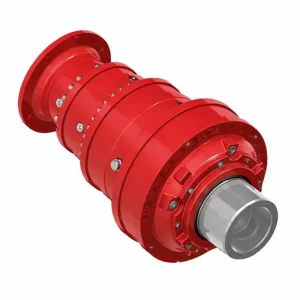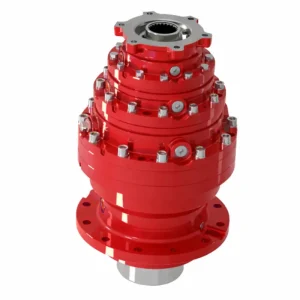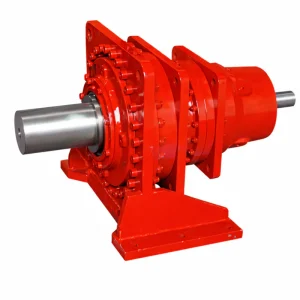
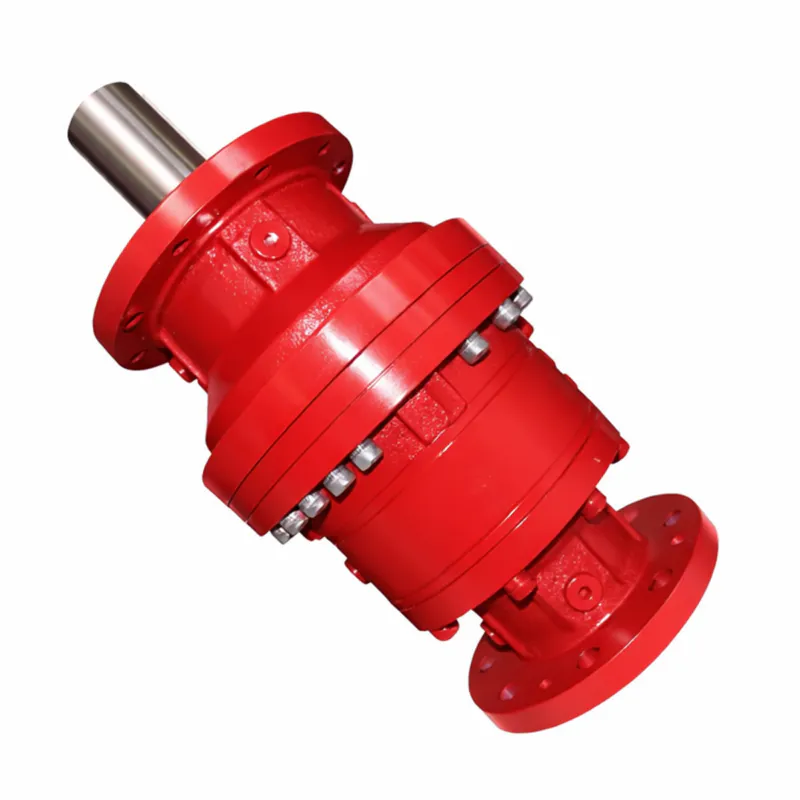
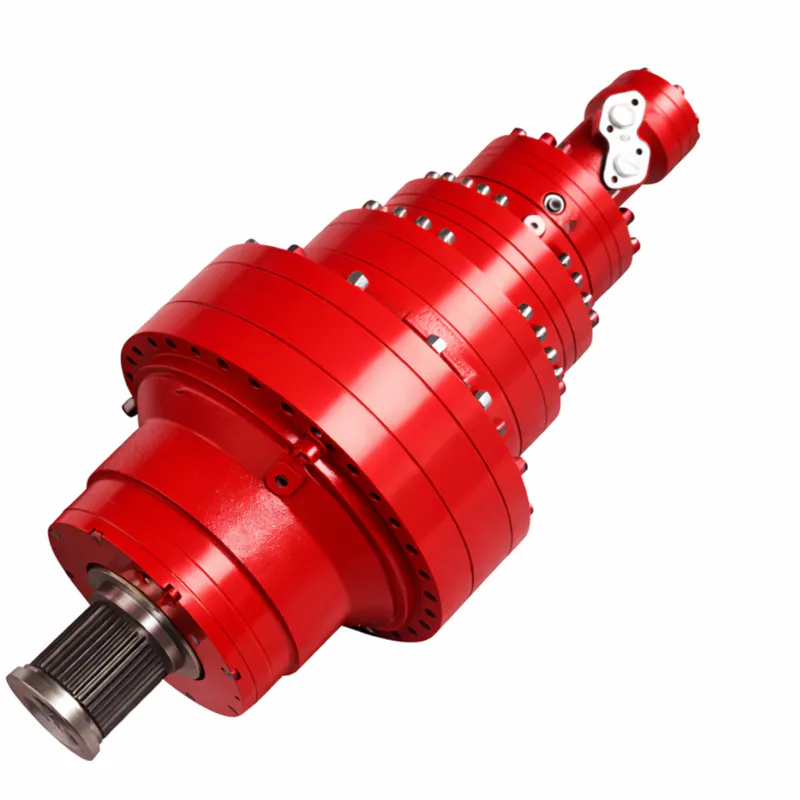
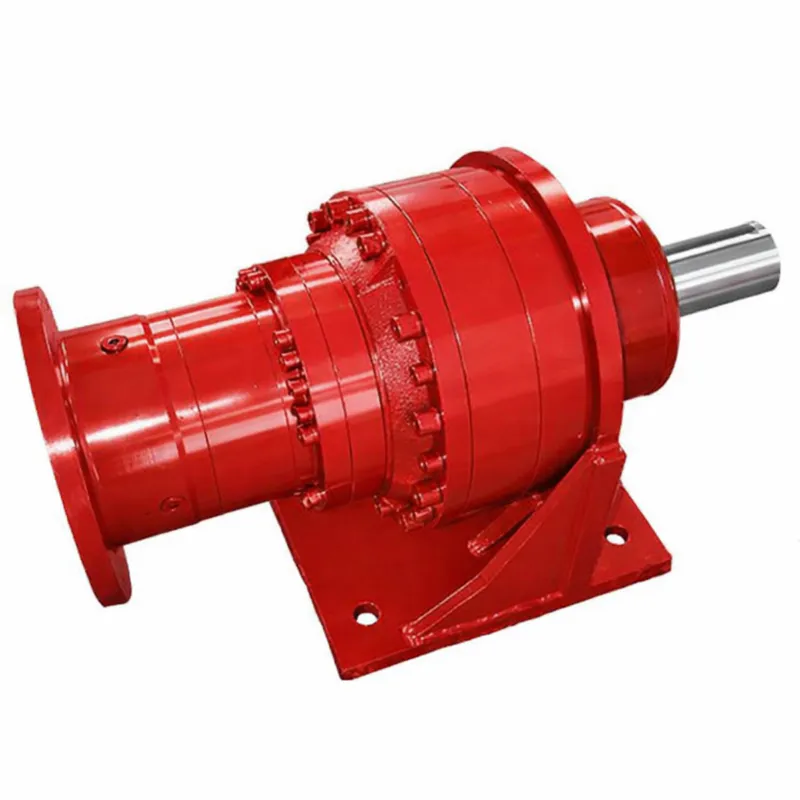
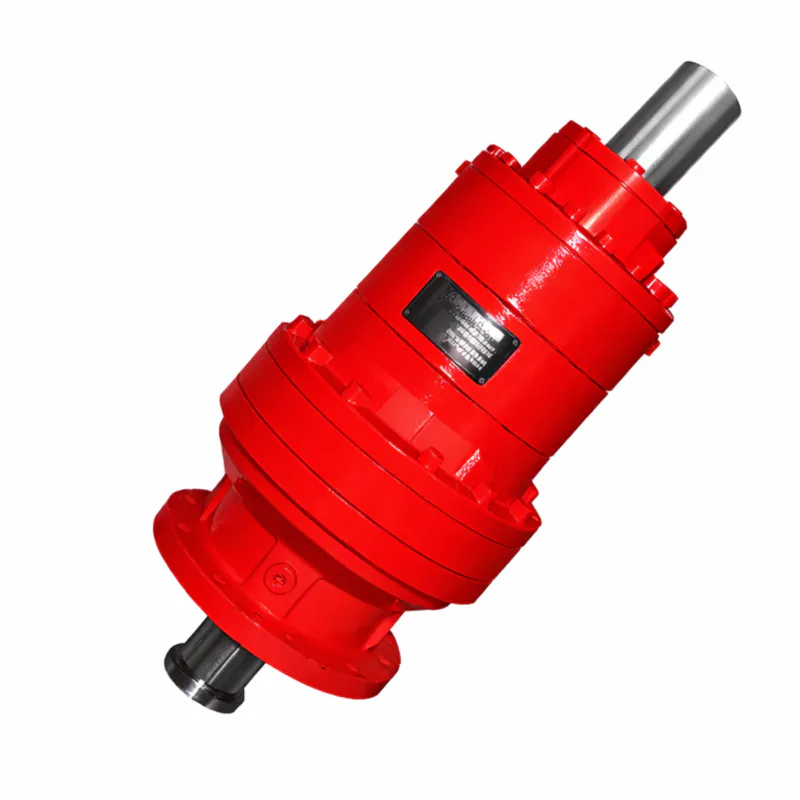
EP-Inline Planetary Gear Reducer
Input speeds up to 3,000 RPM are supported, covering the full range of standard 2-pole and 4-pole electric motors used in Colombian industrial and agricultural machinery.
The EP-Inline Planetary Gear Reducer is manufactured under an ISO 9001-certified quality management system. Gear geometry is calculated and verified to ISO 6336, the international standard for load capacity of spur and helical gears, which provides the engineering basis for acceptance by Colombian regulatory bodies and international export customers alike.
Input speeds up to 3,000 RPM are supported, covering the full range of standard 2-pole and 4-pole electric motors used in Colombian industrial and agricultural machinery.
The EP-Inline Planetary Gear Reducer is manufactured under an ISO 9001-certified quality management system. Gear geometry is calculated and verified to ISO 6336, the international standard for load capacity of spur and helical gears, which provides the engineering basis for acceptance by Colombian regulatory bodies and international export customers alike.
1. Technical parameters of the inline planetary speed reducer gearbox
| Tipo | Torque Nm | |
| EP300L | EP300L1, EP300L2, EP300L3, EP300L4 | 1000 |
| EP301L | EP301L1, EP301L2, EP301L3, EP301L4 | 1750 |
| EP303L | EP303L1, EP303L2, EP303L3, EP303L4 | 2500 |
| EP305L | EP305L1, EP305L2, EP305L3, EP305L4 | 5000 |
| EP306L | EP306L1, EP306L2, EP306L3, EP306L4 | 8500 |
| EP307L | EP307L1, EP307L2, EP307L3, EP307L4 | 12500 |
| EP309L | EP309L1, EP309L2, EP309L3, EP309L4 | 18000 |
| EP310L | EP310L1, EP310L2, EP310L3, EP310L4 | 25000 |
| EP311L | EP311L1, EP311L2, EP311L3, EP311L4 | 40000 |
| EP313L | EP313L1, EP313L2, EP313L3, EP313L4 | 55000 |
| EP315L | EP315L1, EP315L2, EP315L3, EP315L4 | 100000 |
| EP316L | EP316L1, EP316L2, EP316L3, EP316L4 | 135000 |
| EP317L | EP317L1, EP317L2, EP317L3, EP317L4 | 170000 |
| EP318L | EP318L1, EP318L2, EP318L3, EP318L4 | 250000 |
| EP319L | EP319L1, EP319L2, EP319L3, EP319L4 | 350000 |
| EP321L | 321L 1, 321L2, 321L3, 321L4 | 500000 |
| EP-Inline Planetary Gear Reducer Performance Parameter | Standard Range | Notes |
|---|---|---|
| Nominal Output Torque | 1,000 — 450,000 Nm | ISO 6336 rated at 10,000 h |
| Transmissible Power | Up to 540 kW | Standard catalogue; larger on request |
| Gear Ratio Range | 3.4:1 | Single to compound multi-stage |
| Max. Input Speed | 3,000 RPM | Direct motor coupling, no belt stage required |
| Mechanical Efficiency | >95% per stage | Helical planetary gear meshing |
| Operating Temperature | -20°C to +80°C | Standard mineral oil; synthetic for wider range |
| Reduction Stages | 1, 2, 3 planetary stages | Compound multi-stage for ratios >1,000:1 |
| Gear Unit Orientation | Inline (coaxial) standard | Right-angle bevel option available |
| Output Shaft Types | Solid keyed; splined; hollow with shrink disc | Custom profiles on request |
| Input Options | IEC motor adaptor; solid shaft; hydraulic motor flange | SAE hydraulic flanges available |
| Mounting Configurations | Flange; foot; shaft mount with torque arm | All orientations supported |
| Brake Options | DC/AC electromagnetic; hydraulic fail-safe | Negative (spring-applied) parking brake |
| Lubrication | Oil splash; forced oil (large); lifetime grease (small) | NSF H1 food-grade oil available |
| Gear Design Standard | ISO 6336 | Supports CE and AGMA documentation |
| Quality System | ISO 9001 certified | Full documentation package included |
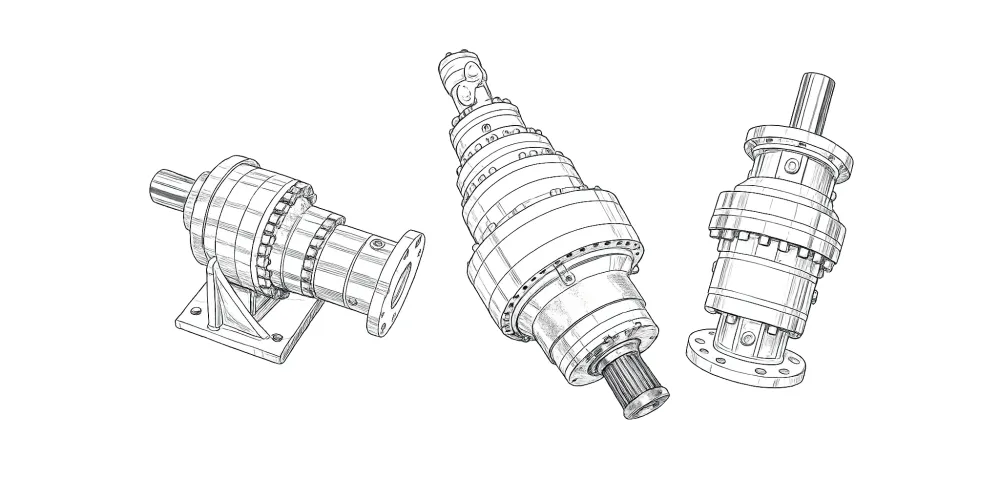
2. Five Key Advantages of EP-Inline Planetary Gear Reducer
01 — Coaxial Compactness with Maximum Torque Output
The inline (coaxial) shaft configuration means the motor, gearbox, and driven machine all align along one shared centerline, eliminating the housing bulge created by offset-shaft gear units. Despite this narrow profile, the EP-Inline's planetary load-sharing geometry can handle torques up to 450,000 Nm — a level that would require a much larger parallel-shaft unit. For Colombian OEMs designing compact equipment with restricted machine frames, this dimensional efficiency directly reduces steel structure weight and fabrication cost without sacrificing drivetrain performance.
02 — Multi-Stage Ratio
A single product platform covers gear ratios spanning three orders of magnitude. This span removes the need for procurement teams to source from multiple gearbox families or suppliers for different machines across a production facility, reducing qualification effort, spare-part complexity, and the supplier risk inherent in managing multiple product lines.
03 — Up to 540 kW Transmissible Power in a Single Unit
The EP-Inline Planetary Gear Reducer can transmit mechanical power up to 540 kW within its standard catalogue range — a level of power density that reflects the thermal and structural efficiency of the planetary architecture. High-power applications such as large conveyor main drives, heavy agitator systems, and industrial hoist mechanisms that previously required oversized helical gear trains can now be served by a compact, coaxially arranged planetary unit that occupies a fraction of the original installation volume while running cooler and quieter.
04 — Direct Hydraulic and Electric Motor Compatibility
The EP-Inline Planetary Gear Reducer accepts both electric motor inputs via IEC-normalized adaptor flanges and hydraulic motor inputs via standard SAE or metric bolt-circle flanges, making it a versatile solution for machines that operate from either grid-supplied electric power or mobile hydraulic circuits. This dual compatibility is particularly relevant in Colombian agro-industrial and mining equipment contexts, where machinery may need to function in locations without stable grid electricity and must rely on tractor hydraulics or diesel-hydraulic power packs for their primary drive energy.
05 — Integrated Brake and Accessory Ecosystem
Negative multi-disc parking brakes, torque arm mounting supports, backstop devices, and a comprehensive selection of motor adaptor flanges are all available as factory-fitted accessories on the EP-Inline Planetary Gear Reducer. This integrated accessory ecosystem means the gear reducer arrives at the installation site as a complete, pre-assembled subsystem rather than a collection of loose components requiring assembly and alignment by the end user. For Colombian maintenance teams managing tight installation schedules, this factory pre-assembly approach reduces commissioning time and eliminates a common source of field assembly errors.
3. How the EP-Inline Planetary Gear Reducer Works
The mechanical foundation of every inline planetary gear reducer is the epicyclic gear train, which uses three concentric rotating elements to achieve speed reduction through a coaxial housing. The central element is the sun gear, a small-diameter gear fixed to the input shaft and driven at motor speed. Surrounding the sun gear at equal angular intervals are the planet gears — usually three or four in number — each of which meshes with both the sun gear's external teeth and the ring gear's internal teeth. The ring gear is the outermost element, anchored to the housing so it cannot rotate. As the sun gear turns, it rolls the planet gears around the inside of the fixed ring gear; because the ring gear is stationary, the planet gears cannot simply spin on their own axes — they must orbit the sun gear. This orbital motion is captured by the planet carrier, a rigid structural assembly that holds all planet gear shafts. The planet carrier rotates as the planets orbit, and its shaft is the output of the first reduction stage.
The mathematical relationship governing the gear ratio of one planetary stage is: Ratio = (Ring Gear Tooth Count ÷ Sun Gear Tooth Count) + 1. A typical stage with a sun gear of 18 teeth and a ring gear of 72 teeth produces a ratio of (72 ÷ 18) + 1 = 5:1. For higher overall ratios, the EP-Inline Planetary Gear Reducer connects multiple such stages in series within a shared housing. The output planet carrier of stage one becomes the input to stage two's sun gear, and so on. Three stages in series with individual ratios of 5:1, 5:1, and 7:1 would yield an overall ratio of 5 × 5 × 7 = 175:1.
The load-sharing characteristic that defines the planetary format is worth understanding in practical terms. Consider a conventional single-mesh helical gear reducer: the entire transmitted torque passes through one pair of meshing teeth at a time, concentrating stress at a single contact zone. In the EP-Inline Planetary Speed Reducer Gearbox with three planet gears, each planet carries one-third of the total torque simultaneously. This parallel torque path is why the planetary format achieves such high torque density — the tooth contact stress per mesh is dramatically lower than in a single-mesh unit of equivalent torque rating. The symmetric distribution also produces balanced radial forces at the sun gear and planet carrier, minimizing shaft deflection and bearing wear.
4. Materials & Manufacturing Standards
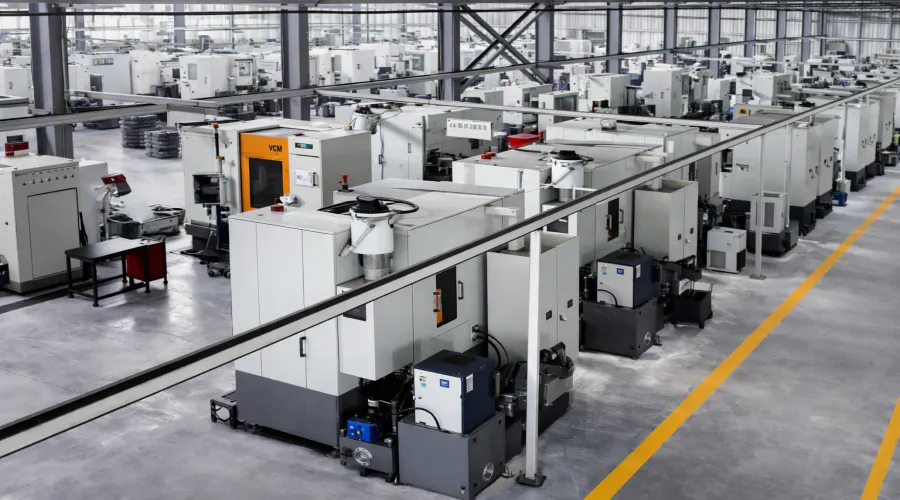
Every gear element, housing component, shaft, and bearing is selected from defined material grades with traceability through incoming inspection records, and all machining operations are performed on CNC equipment maintained to dimensional calibration standards that guarantee the tight tolerances the planetary architecture demands.
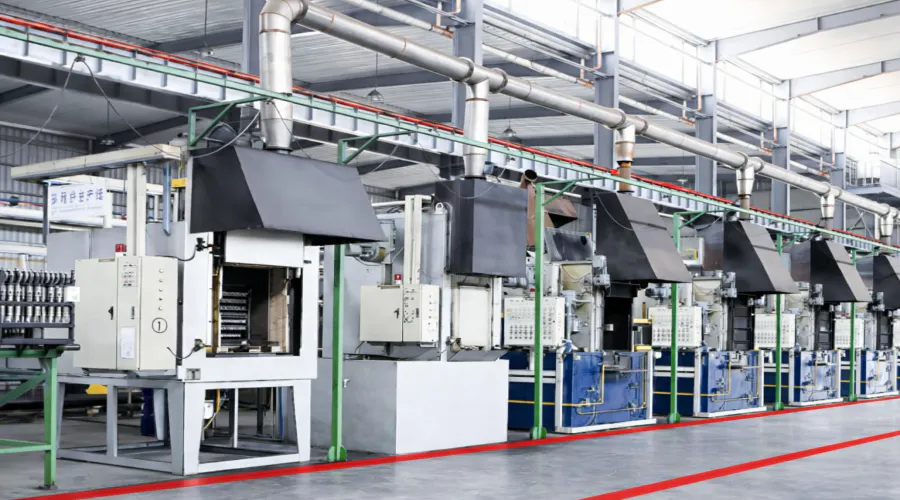
Sun gears and planet gears are hobbed from low-alloy case-hardening steel bar, typically 20MnCr5 or 18CrNiMo7-6. After profile grinding to DIN 3962 accuracy grade 5 or better, the gear elements enter a sealed atmosphere carburizing furnace where carbon is diffused into the surface layer to a case depth of 0.8–1.5 mm, followed by oil quenching and tempering to develop a tooth-flank hardness of 58–62 HRC. This dual-property microstructure — hard, wear-resistant surface over a tough, impact-absorbing core — is fundamental to achieving the service life targets under real industrial operating conditions. Ring gears are produced from medium-alloy steel with induction-hardened internal teeth ground to the same tolerance grade as the mating planet gears, ensuring consistent mesh quality around the full circumference of the ring.
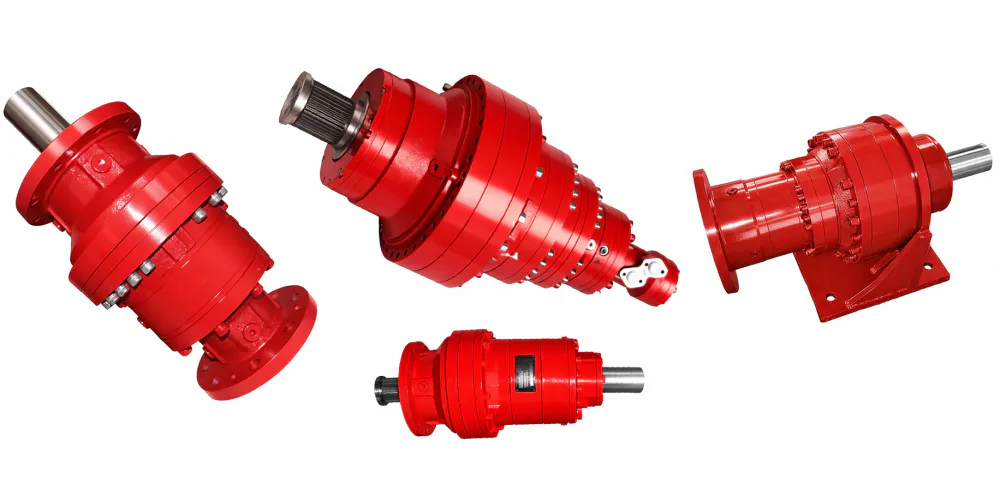
The input flange and intermediate coupling components are cast from EN-GJL-250 grey cast iron, selected for its superior vibration-damping characteristics — a meaningful benefit in machines subject to torsional impulses from crusher jaws, hammer mills, or conveyor jerk starts. Output supports and planet carrier housings use EN-GJS-400-15 spheroidal-graphite (nodular) cast iron, which provides the higher tensile strength and ductility needed at the high-torque output end of the gearbox. On the largest frame sizes, output supports may be produced from fabricated structural steel for maximum strength and dimensional stability at elevated torque levels.
5. Application Scenarios
The EP-Inline Planetary Gear Reducer serves an exceptionally broad application spectrum, from compact automation modules to large-scale heavy-duty industrial drives. The following areas represent the primary deployment contexts relevant to the Colombian and Latin American industry.
Industrial Conveyor & Logistics
Belt and roller conveyor main drive positions are among the most common applications for the inline planetary gear reducer format. The coaxial shaft arrangement eliminates the geometric offset of parallel-shaft units, keeping the drive head compact against the conveyor frame. For Colombian distribution centers, export warehouses, and manufacturing plants where conveyor aisles are narrow and overhead clearances limited, the EP-Inline Planetary Gear Reducer's compact drive head profile is a genuine design advantage that reduces civil and structural costs.
Industrial Mixing & Process Vessels
Chemical reactors, pharmaceutical ingredient vessels, paint and coating blending tanks, and food-grade ingredient mixers all rely on reliable, high-efficiency reducers for their agitator drives. The EP-Inline Planetary Gear Reducer's torque output to 450,000 Nm covers the largest industrial mixer drives, while its 95%+ stage efficiency ensures the drive runs cool enough to avoid the heat-related derating problems that afflict worm gear reducers in continuous-duty mixing applications. Food-grade NSF H1 oil compatibility makes it suitable for INVIMA-regulated food production environments in Colombia.
Hoist, Winch & Crane Drives
Overhead crane hoisting gearboxes, jib crane slewing drives, and industrial winch mechanisms demand gear reducers that combine high torque holding capacity with the ability to integrate a fail-safe parking brake. The EP-Inline Planetary Gear Reducer supports negative (spring-applied) electromagnetic and hydraulic brake mounting directly at the input stage, satisfying the mandatory holding brake requirements for suspended-load machinery under Colombian workplace safety law and the EU Machinery Directive for European export markets.
Precision Automation & Servo Drives
Rotary indexing tables, servo-driven positioning axes, robotic wrist joints, and CNC fourth-axis systems specify inline planetary gear reducers for their combination of low backlash, high torsional rigidity, and coaxial compactness. The EP-Inline's precision-ground helical gear sets and preloaded output bearings achieve the angular repeatability required by automated assembly equipment in Colombian electronics, automotive parts, and consumer goods manufacturing sectors.
Agricultural & Agro-Industrial Equipment
Coffee pulping and washing machines, sugarcane fiber-press drives, palm oil continuous screw presses, and flower-stem cutting lines represent key Colombian agro-industrial applications for the EP-Inline Planetary Gear Reducer. The gearbox's compatibility with both electric motor IEC flanges and hydraulic motor inputs makes it a universal drivetrain choice for agro-industrial equipment builders whose machines may be field-deployed with tractor hydraulic power or factory-installed on grid-connected drives, depending on the customer's facility configuration.
Mining, Quarrying & Construction Equipment
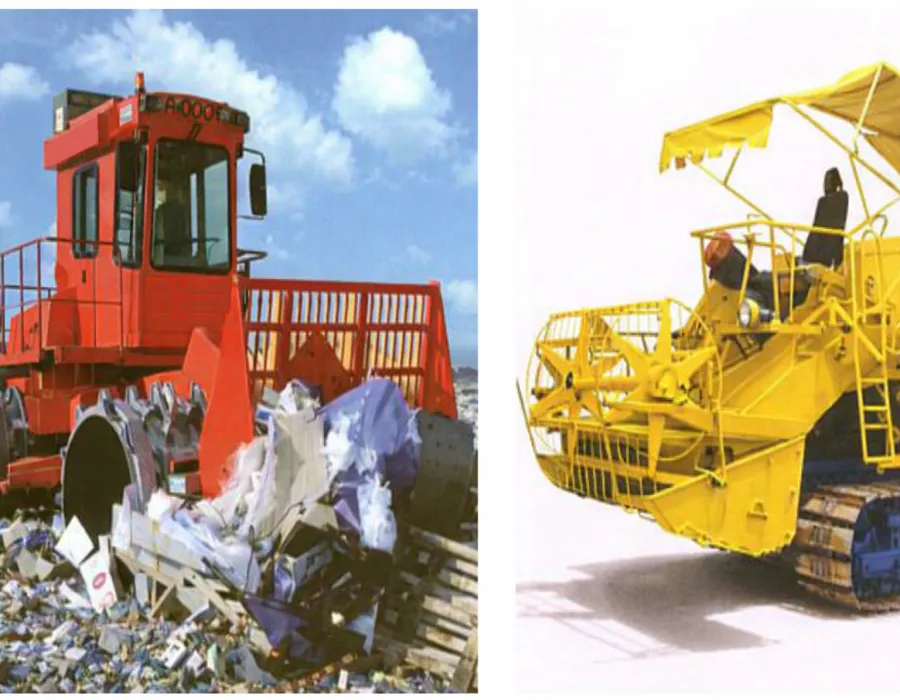
Vibrating screen drives, small conveyor boot drives in underground mines, drill carousel slewing, and compact track drive units in construction machinery use inline planetary gear reducers where the mounting envelope is constrained by the machine structure. The EP-Inline Planetary Gear Reducer's robust planetary architecture handles the high shock-load factors typical of stone crushing and underground mine haulage duty cycles that would cause fatigue failure in lighter-rated gear arrangements.
6. Regulatory Compliance & Legal Framework
Colombia — National Framework: The Ministerio de Trabajo's Resolución 0312 de 2019 establishes the mandatory minimum standards for SG-SST (Sistema de Gestión de Seguridad y Salud en el Trabajo) and requires all industrial machinery to undergo hazard identification and risk assessment for mechanical motion, including power transmission components. Fixed guarding of all accessible rotating parts — shafts, couplings, and gear reducer outputs — is required under this framework. NTC (Normas Técnicas Colombianas) standards administered by ICONTEC align closely with ISO, meaning that ISO 9001-certified manufacturing and ISO 6336 gear design qualification satisfy Colombian technical file requirements for most industrial procurement processes. The Reglamento Técnico de Instalaciones Eléctricas (RETIE) governs motor installation and earthing continuity, which intersects with IEC motor adaptor and grounding provisions on the gear reducer. For food processing operations, INVIMA's hygiene regulations additionally require documented evidence that lubricants used in food-proximity drives are food-safe (NSF H1 rated).
European Union: Machinery placed on the EU market must comply with the Machinery Directive 2006/42/EC, which will be progressively replaced by Machinery Regulation EU 2023/1230 (mandatory application from January 2027). Gear units supplied as sub-components of complete machines must be accompanied by an Incorporation Declaration specifying which Annex I essential health and safety requirements are met. ISO 6336 gear design verification satisfies the fatigue and load capacity provisions of Annex I. The Low Voltage Directive (2014/35/EU) applies to combined motor-gearbox assemblies supplied as complete gearmotors. The EU Ecodesign Regulation (EU) 2019/1781 mandates minimum IE efficiency classes for electric motors, which influences gearbox selection by establishing the motor efficiency context within which the overall drive train efficiency must be evaluated.
United States: OSHA 29 CFR 1910 Subpart O requires guarding of all power transmission apparatus including gears, shafts, and couplings. ANSI/AGMA 6000 and AGMA 2001 provide the US industrial gear design and quality standards that align closely with ISO 6336, enabling cross-acceptance of documentation between markets. NFPA 79 (Electrical Standard for Industrial Machinery) covers motor and control wiring specifications relevant to combined motor-gearbox assemblies.
Brazil & Andean Community: ABNT NBR NM 272 and related ABNT standards govern machinery safety for the Brazilian market, Colombia's largest regional trading partner. The Comunidad Andina Decisión 584 establishes a harmonized occupational safety framework across Colombia, Peru, Ecuador, and Bolivia. INMETRO compulsory certification requirements in Brazil must be assessed for machinery categories covered under Brazilian technical regulations (Portarias INMETRO), and Colombian exporters building complete machines must factor these into their CE marking and export documentation strategies.
7. About Us
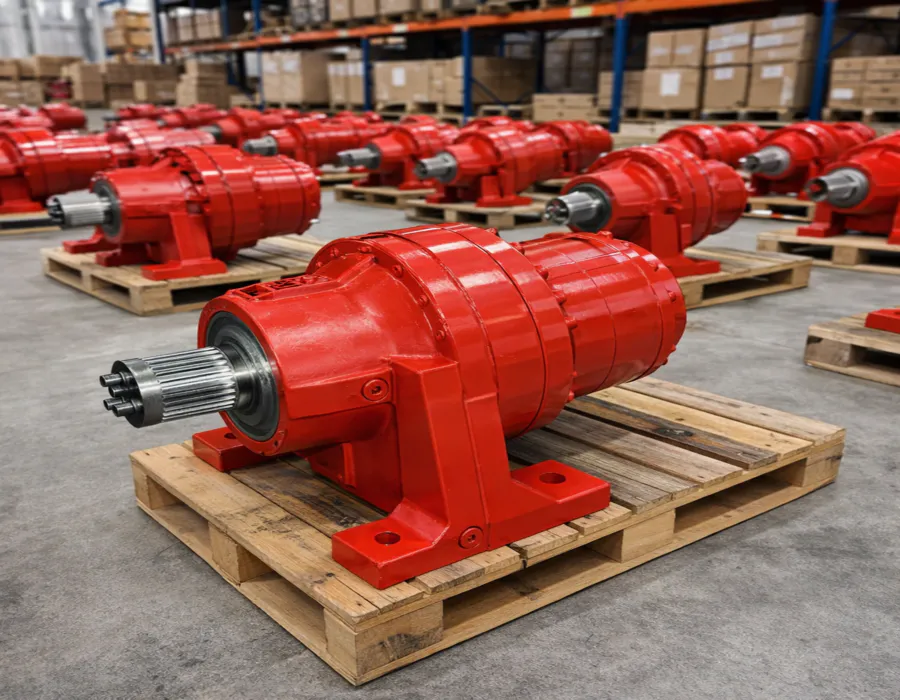
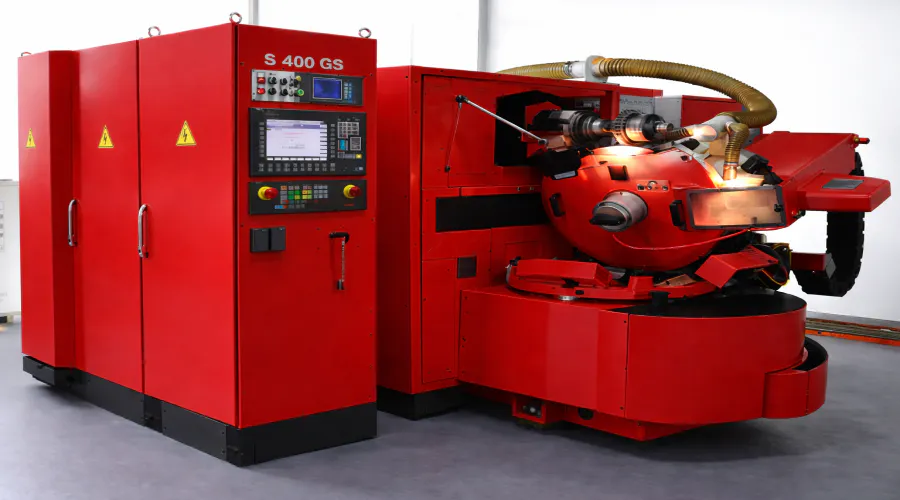
We are an established manufacturer of precision planetary gear reducers and industrial gearbox solutions with a product range spanning compact servo-grade units through to large-frame heavy-duty reducers for mining, marine, and process industry applications. Our manufacturing operations are built around CNC gear-hobbing, gear-grinding, and controlled-atmosphere heat treatment infrastructure, and our metrology department maintains coordinate measuring machines and gear-testing equipment to verify dimensional and geometric accuracy on every batch of gears we produce.
Our technical team brings direct application experience across the agro-industrial, food processing, chemical, logistics, automation, and mining sectors — experience that informs every product configuration recommendation we make to customers. We believe that selecting the right inline planetary gear reducer for a specific application is not a catalogue exercise alone; it requires genuine engineering engagement with the duty cycle, load profile, mounting constraints, and regulatory context of each machine.
Workshop

8. Related Products — One-Stop Drivetrain Supply
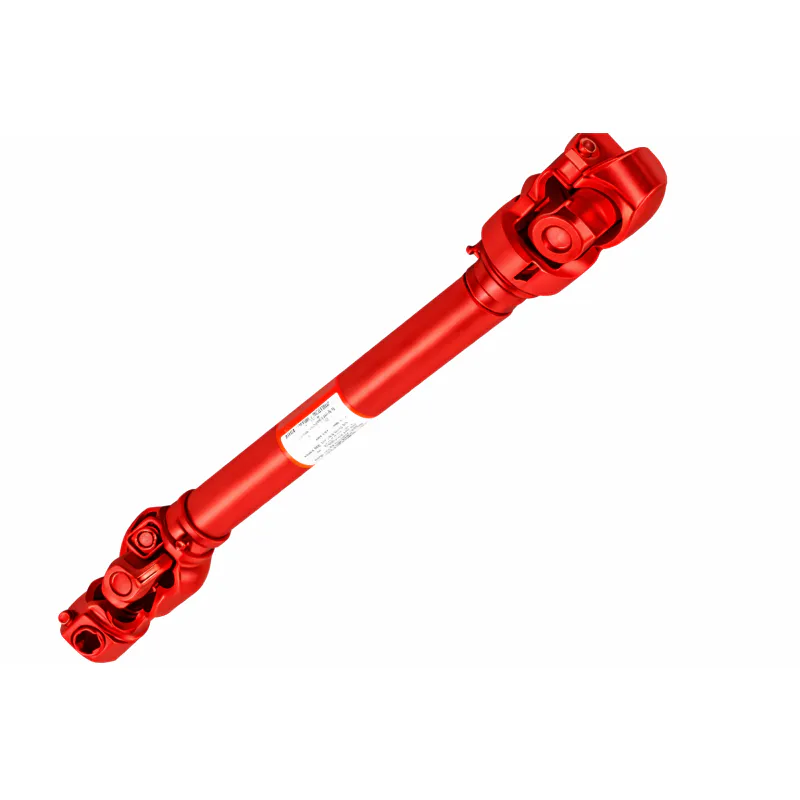
The EP-Inline Planetary Gear Reducer is the central component of a complete drivetrain, but its performance and installation simplicity are maximized when the motor input and shaft driveline are equally well-matched. We supply a full range of complementary drive components specifically selected for dimensional and torque compatibility with the EP-Inline Planetary Gear Reducer, allowing you to source the complete power transmission assembly from a single supplier with unified technical support and warranty coverage.

Drive Motor
Frequently Asked Questions
Q1. What is an inline planetary gear reducer and why is it a better choice than a worm gearbox for continuous industrial drives in Colombia?
A1. An inline planetary gear reducer uses an epicyclic gear arrangement — sun gear, multiple planet gears, and a fixed ring gear — where the input and output shafts share the same rotational axis. This coaxial configuration gives it a significant space advantage over parallel-shaft helical units and a decisive efficiency advantage over worm gears. While a worm gear loses 25–40% of input power as heat at ratios above 30:1, the inline planetary gear reducer maintains efficiency above 95% per stage regardless of the ratio selected. For Colombian plants running continuous-duty applications, this efficiency gap translates directly into lower electricity bills, reduced motor heat, and longer drive component life.
Q2. What output shaft configuration should I choose when specifying an inline planetary gear reducer for a direct drum-mount hoist application in a Colombian cement plant?
A2. For a drum-mount hoist application — where the gearbox output shaft is inserted directly into the hoist drum bore and held in torque by a shrink disc — the hollow output shaft with shrink disc is the correct configuration. The shrink disc applies radial clamping pressure uniformly around the drum shaft, creating a high-friction joint that transmits the full output torque without keyways or splines, eliminating the fretting and stress concentration problems that can occur with traditional keyed connections under reversing hoist loads. The EP-Inline Planetary Gear Reducer offers shrink disc hollow shaft outputs across its full frame size range. Specify the drum shaft diameter when ordering to ensure the correct hollow bore and shrink disc size are supplied.
Q3. Which high torque inline planetary gear reducer model is recommended for a 15 kW agitator running at 25 RPM output in a Colombian pharmaceutical plant?
A3. At 15 kW motor power and 25 RPM output from a 4-pole motor (approximately 1,750 RPM in Colombia's 60 Hz system), the required ratio is 1,750 ÷ 25 = 70:1. Calculate the output torque: T = (15,000 W × 60) ÷ (2π × 25 RPM) ≈ 5,730 Nm. Applying a service factor of 1.5 for agitator duty with possible start-up inertia gives a design torque of approximately 8,600 Nm. A two-stage EP-Inline Planetary Gear Reducer unit rated for nominal torque above 8,600 Nm at a ratio of 70:1 or 71:1 would be the appropriate selection. For pharmaceutical environments in Colombia, specify the NSF H1 lubrication option and confirm material certificate requirements with our team.
Q4. How does an inline planetary gear reducer handle the shock loads from a conveyor jerk start in a Colombian underground coal mine?
A4. Conveyor belt jerk starts — where the full motor torque is suddenly applied to a stationary loaded belt — generate peak torques several times higher than the steady-state running torque. The EP-Inline's peak torque capacity is specified at 2 to 3 times the nominal rated torque, designed specifically to absorb these transient overloads without gear tooth fracture. The key is the service factor: for conveyor drives with electric motor direct-on-line starting, a minimum service factor of 1.5 to 2.0 is applied to the steady-state torque calculation when selecting the unit, ensuring the gearbox's nominal torque rating comfortably exceeds the peak load expected during start events. Soft-starter or VFD control on the motor will further reduce start torques and is recommended for underground mine applications where drivetrain maintenance access is difficult.
Q5. How does the inline planetary gear reducer perform when connected to a variable frequency drive for speed control in a Colombian packaging line?
A5. The EP-Inline Planetary Gear Reducer performs very well in variable frequency drive (VFD) applications. Unlike worm gear reducers, which experience significant thermal efficiency reduction at reduced frequencies (and therefore reduced speeds), the planetary gear mesh maintains high efficiency across the full speed range of the VFD. The inline planetary design is also inherently low-vibration, which means it does not amplify the electrical noise harmonics that a VFD introduces to the motor supply. For Colombian packaging lines where multiple conveyors and dosing systems must run at coordinated variable speeds, the EP-Inline Planetary Gear Reducer combined with a VFD and IE3 motor provides the most energy-efficient and speed-accurate drive configuration available in this torque class.
Q6. What are the Colombian regulatory requirements for an inline planetary gear reducer used in a food processing plant under INVIMA oversight?
A6. INVIMA (Instituto Nacional de Vigilancia de Medicamentos y Alimentos) requires that machinery in food processing environments meets hygiene and safety standards for food contact surfaces and does not present a contamination risk to the product. For gear reducers in zones where incidental lubricant contact with food is possible, the lubricant must be NSF H1 certified as food-safe. The EP-Inline Planetary Gear Reducer is compatible with NSF H1 synthetic food-grade gear oils — specify this option when ordering for Colombian food industry applications. The external paint system and seal materials should also be confirmed as appropriate for your specific food processing environment (washdown conditions, cleaning chemical exposure, etc.) before final specification.
Q7. When is an inline planetary gear reducer the best option compared to a bevel helical gearbox for an agro-industrial drive in a Colombian palm oil processing plant?
A7. Choose an inline planetary gear reducer when your motor and driven shaft are aligned along the same axis — for example, a horizontally mounted motor driving a horizontal screw conveyor or a vertically mounted motor driving a vertical agitator. The coaxial arrangement eliminates the right-angle housing and bevel gear set required by a bevel helical unit, resulting in a smaller, lighter drive with higher efficiency. Choose a bevel helical gearbox when the motor must be positioned at 90° to the output — for instance, a horizontally mounted motor driving a vertical stirrer through a right-angle turn. For palm oil screw press drives and digester agitator positions in Colombian palm oil mills, the specific shaft orientation of each machine should guide the selection, and our engineering team is available to review drive layout drawings and recommend the optimal configuration.
Editor: PXY