
Right Angle Planetary Gearbox in Food & Beverage Filling Lines
Application Focus: Corner Conveyor Direction Change | Industry: Food & Beverage Processing | Target: Filling and Canning Lines
1. Why Corner Direction Change Demands a Specialised Drive Solution
On a modern filling or canning line, containers move at rates that can exceed 800 units per minute. At every 90-degree turn in the conveyor path — transferring bottles from the filler to the capper, or cans from the seamer to the labeller — the drive system must deliver a smooth, controlled velocity change without tilting, jamming, or micro-jolting the container. A standard helical gearbox paired with a separate bevel unit gets the job done mechanically, but introduces two shaft alignment points, two oil sumps to maintain, two seal interfaces to keep clean, and a joint that is genuinely difficult to hose down without leaving water pockets where bacteria thrive.
The right angle planetary gearbox resolves this by integrating the planetary speed reduction stage and the bevel-stage direction change into a single sealed housing. The result is a drive unit that arrives at the machine frame as one bolt-on component, with a single lubrication volume, a unified seal perimeter, and a form factor compact enough to fit within the frame rails of existing conveyor structures. In food and beverage environments where IP69K high-pressure washdown is a daily routine — not an exception — this integration is not a convenience; it is an engineering necessity that directly affects hygienic compliance and maintenance labour costs.
This article examines the mechanics, materials, configuration parameters, and regulatory context of the right angle planetary gearbox as applied specifically to corner conveyor and direction-change drives on filling and canning lines. The content is aimed at drive engineers, plant maintenance supervisors, and procurement specialists in Colombia and across the Latin American food processing sector who are evaluating drive specifications for new installations or replacement projects.
2. Motion Mode: How the 90-Degree Transfer Actually Works
The motion requirement at a filling-line corner is deceptively precise. The incoming conveyor belt carries containers at a fixed speed. The outgoing belt, running perpendicular, must accept those containers at the same linear speed — or at a controlled differential — without the container tilting, sliding, or losing orientation. Any rotational velocity error at the handoff point translates directly into a toppled bottle or a misaligned can, which triggers a jam that shuts down the entire upstream fill block.
The right angle planetary gearbox achieves this by providing a highly stable output speed ratio that is maintained across the full operating torque range. The planetary stage handles speed reduction with an efficiency typically above 96%, meaning that the output velocity does not droop or fluctuate as conveyor load changes when containers bunch at the turn point. The integrated bevel output stage then redirects this stable, reduced-speed rotation through exactly 90 degrees to the cross-belt drive shaft. Because the bevel gears are pre-loaded and lapped within the same housing as the planetary pack, the angular transmission accuracy — expressed as arc-minute backlash — is held to a value that eliminates the micro-oscillation that would otherwise cause container rocking at the transfer point.
In canning lines running carbonated beverages, the motion demand is even stricter. A can that receives a lateral impulse during the corner transfer will retain that angular momentum through the seaming station, producing a lid that is not square to the body — a defect that does not show up until the pressure test or, worse, the shelf. The low-backlash characteristic of a precision right angle planetary gearbox — typically 3 to 8 arc-minutes in a single-stage unit — is what separates production-grade direction-change drives from general industrial alternatives in this context.
3. Structure Type: Integrated Bevel-Planetary Architecture
The configuration used for filling-line corner drives is specifically a bevel-planetary arrangement, sometimes called a right-angle gear drive or a 90 degree planetary gearbox in procurement specifications. The structure places the servo or AC motor on the input axis, feeds into a planetary gear stage (one or two stages depending on the required speed ratio), and then routes the output through a bevel gear set — spiral bevel or hypoid — that delivers the 90-degree shaft offset.
Spiral bevel output stages are the more common choice for filling-line applications. The helical tooth engagement of a spiral bevel produces gradual tooth load transfer rather than the abrupt full-face engagement of straight bevel, which reduces noise (important in bottling halls where operators work in close proximity to the machinery for eight-plus hours) and distributes gear contact stress over a greater tooth length, extending service life under the start-stop duty cycles typical of filling line operation.
Hypoid configurations, where the input and output shaft axes are offset rather than intersecting, offer the additional advantage of allowing the motor axis to be positioned below the conveyor frame centreline, reducing the installed height of the drive package. This is particularly valuable in retrofit projects on existing conveyor structures where headroom constraints prevent mounting a standard perpendicular drive.
In a compact right angle planetary gearbox designed for food applications, the entire bevel-planetary assembly shares a single oil volume — typically H1 food-grade synthetic lubricant — sealed by triple-lip or quad-lip shaft seals at every rotating interface. This unified lubrication eliminates the dual-sump maintenance burden and, critically, eliminates the risk of the two oil types mixing through a degraded intermediate seal, which is an event that can contaminate food-contact zones if the gearbox is mounted above an open container transfer point.
4. Five Key Advantages of the Right Angle Planetary Gearbox in Filling Line Applications
These advantages are drawn from documented field performance data and the engineering specifications of current hygienic-class right angle planetary gearbox designs. They reflect the reasons plant engineers at beverage and food processors in Colombia, Chile, Brazil, and Mexico have shifted from compound gearbox trains to integrated right-angle planetary units over the past decade.
01 — Single-Housing Integration
Combining the planetary reduction and 90-degree bevel stages into one sealed housing eliminates the intermediate coupling, second alignment point, and second seal interface of a compound arrangement. On a production line running 20 hours per day, reducing seal interfaces from four to two per drive point cuts potential leakage paths in half — a directly measurable reduction in food safety risk and in unscheduled maintenance events per year.
02 — IP69K Hygienic Rating
IP69K certification confirms that the unit withstands a 100-bar water jet at 80 °C from any angle without water penetration. This is the standard specified by food and beverage equipment hygiene guidelines including EHEDG (European Hygienic Engineering and Design Group) and is the minimum requirement for drive units mounted on open conveyor transfer points in direct-contact or above-food zones. Standard IP65 or IP67 units are not suitable for this environment because the daily caustic rinse cycle — using NaOH or peracetic acid at elevated temperatures — will breach lower-rated seals within months.
03 — High Torque Density in Compact Envelope
The planetary stage distributes torque load across three or more planet gears simultaneously, achieving output torque densities three to five times higher than a comparable helical single-axis gearbox of the same housing diameter. For a filling-line corner drive where the conveyor frame rail width constrains the available drive envelope to 120–180 mm in the cross-machine direction, this torque density advantage is often the determining factor between a unit that fits within the existing frame and one that requires costly frame modification.
04 — Low Backlash for Container Stability
Precision right angle planetary gearbox designs achieve backlash values of 3 to 8 arc-minutes in single-stage configurations and 6 to 14 arc-minutes in two-stage units. This low-backlash characteristic eliminates the micro-velocity discontinuity at the output shaft that causes container oscillation during direction change on high-speed filling lines. For canning operations running carbonated products, this is not a refinement — it is a structural requirement for achieving consistent seam quality at the seaming station downstream.
05 — H1 Food-Grade Lubrication Compatibility
The internal gear and bearing surfaces of filling-line right angle drives are lubricated with H1-registered synthetic lubricants — typically polyalphaolefin (PAO) or polyalkylene glycol (PAG) base oil formulations meeting NSF/ANSI 61 or equivalent registration. H1 lubricants are formulated to be non-toxic in incidental food contact at the concentrations that could result from seal seepage, which provides a regulatory compliance buffer in jurisdictions where food safety inspections include lubricant audit as part of the equipment assessment protocol.
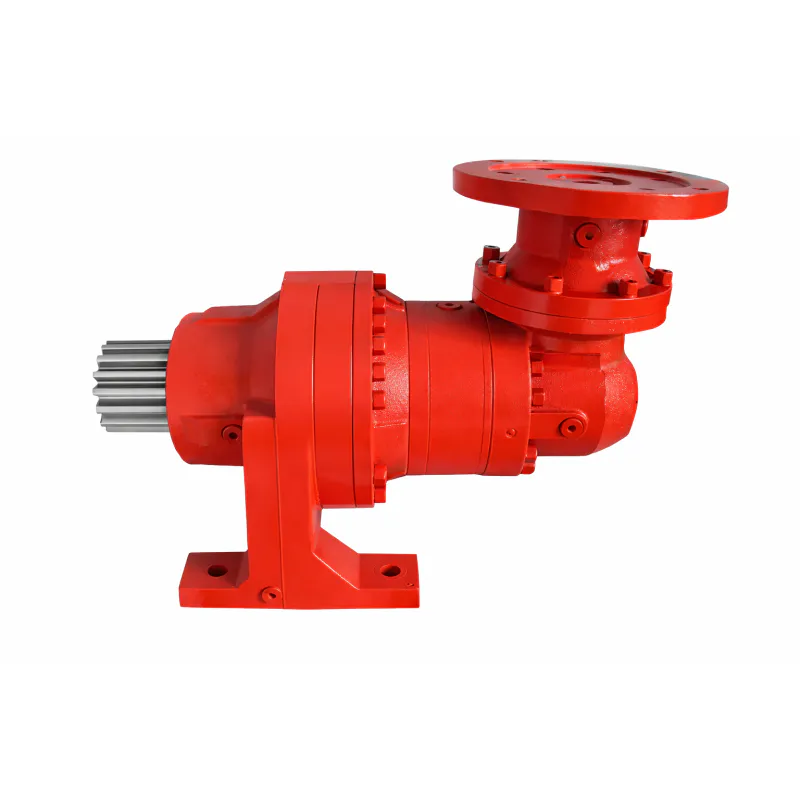
5. Working Principle: How Does a Right Angle Planetary Gearbox Work?
Understanding how does a right angle planetary gearbox work starts with separating the two functional stages. The planetary stage is the speed-reduction mechanism. The bevel stage is the direction-change mechanism. In a single-stage planetary configuration, the motor drives the sun gear at the centre of the planetary carrier. The sun gear meshes simultaneously with two, three, or four planet gears that orbit inside a fixed ring gear (annulus). The planet carrier — which holds the planet gear shafts — rotates as a unit at the output speed. Because the torque delivered at the planet carrier is the sum of all planet gear contact forces acting simultaneously, the torque multiplication is very high relative to the housing volume.
The planetary gearbox ratio is determined by the tooth count relationship between the sun gear, the planet gears, and the ring gear. For a standard three-planet single-stage configuration, the ratio formula is (1 + ring tooth count / sun tooth count). Typical single-stage ratios range from 3:1 to 10:1, while two-stage units extend this to 100:1. In filling-line corner drives, ratios of 5:1 to 20:1 are most common, matching typical servo motor or AC motor base speeds (1,400–3,000 rpm) down to the 100–600 rpm range required for belt conveyor speeds of 0.5–3.0 m/s.
This reduced-speed rotation from the planet carrier is then fed into the bevel gear stage. In a spiral bevel arrangement, the input bevel pinion — mounted coaxially with the planet carrier output — engages a ring bevel gear on a shaft that is oriented at exactly 90 degrees to the input axis. The helical tooth geometry of the spiral bevel produces a gradual tooth load transfer that results in smooth, low-noise transmission — important for the acoustic environment of a food processing facility. The question of planetary gear reverse direction is answered here: the bevel stage inverts the rotation direction in a fixed, defined relationship to the input — typically clockwise input yields counterclockwise output when viewed from the output shaft end — which machine builders account for in specifying motor rotation direction during commissioning.
For a deeper look at standard product configurations and custom ratio options, see our planetary gearbox product range, where single and two-stage right-angle configurations are documented with full dimensional drawings and output torque curves.
6. Representative Technical Parameters – Right Angle Planetary Gearbox (Filling Line Corner Drive)
The following 20 parameters represent a representative configuration for a hygienic-class right angle planetary gearbox sized for a medium-speed filling line corner transfer application at 250–400 containers/min. Custom configurations are available; contact our engineering team for application-specific sizing.
| Parameter | Value / Specification |
|---|---|
| Gearbox Type | Spiral Bevel + Planetary (integrated) |
| Output Shaft Angle | 90° |
| Available Ratios (single-stage) | 3:1, 4:1, 5:1, 7:1, 10:1 |
| Available Ratios (two-stage) | 12:1, 16:1, 20:1, 25:1, 35:1, 50:1, 70:1, 100:1 |
| Rated Output Torque | 30 – 3,200 Nm (application range) |
| Backlash (single-stage) | ≤ 5 arc-min |
| Backlash (two-stage) | ≤ 8 arc-min |
| Input Speed (max.) | 4,000 rpm |
| Transmission Efficiency | ≥ 96% per stage |
| Protection Class | IP69K (IEC 60529) |
| Housing Material | AISI 316L stainless steel (electropolished) |
| Gear Material | 20MnCr5 / 18CrNiMo7-6, case-hardened |
| Bearing Type | Angular contact + tapered roller (output side) |
| Seal Type | Triple lip FKM / EPDM (food-safe) |
| Lubrication | H1 food-grade PAO synthetic, lifetime-sealed |
| Operating Temperature Range | -20 °C to +90 °C |
| Torsional Rigidity (representative) | ≥ 8 Nm/arc-min (size 60–90 frame) |
| Noise Level (no-load) | ≤ 66 dB(A) at 3,000 rpm input |
| Service Life (L10h) | ≥ 20,000 hours at rated load |
| Overall Dimensions (L × W × H) – size 090 | 195 mm × 155 mm × 155 mm |
Custom ratios, flange configurations, and hollow shaft outputs are available on request. Our engineering team can provide sizing calculations for specific conveyor speeds, load torques, and motor pairings for filling line applications in Colombia and across Latin America.
7. Manufacturing Structure
The production of a food-grade right angle planetary gearbox for filling-line applications follows a manufacturing sequence meaningfully different from that of a standard industrial unit. The precision requirements at every stage are tighter, the material traceability requirements more stringent, and the inspection protocol more comprehensive, because a failure in service does not simply cause a production stoppage — it creates a potential food safety incident with regulatory and reputational consequences that extend far beyond the cost of the gearbox itself.
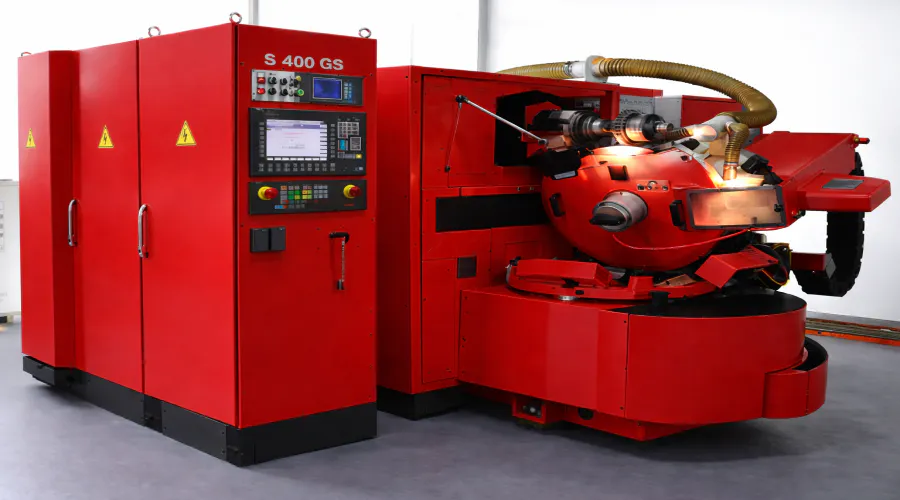
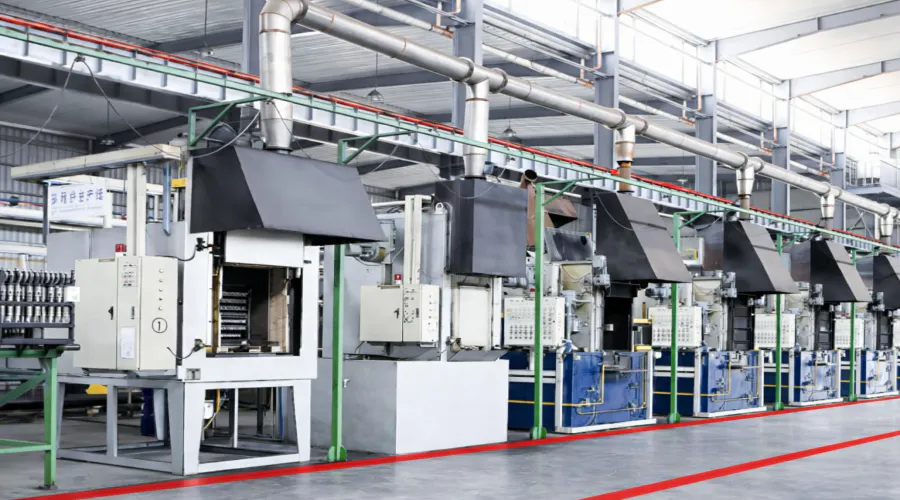
Gear blanks for the planetary and bevel stages are cut from certified alloy steel bar stock (20MnCr5 or 18CrNiMo7-6 to DIN EN 10084) with full material certification documenting chemical composition and mechanical properties per heat. After rough machining, the gear forms are hobbed or milled to a pre-hardened tooth profile, then subjected to case-carburising and quench-hardening to produce a case depth of 0.6–1.2 mm at 58–62 HRC surface hardness over a 30–38 HRC core. Following heat treatment, every gear undergoes profile grinding on CNC gear-grinding machines to a tooth profile tolerance of DIN 5 or better — this post-grind finish is what delivers the low backlash and smooth meshing that distinguishes a precision right angle planetary gearbox from a general industrial unit.
Planetary carriers for the food-grade range are CNC-machined from billet rather than cast, eliminating the porosity risk associated with cast iron or aluminium die-casting. Housing components are produced from AISI 316L stainless steel plate and tube, machined and then electropolished to Ra ≤ 0.8 µm surface roughness — the threshold below which bacterial biofilm formation is demonstrably suppressed according to EHEDG guideline documents. Assembly is performed in a controlled environment, with torque-controlled fastener tightening and oil-fill by measured weight (not volume) to ensure the correct lubrication level is achieved independently of mounting orientation.
8. Material System: Standard Industrial vs. Hygienic Food-Grade Configuration
The material differences between a general industrial right angle planetary gearbox and a food-grade unit are not cosmetic — they reflect fundamentally different durability and contamination-risk profiles that matter in a food production environment. The following comparison captures the critical differences that should inform specification decisions for filling-line corner drive applications.
| Component | Standard Industrial Unit | Hygienic Food-Grade Unit |
|---|---|---|
| Housing | Cast iron or aluminium alloy, painted | AISI 316L stainless steel, electropolished |
| Planetary Carrier | Cast iron or ductile iron | CNC-machined billet steel, nitride treated |
| Seals | NBR single or double lip | FKM / EPDM triple lip, spring-loaded |
| Lubrication | Mineral gear oil, H2 rating | H1 PAO synthetic, NSF/ANSI 61 registered |
| Fasteners | Zinc-plated carbon steel | A4-70 stainless steel, recessed heads |
| Protection Rating | IP54 or IP65 | IP69K (100 bar at 80 °C) |
| Surface Geometry | Standard machined, may have recesses | No dead spaces, Ra ≤ 0.8 µm, EHEDG compliant |
| Chemical Resistance | Limited; paint/coating degrades in NaOH | Full resistance to NaOH, peracetic acid, CIP agents |
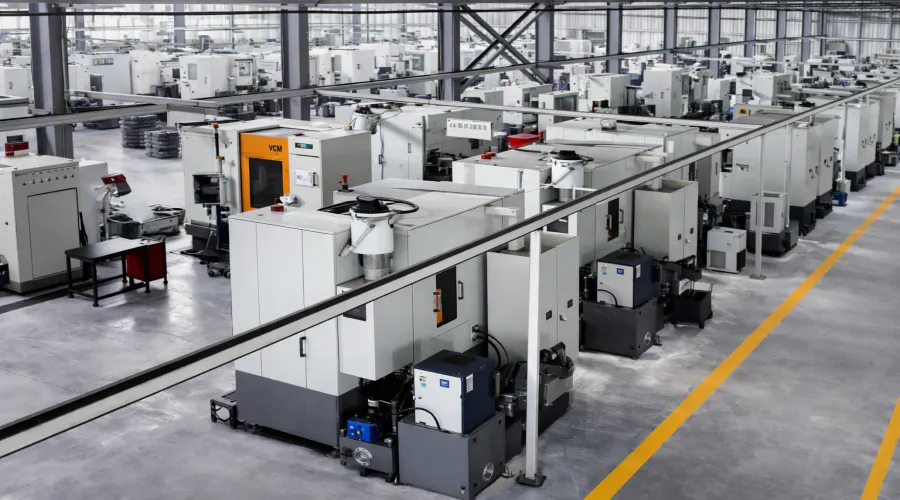
9. Surface Treatment
Surface treatment on a hygienic right angle planetary gearbox serves two distinct purposes that industrial equipment specifications often conflate: corrosion resistance and microbial soil release. Corrosion resistance prevents the housing from degrading when exposed to the caustic cleaning agents (NaOH at 2–4%, peracetic acid at 0.2–0.4%) used in CIP (clean-in-place) and foaming cycles on beverage filling lines. Microbial soil release is a different property — it determines whether residual organic material from the production environment adheres to the surface between cleaning cycles, providing a substrate for bacterial growth.
Electropolishing of AISI 316L stainless steel housing achieves both simultaneously. The electrochemical removal process preferentially dissolves surface peaks on the micro-scale, producing a surface roughness of Ra ≤ 0.8 µm and simultaneously enriching the chromium oxide passive layer on the surface. This passive layer is what gives 316L its chemical resistance to chlorides — including the hypochlorite-based sanitisers common in beverage production — and the smoother surface geometry directly reduces the mechanical adhesion points available to biofilm-forming organisms such as Listeria monocytogenes, which is a persistent concern in chilled beverage and dairy filling operations.
For filling lines running dry-zone packaging operations — where the gearbox is not in a washdown zone but may be exposed to CO₂ atmospheres or humidity condensation — a white epoxy antimicrobial coating over the housing (applied over an AISI 304 base) provides an acceptable alternative to full electropolished 316L. This coating system is used in many North American and Colombian beverage plants on their secondary packaging conveyors and provides a cost-effective intermediate specification between standard painted industrial units and full stainless food-grade units.
10. Operating Characteristics of Filling Line Corner Drives
Corner conveyor drives on filling and canning lines operate under a load profile that is meaningfully different from continuous-duty conveyor drives on straight sections. Understanding these operating characteristics is important for correct service factor selection and for predicting where gearbox wear will concentrate over the equipment’s service life.
The start-stop duty cycle is the defining load characteristic. A filling line running at 600 containers per minute on a 1-metre-wide belt will stop and restart many dozens of times per shift due to downstream jams, container changeovers, and scheduled micro-stops. Each stop-start event imposes a torque spike at the gearbox output as the belt and container mass accelerates from rest. For a compact right angle planetary gearbox Colombia filling plant engineers should note that this torque spike — often 2 to 4 times the steady-state running torque — is what determines the peak torque rating that the gearbox must be sized to rather than the nominal running torque alone. A service factor of 1.5 to 2.5 over the calculated running torque is standard practice for this duty cycle.
The overhung load at the output shaft is the second critical characteristic. The belt drive sprocket or friction roller is typically mounted directly on the gearbox output shaft without an outboard bearing, which means the full weight of the sprocket plus the belt tension load acts as a bending moment on the output shaft and its supporting bearings. The tapered roller bearing configuration at the output end of a properly designed right angle planetary gearbox is sized specifically to handle this combined radial and axial load, but the bearing selection must be verified against the actual overhung load distance and sprocket weight for each specific installation.
11. Typical Failure Modes and Preventive Measures
Service data from filling line installations provides a consistent picture of how right angle planetary gearboxes fail in food processing environments when they are not correctly specified or maintained. The failure modes below are listed in approximate order of frequency based on industry maintenance reports and reflect the conditions encountered in Colombian, Chilean, and Brazilian beverage production facilities.
Output Seal Failure – Lubricant Contamination
The most common failure in washdown environments. An NBR seal installed on a unit designed for standard IP67 begins to swell and lose lip contact force after approximately 400–600 hours of repeated exposure to peracetic acid washdown. The resulting oil seepage contaminates the food zone and triggers a regulatory inspection event. Prevention: specify FKM triple-lip seals rated for the specific cleaning agents used in the facility; confirm with the lubricant and seal supplier using the actual chemical concentrations used in the CIP programme.
Bevel Gear Pitting – Insufficient Backlash Setting
Bevel gear surface pitting in the early operating hours (200–500 h) indicates that the bevel gear set was assembled with insufficient backlash. This produces edge loading at the tooth tips and flanks rather than full-face contact, concentrating Hertzian contact stress to levels that exceed the case hardness capacity of the gear surface. Prevention: verify assembly backlash against the manufacturer’s specification; for replacement units, confirm that the replacement is assembled to the same standard as the original, not simply matched on outside dimensions.
Planet Bearing Fatigue – Overload from Jam Events
When a container jams in the corner transfer zone and the conveyor motor continues to run against the blocked belt for several seconds before the overload protection trips, the planet bearings absorb a sustained torque overload that can significantly reduce their L10 fatigue life. If this event is repeated across dozens of jam occurrences per shift, the bearing degradation accumulates rapidly. Prevention: programme the VFD to trip at 150% of rated torque within 0.5 seconds of the overload event onset; review jam frequency data and address the root cause (container height variation, guide rail wear) if the trip frequency is above 2–3 events per shift.
Housing Corrosion – Wrong Material Specification
AISI 304 stainless steel housing units exposed to chloride-containing sanitisers (hypochlorite-based CIP) at concentrations above approximately 150 ppm will develop pitting corrosion within 12–18 months, particularly at welded seams and machined surfaces with residual stress. This corrosion eventually breaches the housing wall or creates crevices that harbour biofilm. Prevention: specify AISI 316L for all Zone 1 and Zone 2 installations; request material certification from the supplier confirming 316L grade (not 316) for the housing components.
12. Recommended Configuration for Filling Line Corner Drives
Based on the application characteristics discussed above, the recommended configuration for a right angle planetary gearbox on a filling or canning line corner transfer point is summarised below. These recommendations reflect current best practice for precision planetary gearbox Colombia installations and for similar food-grade installations across the Andean region and wider Latin American beverage sector. Custom sizing is available — the parameters listed below should be verified against your specific conveyor speed, belt tension, motor selection, and production line speed before ordering.
Drive configuration: Two-stage bevel-planetary, spiral bevel output stage. Single-stage is acceptable for ratios up to 10:1 where the available motor speed closely matches the target belt speed without an excessively high or low PTO speed.
Ratio range: 10:1 to 20:1 for servo motor input (rated speed 2,000–3,000 rpm); 5:1 to 10:1 for AC motor input (1,450–1,500 rpm at 50 Hz or 1,750–1,800 rpm at 60 Hz). For installations in Colombia operating on the 60 Hz national grid, input motor speed of 1,800 rpm at full load is the baseline for ratio calculation.
Output torque sizing: Calculate the nominal running torque from the conveyor belt tension and drive roller diameter. Apply a service factor of 2.0 for a start-stop duty cycle with jam events. Verify that the peak torque rating of the selected gearbox exceeds the nominal torque multiplied by the service factor.
Hygiene specification: IP69K, AISI 316L electropolished housing, H1 PAO lubricant, FKM triple-lip seals, A4-70 stainless fasteners, no external oil fill or drain ports accessible without tools, EHEDG-compliant geometry (no dead spaces, all external radii ≥ 3 mm).
Lubrication management: Specify lifetime-sealed lubrication where possible. If the application torque and input speed combination generates significant heat (confirmed by thermal simulation), provide for an oil temperature monitoring point rather than periodic oil changes, as disturbing a sealed food-grade unit for oil service in a production environment introduces contamination risk that outweighs the benefit of a fresh lubricant charge.
Motor interface: IEC B5 or B14 flange for European-standard motors; NEMA C-face for North American motor types common in Colombian processing plants supplied with US-origin equipment. Confirm the motor shaft diameter and keyway dimensions match the gearbox input before ordering — tolerance mismatches are a frequent source of vibration-induced bearing failure within the first 1,000 operating hours.
For specific model references and dimensional drawings, visit our right angle planetary gearbox product catalogue or contact our engineering team directly for a configured quote.
13. Application Scenarios
The right angle planetary gearbox in food and beverage production is encountered across a wider range of machine types than the filling-line corner transfer that is the primary focus of this article. The following scenarios illustrate the breadth of applications where the same integrated bevel-planetary drive architecture delivers value.
Filling Line Corner Transfer – Bottles & Cans
The primary application discussed in this article. PET bottles, glass containers, and aluminium cans are transferred through 90-degree turns between the filling, capping, inspection, and labelling stations. The drive must maintain constant belt speed across the turn, resist jar shock from occasional container jams, and withstand daily IP69K washdown. A right angle bevel planetary gearbox Colombia plants use for this function typically runs at ratios between 10:1 and 25:1 feeding into a belt drive sprocket at 50–200 rpm output.
Capping and Lid Feed Mechanisms
Rotary cap sorters and linear cap feeders on carbonated beverage lines use right angle gear drives to deliver consistent feed speed to the capping turret. The 90-degree transmission allows the cap magazine hopper to be oriented vertically above the cap track while the drive motor is positioned horizontally alongside the frame — a packaging efficiency that would be impossible with a straight-axis drive without adding a separate bevel pair.
Dairy Processing – Cheese and Curd Handling
Dairy processing lines move curd blocks and mould-pressed cheese forms through multi-stage handling conveyors in chilled, high-humidity environments that are subject to aggressive lactic acid condensate. The 90 degree planetary gearbox heavy duty configuration — with oversized tapered roller output bearings and full 316L stainless construction — handles the combination of high overhung load from heavy cheese forms, continuous moisture exposure, and the organic acid chemistry of the dairy washdown environment.
Bakery and Confectionery Conveyors
Biscuit, bread, and confectionery lines use right-angle drive units at oven exit turns, cooling spiral entrances, and packaging line feeds. In these applications the environment is dry but hot — oven exit temperatures can approach 80 °C ambient — and the lubricant and seal specification must be confirmed for the high operating temperature. The PAO synthetic lubricant and FKM seals used in food-grade right angle planetary gearbox units retain their properties across this temperature range, while mineral-oil-lubricated standard units may experience oil thinning and seal shrinkage at sustained elevated temperatures.
Poultry and Meat Processing Lines
Poultry evisceration and portioning lines in Colombian processing plants operate at temperatures of 2–6 °C with continuous water spray and chlorine or peracid sanitiser contact. The combination of low temperature and chemical exposure is particularly demanding on seal materials — NBR becomes rigid at temperatures below approximately 5 °C and loses its lip contact force, allowing water ingress. FKM seals maintain their elasticity to -20 °C, making the hygienic-class right angle planetary gearbox the specification that refrigerated poultry processing line engineers default to for drive units in these zones.
14. Regulatory Framework: Food Equipment Standards Across Key Markets
The specification of drive equipment for food and beverage production lines is not simply a mechanical engineering decision — it is a compliance decision that intersects food safety law, equipment hygiene standards, and workplace safety regulation across every market where the equipment operates. The following overview covers the principal frameworks relevant to right angle planetary gearbox specification in Colombia and other major markets.
Colombia – INVIMA & NTC Standards
In Colombia, food processing equipment is regulated through INVIMA (Instituto Nacional de Vigilancia de Medicamentos y Alimentos), which enforces Good Manufacturing Practice (BPM) requirements under Decreto 3075/1997 (now complemented by Resolución 2674/2013). Equipment in food contact zones must be constructed of materials approved for food contact under the applicable food safety frameworks, lubricants used in machinery above food handling zones must be H1 food-grade, and equipment design must facilitate cleaning and sanitisation. Drive components that cannot be fully cleaned and sanitised in place are subject to regulatory inspection risk. The ICONTEC (Instituto Colombiano de Normas Técnicas) NTC standards for food processing machinery design reference ISO and EN standards for hygienic equipment construction.
European Union – EC 1935/2004 & EHEDG
EC Regulation 1935/2004 governs materials intended for contact with food in the EU. For drive components in food contact zones, this regulation requires that materials do not transfer constituents to food in quantities that could endanger human health or bring about unacceptable changes in the composition of the food. The EHEDG (European Hygienic Engineering and Design Group) publishes guidelines — including Document 8 (Hygienic Equipment Design Criteria) — that are widely used as the design reference for food-grade drive equipment across Europe and by multinationals operating in Latin America who apply global standards to their Colombian and regional facilities.
United States – FDA 21 CFR & NSF/ANSI
In the US, FDA 21 CFR Part 178.3570 governs lubricants with possible incidental food contact (H1 lubricants). The 3-A Sanitary Standards programme and NSF International certification (NSF/ANSI 51 for food equipment materials; NSF/ANSI 61 for lubricants in food contact) are the primary third-party certification schemes used to document compliance. Colombian food processors supplying to US markets under export programmes are frequently required to meet these standards to satisfy US retail customer audits, making NSF certification of lubricants and EHEDG-compliant equipment design relevant even for domestic Colombian production facilities.
Brazil – ANVISA & ABNT
Brazil’s food equipment regulatory framework is administered by ANVISA (Agência Nacional de Vigilância Sanitária) under Resolução RDC 275/2002 and subsequent updates, which mandate Good Manufacturing Practices for food production facilities including equipment design and maintenance. ABNT NBR standards for machinery design incorporate ISO and EN hygienic design references. For drive equipment on filling lines, the practical compliance requirements in Brazil parallel those in Colombia — H1 lubricants, IP69K protection in washdown zones, smooth surfaces without crevices, and materials resistant to the cleaning agents used in the specific facility.
ISO & IEC Gearbox Standards
The mechanical performance of the gearbox itself is governed by ISO standards independent of the food safety framework: ISO 6336 (calculation of load capacity for involute spur and helical gears, applicable by analogy to planetary stages), ISO 23509 (bevel and hypoid gear geometry), and IEC 60529 (ingress protection ratings, including the IP69K definition). The planetary gearbox ratio calculation and load capacity verification for a given filling-line application should be documented against these ISO standards in the equipment technical file, which is required for CE marking under the EU Machinery Directive 2006/42/EC for equipment exported from Latin America to European markets.
WorkShop

15. Related Products & System Compatibility
A right angle planetary gearbox functions as part of a wider drive system — motor, reducer, gearbox, and mechanical interface — and the performance of the full system depends on the compatibility of every element in the chain. We produce and supply matched drive system components that integrate with our planetary gearbox range, enabling one-stop system procurement and eliminating the dimensional and electrical interface uncertainties that arise when sourcing from multiple vendors. For filling line corner drive applications in Colombia, having a single supply source for the full drive package — motor, reducer, and right angle gearbox — simplifies the commissioning process and ensures that warranty coverage spans the entire drive train rather than stopping at individual component interfaces.
Servo & AC Motor – Matched Input Drive
Our food-grade servo and AC motor range is engineered for direct mating to the planetary gearbox input flange without adapter plates or machined interfaces. Available in IEC and NEMA frame sizes with IP65/IP69K protection options, stainless steel shaft and hardware, and food-grade paint or stainless enclosures. Paired with the right angle planetary gearbox, they deliver a compact, hygienic geared motor assembly that can be mounted, wired, and commissioned in a single installation sequence.

Inline Planetary Reducer – Pre-Stage Option
For filling line applications requiring ratios greater than 100:1 — such as slow-speed accumulation conveyors or orientation turntables — our inline planetary reducer can be paired as a pre-stage upstream of the right angle bevel output. This three-component arrangement (motor + inline reducer + right angle stage) achieves combined ratios up to 3,000:1 while maintaining the sealed hygienic architecture and IP69K rating of the overall assembly. All inter-stage connections use matched flange systems that preserve the seal integrity of the full drive unit without exposed shaft joints.

Frequently Asked Questions
Q1. How does a right angle planetary gearbox work in a high-speed beverage filling line corner transfer application in Colombia?
In a filling line corner transfer, the planetary stage reduces the motor speed to the required belt drive speed (typically 50–200 rpm) while multiplying torque proportionally. The integrated spiral bevel output stage then redirects this reduced-speed rotation through exactly 90 degrees to the cross-belt drive shaft. The bevel gears are pre-lapped within the same housing as the planetary pack, so the angular transmission accuracy — expressed as arc-minute backlash — is maintained without the alignment error that would accumulate across two separately mounted units. For a 60 Hz Colombian power grid application running a 4-pole AC motor at 1,760 rpm, a 16:1 two-stage right angle planetary gearbox delivers approximately 110 rpm at the output shaft — a typical belt drive speed for a 0.65 m/s conveyor with a 56 mm drive sprocket pitch circle diameter.
Q2. What is the correct planetary gearbox ratio for a corner conveyor running at 0.8 m/s with a 1,800 rpm motor input in a Colombian canning plant?
The required output shaft speed is calculated from the belt speed and the drive sprocket circumference. For a belt speed of 0.8 m/s with a typical 70 mm pitch circle diameter sprocket: output RPM = (0.8 m/s × 60 s/min) / (π × 0.070 m) ≈ 218 rpm. Required ratio = 1,800 / 218 ≈ 8.3:1. The nearest standard ratio in a single-stage right angle planetary gearbox is 8:1 or 10:1 — the 10:1 gives 180 rpm output, which is a 17% slower belt speed and can be corrected by adjusting the motor drive frequency on a VFD. For precise speed matching without VFD adjustment, a two-stage unit at 8:1 may be available as a custom ratio. Contact the application engineering team for confirmation of available ratios for the specific frame size required.
Q3. Which right angle planetary gearbox supplier in Colombia can provide IP69K-rated units with 316L stainless steel housings for a beverage filling line upgrade?
IP69K-rated right angle planetary gearbox units with AISI 316L stainless steel electropolished housings are a specialised product segment. When evaluating suppliers, confirm: IP69K certification to IEC 60529 (not just IP67 with an incremental rating); housing material certification confirming 316L grade (request mill certificate); H1 lubricant registration from NSF International for the specific lubricant charged in the unit; and FKM or EPDM seal material documentation. For supply to Colombia, also confirm that the supplier can provide an NCM classification for import purposes and provide HS code documentation for the gearbox type. We can supply this documentation package with every order as standard.
Q4. What are the typical cost drivers for a right angle planetary gear drive torque Colombia filling line project, and how can I reduce the total cost of ownership?
The initial unit cost of a hygienic IP69K right angle planetary gearbox is typically higher than a standard industrial unit of comparable torque rating, reflecting the 316L stainless housing, H1 lubricant, precision-ground gears, and FKM seals. However, total cost of ownership analysis consistently shows that the integrated hygienic unit is more cost-effective over a 5-year production period because it reduces: annual maintenance labour (one sump, two seals versus two sumps, four seals on a compound arrangement); replacement parts cost from premature seal failure; production downtime from hygiene-related non-conformance events; and audit risk from inadequate equipment specification. The most effective cost reduction strategy is accurate initial torque sizing — an oversized gearbox has a higher initial cost but runs cooler, generates lower bearing loads, and achieves longer service life without maintenance events.
Q5. What is the difference between a high torque right angle planetary gearbox and a standard helical bevel gearbox for food industry conveyor corner drives?
The main practical difference from a food-line engineering standpoint is integration, seal count, and torque density. A standard helical bevel unit has one gear stage and one direction change in one housing — suitable for moderate torque applications but limited in how compact it can be made for a given torque output. A high torque right angle planetary gearbox adds a planetary reduction stage upstream of the bevel output, achieving three to five times higher torque output from the same housing diameter. For a filling-line corner drive where the conveyor frame width constrains the cross-machine drive envelope, this torque density advantage often allows a smaller-diameter gearbox that fits within the frame without modification. The integration also reduces the seal count from four (two per housing) to two, cutting the contamination risk and maintenance workload in half per drive point.
Q6. How does a planetary gear reverse direction on a right angle gearbox, and does this affect filling line layout design?
Planetary gear reverse direction in a right angle configuration is determined by the bevel gear set geometry. In a standard spiral bevel arrangement, the output shaft rotates in the opposite direction to a straight bevel pair at the same tooth count ratio. The specific rotation direction at the output — clockwise or counterclockwise when viewed from the output shaft end — is fixed for a given bevel gear hand (left-hand or right-hand spiral). For filling line layout, this means the drive engineer must specify the required output rotation direction when ordering, and the manufacturer supplies the appropriate bevel hand. If the rotation direction is wrong for the conveyor belt wrap direction, the belt will run in reverse. This is a common specification error on replacement orders; always confirm output rotation direction in the specification when ordering a replacement right angle gearbox.
Editor: PXY