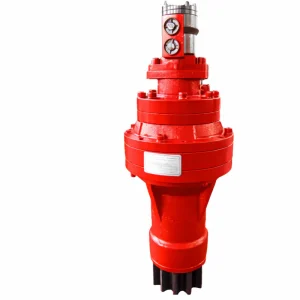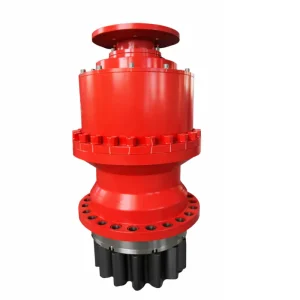
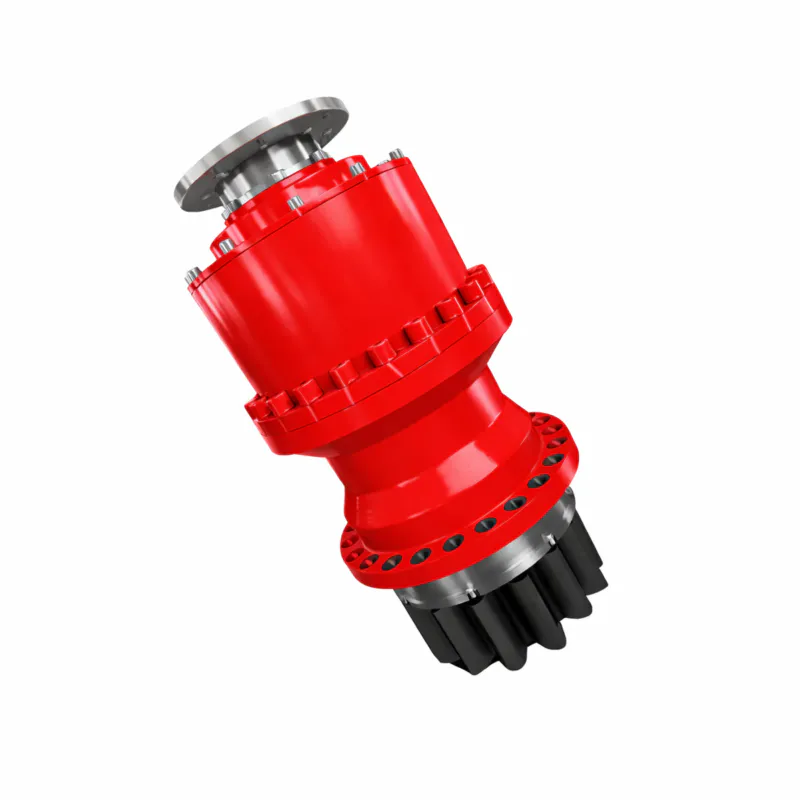
EP-Wind turbine planetary gearbox reducer
The EP-Wind turbine planetary gearbox reducer is a multi-stage planetary drivetrain component purpose-built for yaw drive and pitch drive systems in modern wind turbines, capable of handling turbine capacities from 1 MW up to 15 MW. Its sun-gear-to-ring-gear architecture distributes torque across multiple planet gears simultaneously, achieving mechanical efficiencies above 95% while maintaining a compact, balanced footprint.
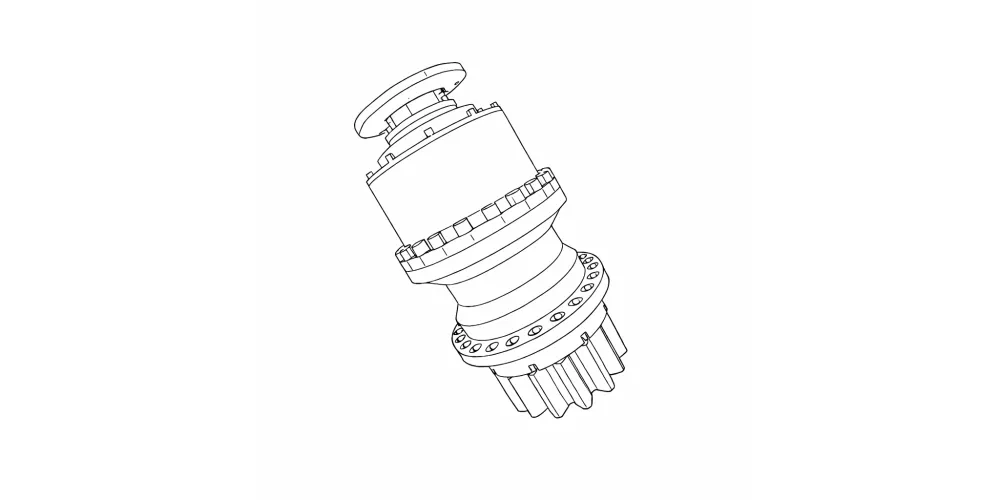
1. Technical specifications of the EP-wind turbine planetary gearbox reducer
| 1 | 2 | 3 | 4 | 5 | 6 |
| NB | 706 | L | 4 | 1671 | IEC80B5 |
| 1. NB: Ningbo planetary gearbox | |||||
| 2. 706: Gearbox size, 700, 701, 703...715 | |||||
| 3. L: L series slew drive | |||||
| 4. 4: Number of stages, 4...four stage | |||||
| 5. 1671: Ratio | |||||
| 6. IEC80B5: Motor type | |||||
| Type | Nominal Output Torque (N.m ) | Peak Static Output Torque (N.m ) | Ratio (i) |
|---|---|---|---|
| NB700L | 1000 | 2000 | 297--2153 |
| NB701L | 2000 | 4000 | 297--2153 |
| NB703AL | 2500 | 5000 | 278--1866 |
| NB705AL | 5000 | 10000 | 278--1866 |
| NB706BL4 | 8000 | 15000 | 203--2045 |
| NB707AL4 | 12000 | 25000 | 278--1856 |
| NB709AL4 | 18000 | 30000 | 278--1856 |
| NB711BL4 | 35000 | 80000 | 256--1606 |
| NB710L4 | 25000 | 50000 | 329--1420 |
| NB711L4 | 35000 | 80000 | 256--1606 |
| NB713L4 | 50000 | 100000 | 250--1748 |
| NB715L4 | 80000 | 140000 | 269--1390 |
2. Five Key Facts about the wind turbine speed reducer in Colombia
- High Torque Range: Rated output torques of 1,000–250,000 N·m cover everything from small community turbines to multi-megawatt offshore arrays in Colombia's Atlantic zone.
- Broad Gear Ratio Coverage: i=300–2,000 ratio range enables precise rotor-to-generator speed matching without secondary gearing stages.
- ISO 6336 & DIN 3990 Compliant: Gear tooth geometry and load capacity calculations are verified against internationally recognized standards, supporting regulatory acceptance in Colombia and the EU.
- Dual Application: One platform serves both yaw drive (nacelle rotation) and pitch drive (blade angle) requirements, reducing spare-parts inventory for wind farm operators.
- 12-Month Warranty + 24 h Technical Response: Every unit ships with a formal quality guarantee and rapid after-sales engineering support — critical for remote wind farm sites.
3. What Is the EP Wind Turbine Speed Reducer?
The EP Speed Reducer for Wind Turbines Planetary Gearbox is a precision-engineered transmission assembly designed to bridge the mechanical gap between a wind turbine's slow-turning rotor and its high-speed generator. In a standard utility-scale turbine, rotor blades rotate at roughly 6–20 rpm under operational wind conditions, while most generators require input speeds of 1,000–1,800 rpm to produce grid-quality electricity efficiently. Without a capable gearbox wind turbine solution, that enormous speed differential would be either unmanageable or require a prohibitively large direct-drive generator.
This planetary gear reducer addresses that challenge through a coaxial multi-stage epicyclic arrangement. The EP wind turbine planetary gearbox reducer is specifically optimized for two mission-critical subsystems: the yaw drive, which continuously rotates the nacelle to keep the rotor perpendicular to the wind vector, and the pitch drive, which independently adjusts each blade's angle of attack in real time. Both functions demand extreme precision, high torque density, and fail-safe braking — all of which are built into the EP wind turbine planetary gearbox reducer architecture. With Colombia's Ministry of Mines and Energy actively pursuing an offshore wind round of 6 GW capacity in departments such as Atlántico, Bolívar, and Magdalena, procurement managers evaluating wind turbine drivetrain components in Colombia will find this product particularly relevant to upcoming project builds.
The planetary arrangement distributes the mechanical load across three or more planet gears simultaneously, preventing any single contact point from bearing excessive stress. This inherent load-sharing keeps surface pressures well within the material fatigue limits specified by ISO 6336, extends L10 bearing life beyond 20,000 operating hours, and reduces audible noise — an increasingly important factor for near-shore and offshore deployments where acoustic compliance requirements are stringent.
4. How does the wind turbine planetary gearbox reducer work?
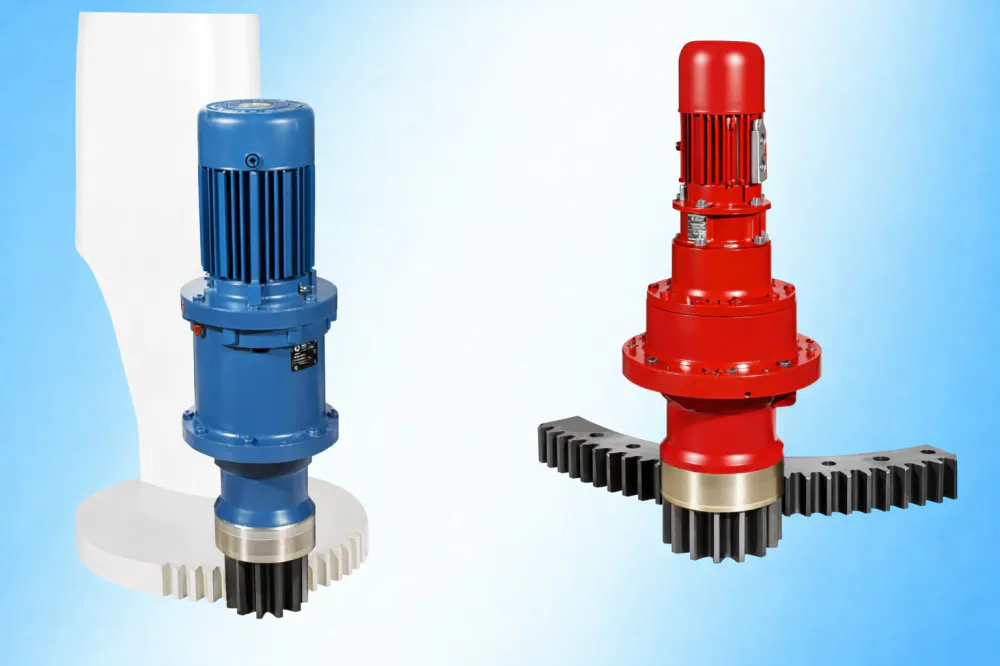
At the heart of every wind turbine planetary gearbox lies a classical epicyclic gear train consisting of three co-planar gear element families: a centrally located sun gear, a set of three to seven planet gears that revolve around the sun gear while simultaneously rotating on their own axes, and a stationary outer ring gear (annulus) whose internal teeth mesh with all planet gears simultaneously.
During normal operation, the input shaft — connected to the electric brake motor in yaw/pitch applications — drives the sun gear. The sun gear's rotation causes each planet gear to roll along the internal face of the fixed ring gear. Because the planet gears are mounted on a rotating planet carrier, their orbital motion around the sun gear is transmitted directly to the carrier shaft, which serves as the output. The net result is a large speed reduction and a corresponding multiplication of torque, all within an extremely compact, balanced assembly. Unlike a parallel-shaft helical gearbox, the planetary arrangement has its input and output shafts coaxially aligned, simplifying nacelle packaging in the confined space of a wind turbine tower head.
For the EP wind turbine planetary gearbox reducer wind turbine reducer, two, three, four, or five epicyclic stages can be cascaded in series to achieve the full gear ratio range of i=300–2,000. Higher stage counts enable greater ratios without increasing the outer envelope diameter, which is critical in pitch drive applications where space inside the blade root hub is extremely limited. An integrated multi-disc holding brake, available as a factory-fitted option, provides parking torque for safe rotor lock during maintenance operations.
5. Material Composition & Metallurgy
Material selection is decisive in determining whether a speed reducer for wind turbines will achieve the 20-year service life demanded by project finance agreements. Each component family in the EP series wind turbine planetary gearbox reducer is manufactured from materials chosen for their specific mechanical duty within the drivetrain.
Sun gear and planet gears are produced from low-alloy case-hardening steels — primarily 20CrMnTi or AISI 8620 — which are carburized to a case depth of 0.8–1.5 mm and then precision-hardened to a surface hardness of HRC 58–62. This combination yields an exceptionally wear-resistant contact surface while maintaining a tough, ductile core capable of absorbing shock loads during wind gusts.
The ring gear (annulus) is manufactured from 42CrMo4 alloy steel and induction-hardened to HRC 50–55 on the tooth flanks. This heat treatment sequence is verified by micro-section examination in accordance with EN ISO 6508. Planet carriers and housings are produced from high-tensile nodular cast iron (QT450-10 or QT600-3) or structural steel (S355), selected based on dynamic load profiles provided during application engineering review. All housing surfaces exposed to marine air receive a dual-layer epoxy primer plus polyurethane topcoat in accordance with ISO 12944 C5-M corrosion protection category — meeting the requirements faced by wind turbine planetary gearbox installations on Colombia's Caribbean coast.
Bearings are sourced from major precision bearing manufacturers and rated to ISO 281 L10 life criteria. In pitch drive applications where misalignment loads from blade bending moments are significant, self-aligning spherical roller bearings with enhanced radial clearance (C3 or C4) are specified. All bearing-to-shaft interfaces use interference fits verified against AGMA 9004 recommendations.

6. Five Product Key Advantages
1. Unmatched Torque Density
The multi-planet load-sharing geometry delivers up to 3× the torque of an equivalently sized parallel-shaft reducer. This allows the EP wind turbine drivetrain components to fit inside standard nacelle envelopes even as rated power increases from 2 MW to 6 MW+ in next-generation turbines.
2. Climate-Adaptive Design
Rated for operation from -40°C arctic conditions down to the high-humidity tropical environments of Colombia's Caribbean coast. Sealed bearing cavities, low-temperature synthetic lubricants, and ISO 12944 C5-M anti-corrosion coatings ensure reliable service across Colombia's diverse geographic conditions — from the Guajira Peninsula to offshore Atlantic zones.
3. Standards-Compliant Engineering
Gear geometry and fatigue life are calculated in accordance with ISO 6336, DIN 3990, and AGMA 6123. Electrical brake motors comply with IEC 60034. This multi-standard compliance simplifies type certification processes required under Colombia's RETIE electrical installation regulation and supports EU CE marking for export projects.
4. Dual Yaw/Pitch Platform
A single product family covers both yaw drive gearbox and pitch drive gearbox applications through modular stage-count configuration. Wind farm operators benefit from unified spare-parts inventory, simplified technician training, and reduced procurement complexity — all particularly valuable for Colombia's first-wave offshore projects where supply chain logistics remain developing.
5. Rapid After-Sales Support
A 12-month warranty and 24-hour engineering response commitment supports wind farm operators through commissioning and early operation phases. Replacement spare parts, oil analysis sampling kits, and field service documentation are available in English and Spanish — directly addressing the needs of engineering teams working on wind turbine gearbox maintenance in Colombia.
7. Application Scenarios
The EP Speed Reducer for Wind Turbines Planetary Gearbox is engineered for demanding real-world operating environments. The following scenarios represent primary deployment contexts where this high torque planetary reducer delivers verified performance:
Yaw Drive — Nacelle Rotation
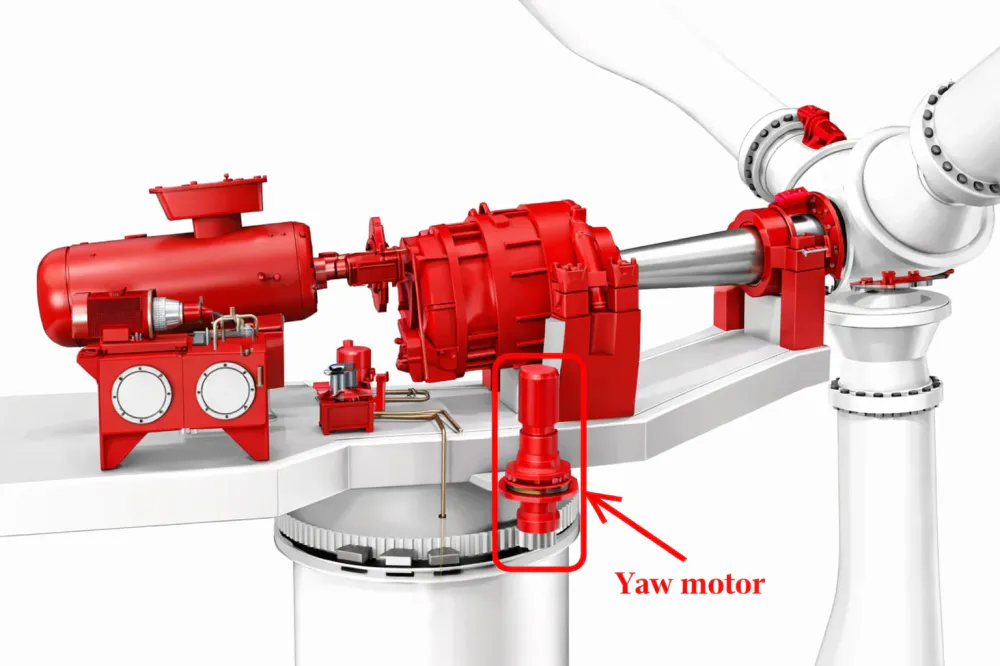
The yaw system rotates the entire nacelle assembly — which can weigh 60–400 tonnes on large turbines — to track the prevailing wind direction. The EP wind turbine planetary gearbox reducer provides the high torque and precise angular control required to achieve smooth, vibration-free yaw motion while withstanding cyclic load reversals.
Pitch Drive — Blade Angle Control
Each rotor blade requires an independent pitch drive to adjust its angle of attack continuously in response to wind speed changes. The EP wind turbine planetary gearbox reducer provides the precise torque output and rapid response needed to maintain optimal energy capture and protect turbine structural integrity during storms.
Onshore Wind Farms — Colombia Interior
Projects in the Guajira Peninsula and the inland Colombian windcorridor benefit from the EP wind turbine planetary gearbox reducer's ability to handle abrasive dust environments, altitude variations, and the intense UV exposure of tropical highland sites. Its sealed IP65 housing maintains lubricant integrity without field-level re-greasing between service intervals.
Offshore Wind — Caribbean Atlantic
Colombia's first offshore wind round targets shallow and deep-water areas along the Atlantic coast. Offshore duty demands IP67 or higher sealing, ISO 12944 C5-M corrosion protection, and stainless-steel fasteners throughout. The EP series wind turbine planetary gearbox reducer offshore variant meets all of these requirements and has been validated for salt-spray exposure per ISO 9227.
MRO Replacement Market
As Colombia's first-generation wind installations in the Guajira department age past their 10-year mark, wind farm gearbox maintenance programs require readily available replacement units with standardized mounting dimensions. The EP series wind turbine planetary gearbox reducer is dimensionally equivalent to major OEM gearbox platforms, enabling drop-in replacement without civil or nacelle structural modifications.
Utility-Scale & Community Wind
From single 1 MW community turbines serving rural Colombian municipalities to multi-hundred-MW utility projects backed by entities like Ecopetrol and Celsia, the EP speed reducer series covers the full power spectrum. Configurable staging means a procurement engineer can specify one vendor for the entire project regardless of turbine model mix.
8. Applicable Regulations & Compliance Standards
Wind turbine drivetrain components procured for Colombian and international projects must navigate a layered regulatory landscape. Below is an overview of the key frameworks relevant to the EP Speed Reducer for Wind Turbines Planetary Gearbox:
Колумбия
Colombia's primary technical regulation for electrical installations is RETIE (Reglamento Técnico de Instalaciones Eléctricas), administered by the Ministry of Mines and Energy (MME). Wind turbine components including gearbox-motor assemblies must comply with RETIE's electrical safety and earthing provisions. The regulatory authority for offshore wind permitting is the Agencia Nacional de Hidrocarburos (ANH) and the Dirección General Marítima (DIMAR), whose concession terms require that mechanical components in offshore turbines meet IEC 61400-3 fatigue load criteria. Additionally, Colombia's Ley 1715 de 2014 (renewable energy promotion law) and its Decree 570 of 2018 provide the fiscal incentive framework that has accelerated Colombian wind investment, requiring that approved equipment meet specified performance and safety standards.
International — IEC Standards
IEC 61400-1 (onshore wind turbines) and IEC 61400-3 (offshore wind turbines) define the design load cases and structural integrity requirements that gearbox speed reducers must withstand over a nominal 20-year design life. IEC 61400-4 specifically addresses gearbox design requirements for wind turbines, referencing ISO 6336 for gear load capacity and ISO 281 for rolling bearing life calculations. Every EP series wind turbine planetary gearbox reducer is designed, manufactured, and documented in alignment with these standards.
EU & Germany
European offshore wind projects increasingly reference the DNV-GL ST-0361 standard (formerly GL Renewables Certification) for drivetrain component type certification. German IECRE (IEC System for Certification to Standards Relating to Equipment for Use in Renewable Energy Applications) certification provides a globally recognized conformity pathway. The EU Machinery Directive (2006/42/EC) and subsequent updates require CE marking for gearbox assemblies supplied into EU member-state projects — a requirement that also applies to equipment exported from Colombia to European energy buyers.
United States
The American Gear Manufacturers Association (AGMA) standards — particularly AGMA 6006 (standard for design and specification of gearboxes for wind turbines) — provide the engineering baseline referenced by US project developers and their lenders. The EP series wind turbine planetary gearbox reducer adheres to AGMA 6123 efficiency and AGMA 6006 design life methodology.
9. About Us
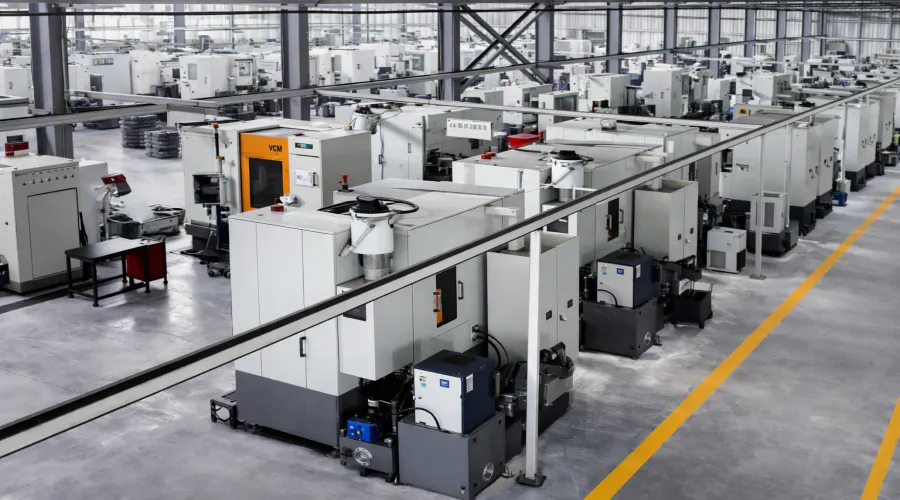
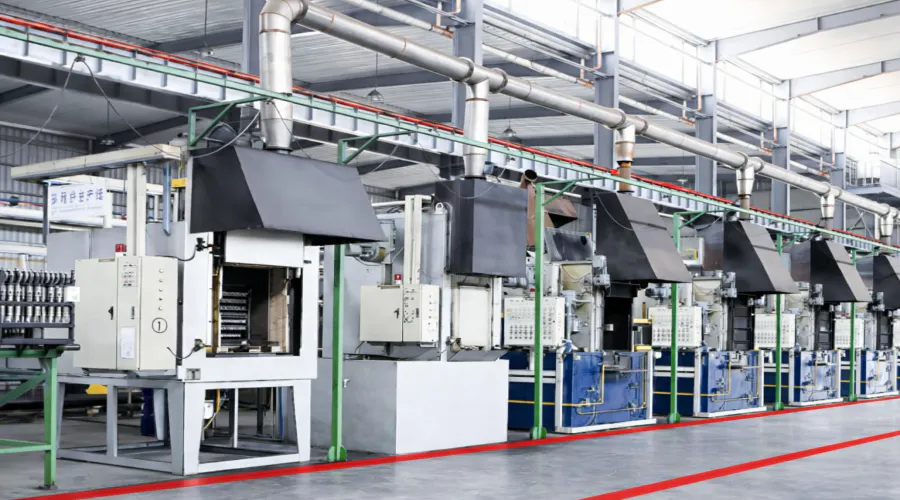
Our engineering and manufacturing team brings decades of focused expertise in planetary gearbox design, development, and production. Operating from a vertically integrated facility equipped with CNC gear hobbing and grinding centers, coordinate measuring machines (CMM), and hardness testing labs, we control the entire manufacturing value chain — from raw billet to assembled, tested gearbox unit.
We supply wind turbine speed reducers, yaw drive systems, and pitch drive assemblies to project developers, EPC contractors, and OEM turbine manufacturers across Latin America, Europe, and Southeast Asia. Our quality system operates under ISO 9001 certification, and our product engineering follows ISO 6336, DIN 3990, AGMA 6006, and IEC 61400 series requirements.
We understand that purchasing a wind turbine planetary gearbox is not a transactional decision — it is a long-term engineering partnership. Our application engineers provide gear ratio sizing, motor selection guidance, and fatigue life validation prior to order placement, and our after-sales team remains accessible for the duration of the product's operational life.
WorkShop
10. Related Products — One-Stop Drivetrain Solutions
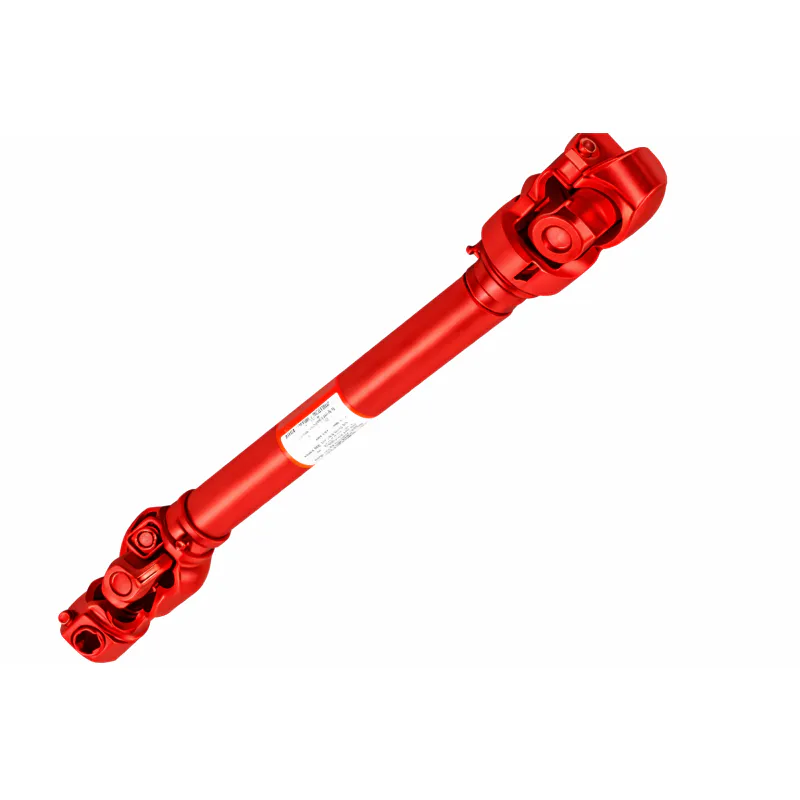
Beyond the Speed Reducer for Wind Turbines Planetary Gearbox, our facility produces complementary drivetrain and power transmission components that integrate seamlessly with this product. Specifying a matched system from a single supplier eliminates interface compatibility risks and simplifies procurement logistics — particularly valuable for Colombian and Latin American projects where supply chain management is a key variable in project schedules.

Drive Motors
Frequently Asked Questions
Q1. What gear ratio do I need for a yaw drive application in a 3 MW onshore wind turbine in Colombia?
A1. For a typical 3 MW onshore yaw drive, the EP series wind turbine planetary gearbox reducer is most commonly configured at i=750–1,200, depending on the motor rated speed (usually 1,400–1,500 rpm for IEC 4-pole motors) and the required nacelle rotation speed (typically 0.3–1.0°/s). Our application engineers will calculate the exact ratio based on your yaw ring tooth count and required holding torque. Please share your turbine model and motor specifications when submitting an inquiry and we will provide a formal gear ratio recommendation within 48 hours.
Q2. What is the difference between a planetary gearbox and a helical gearbox for wind turbines — which is better suited for high torque applications in Colombia?
A2. The fundamental difference lies in the load distribution architecture. A planetary gearbox distributes torque across three or more planet gears simultaneously, achieving torque densities 2–3× higher than a comparable helical gearbox while maintaining coaxial shaft alignment — critical for compact nacelle packaging. For yaw and pitch drives in modern wind turbines (whether installed in Colombia's Guajira Peninsula or offshore Atlantic), planetary architecture is almost universally preferred because the gear ratios required (i=300–2,000) would demand a very large parallel-shaft gearbox. For main drivetrain applications in larger turbines, a combined planetary-helical multi-stage gearbox is the industry standard.
Q3. How does a wind turbine planetary gearbox support Colombia's renewable energy targets and energy transition goals?
A3. Colombia's Ley 1715 de 2014 and its Decree 570 of 2018 establish fiscal incentives for non-conventional renewable energy (FNCE) projects, including wind. Colombia's UPME projects offshore wind installed capacity of 7 GW by 2040 and 13 GW by 2050. Every megawatt of wind generation requires reliable drivetrain components — yaw drive, pitch drive, and main gearbox — to capture energy efficiently throughout the turbine's 20-year design life. A high-quality planetary speed reducer reduces drivetrain losses, extends turbine availability, and lowers the levelized cost of energy (LCOE) — directly supporting Colombia's objective of reducing dependence on hydroelectric power and stabilizing electricity prices.
Q4. Is the EP wind turbine planetary gearbox reducer compatible with offshore wind conditions on Colombia's Caribbean coast?
A4. Yes. The offshore variant of the EP series wind turbine planetary gearbox reducer carries IP67 sealing, ISO 12944 C5-M corrosion protection (tested per ISO 9227 salt-spray for 1,000 hours minimum), stainless-steel external hardware, and a tropical-grade synthetic lubricant rated for +50°C ambient conditions. These specifications directly address the Caribbean offshore environment — high humidity, salt-laden air, and elevated ambient temperatures — that characterize the project areas identified in Colombia's first offshore wind round along the Atlántico and Bolívar coastlines.
Q5. What is the recommended maintenance interval for a wind farm gearbox in Colombia's tropical climate?
A5. In tropical climates with ambient temperatures consistently above 35°C, we recommend an oil sampling analysis every 6 months and a full oil change at 15,000 operating hours (rather than the standard 20,000-hour interval for temperate environments). Visual inspection of shaft seals and housing paint integrity should be completed annually. A detailed maintenance schedule specific to your site's climate and operating profile is provided with every EP series wind turbine planetary gearbox reducer unit. Our after-sales team can also arrange remote condition monitoring setup using vibration and oil temperature sensors compatible with standard SCADA platforms.
Q6. Can the EP wind turbine planetary gearbox reducer serve as a direct drop-in replacement for existing yaw gearboxes already installed in a Colombian wind farm?
A6. In most cases, yes. The EP series wind turbine planetary gearbox reducer is dimensionally engineered to match the bolt-pattern and shaft interface dimensions of major OEM yaw drive platforms. If you share the existing gearbox model number and mounting interface drawings with our technical team, we will confirm dimensional compatibility and identify any adapter flanges required. For the Colombian market specifically, we have documented replacement compatibility with several gearbox platforms currently installed in Guajira department wind farms. This drop-in capability eliminates costly nacelle structural modifications and shortens turbine downtime during replacement.
Q7. What lubrication oil is specified for the EP wind turbine planetary gearbox reducer, and how is it managed in remote Colombian wind farm sites?
A7. The EP series wind turbine planetary gearbox reducer is factory-filled with ISO VG 220 or VG 320 fully synthetic polyalphaolefin (PAO) gear oil, selected for its wide viscosity-temperature stability range (operational from -40°C to +120°C) and oxidation resistance extending oil change intervals to 20,000 hours under temperate conditions. For remote Colombian onshore sites where bulk oil logistics are challenging, we recommend an oil sampling port fitting as a standard option — allowing oil condition monitoring by laboratory analysis of 50 ml samples without gearbox drainage. Low-temperature startup aids (electric oil heaters) can be specified for sites at high altitudes in the Colombian Andes where overnight temperatures drop significantly.
Editor: PXY