
1. Why Spiral Conveyor Drives Demand a Purpose-Designed Right-Angle Drive Solution
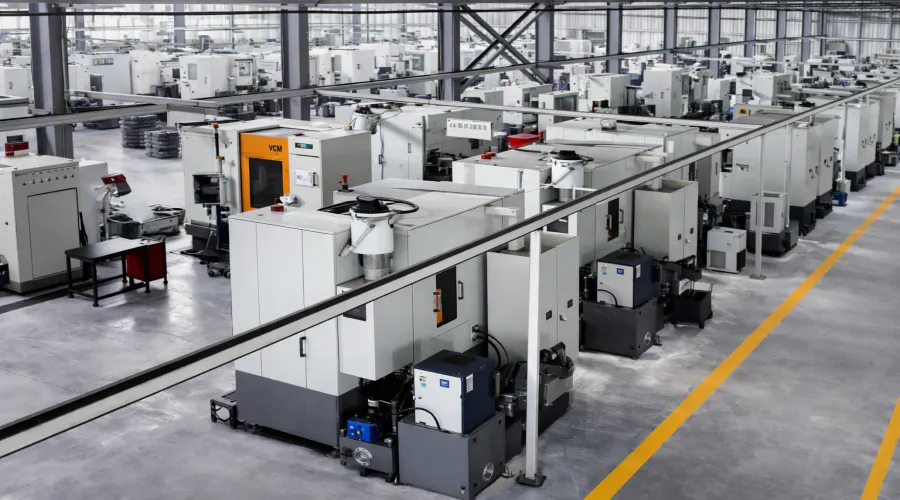
Spiral conveyors — the kind used inside industrial quick-freeze tunnels and continuous baking/roasting tunnels — move product along a helical path that rises or descends through multiple tiers of belt inside a single compact footprint. The cage drum at the centre of the spiral is what keeps the belt in tension and advancing along the helix, and it rotates on a vertical axis. The drive motor, however, must sit at floor level for maintenance access, structural stability, and electrical connection convenience. This geometric constraint — vertical output, floor-level input — is precisely the problem that a right angle planetary gearbox is engineered to solve.
The operating environment around a spiral conveyor is among the most thermally extreme in all of food processing. Spiral quick-freezers run their internal atmosphere at -35 °C to -40 °C to achieve the rapid surface crust-freezing that protects product texture and moisture content. Tunnel bakery and roasting ovens operate at +180 °C to +220 °C in the product zone. In both cases, the drive gearbox is positioned at the base of the cage drum shaft — inside or immediately adjacent to the thermal enclosure — and must deliver continuous rated torque without lubricant breakdown, seal degradation, or bearing damage across these temperature extremes. A standard industrial right angle gearbox rated for -10 °C to +60 °C will fail within weeks under these conditions. The gearbox specification for spiral conveyor service is a thermal engineering problem as much as it is a mechanical one.
This article examines the operating mechanics, structural design, material selection, surface treatment, environmental ratings, and failure modes of the right angle planetary gearbox in spiral freezer and tunnel oven conveyor applications. The content is aimed at food processing plant engineers, equipment OEMs, and maintenance engineering teams in Colombia and across Latin America who are specifying drive equipment for new installations or evaluating replacement options for aging conveyor drive systems. Colombia’s growing food processing export sector — particularly poultry, seafood, and baked goods destined for North American and European markets — increasingly operates spiral thermal processing tunnels that demand this level of drive system performance.
2. Motion Mode: How the Spiral Conveyor Drive Actually Functions
The cage drum of a spiral conveyor rotates continuously at a low, steady angular velocity — typically 2 to 15 rpm at the drum shaft — and must maintain this speed with very low velocity variation throughout the production run. Velocity variation at the drum shaft translates directly to tension variation in the spiral belt, which causes the belt tiers to bunch or separate unevenly. In a quick-freeze tunnel, belt tension variation disrupts the spacing between product pieces, creating non-uniform freezing rates between closely packed items. In a tunnel oven, it affects dwell time distribution across the belt width, producing baking colour non-uniformity that a food quality inspector classifies as a defect.
The drive motor sits on the equipment frame at floor level, with its shaft running horizontally or vertically depending on the motor mounting arrangement chosen by the machine builder. The cage drum shaft runs vertically upward through the tunnel floor into the thermal zone. The right angle planetary gearbox is the mechanical interface between these two perpendicular axes — it transmits the motor’s high-speed, low-torque rotation through a 90-degree change of direction and a large speed-reduction ratio, delivering the low-speed, high-torque output the cage drum requires.
The planetary gearbox ratio for this application is typically in the range of 20:1 to 100:1, depending on the motor speed and the drum diameter. For a 1,500 rpm AC motor driving a cage drum at 8 rpm, a 187.5:1 overall ratio is needed — achievable with a two-stage planetary pre-stage combined with the bevel output stage. The steady, low-speed continuous operation profile means the gearbox operates predominantly at its rated thermal equilibrium temperature, making lubricant selection and thermal management the dominant design considerations rather than peak torque capacity.
3. Structure Type: Integrated Spiral Bevel-Planetary with Extended Temperature Sealing
The structural arrangement for a spiral conveyor cage drum drive is an integrated bevel-planetary unit — the same fundamental architecture used in other right-angle applications — but with specific engineering modifications at the seal, lubrication, and bearing interface that address the extreme temperature service conditions. The planetary stage provides the high-ratio speed reduction in a compact axial length, while the spiral bevel output stage redirects the reduced-speed rotation through 90 degrees to the vertical cage drum shaft.
For freezer applications, the modifications target low-temperature operability. Standard gear oils become highly viscous below -15 °C, generating excessive churning losses and preventing adequate lubricant film formation at gear contact surfaces during cold start. The gearbox housing for freezer service uses an enlarged oil reservoir relative to the gear cavity volume, ensuring a greater thermal mass of oil that moderates the rate of temperature change during cool-down cycles. The bearing inner race interference fits are specified at a lower value than in standard units, accounting for the differential thermal contraction between the steel shaft and the bearing bore that occurs at -40 °C — a contraction difference that can change the bearing fit from interference to clearance if the standard tolerance is used. Input and output seals are FKM or PTFE-lipped, specified to remain flexible and maintain lip contact force at the lowest expected operating temperature.
For tunnel oven applications, the modifications address high-temperature lubricant degradation and seal hardening. PAO synthetic gear oil with a high-temperature viscosity index (VI above 160) maintains adequate film thickness at 90 °C sump temperature — the typical gearbox oil temperature in an oven tunnel application where the housing is partially inside the heated zone. Shaft seals are fluoroelastomer FKM or fluorosilicone, both of which retain elasticity to +200 °C and resist the thermal oxidation that degrades standard nitrile NBR seals at temperatures above 120 °C. The bearing preload specification for oven-duty units uses a slightly lower initial preload than standard, accounting for the thermal expansion of the shaft and housing that will increase effective bearing preload at operating temperature. For the full continuous temperature range of -40 °C to +220 °C, a dual-specification approach is standard: two gearbox variants — one for freezer duty, one for oven duty — each optimised for its specific thermal extreme, rather than a single unit attempting to span the full range.
4. Five Key Advantages for Spiral Conveyor Drive Applications
These advantages are drawn from field performance data and engineering specifications of spiral conveyor drive systems operating at food processing facilities across Colombia, Mexico, Brazil, and the Southern Cone. They reflect the criteria that plant engineers and equipment OEMs use when evaluating drive options for spiral thermal processing tunnels.
01 — Motor-at-Floor / Output-Vertical Layout
The 90-degree drive architecture is the fundamental enabler of the spiral conveyor configuration. By transmitting torque through a right-angle bevel stage, the drive motor stays at floor level where it is accessible for maintenance, inspection, and replacement without entering the thermal enclosure. This layout eliminates the structural challenge of suspending a heavy motor above the tunnel ceiling or inside the freezer atmosphere, keeps electrical connections and variable frequency drives outside the thermal zone, and allows the cage drum shaft bearing to be located at the floor frame — the most structurally stable position for handling the cantilever loading from the belt tension.
02 — High Torque in Compact Vertical Footprint
The planetary stage delivers torque densities three to five times higher than a single-helical gear stage of the same housing diameter. For a spiral freezer with a cage drum diameter of 1.2 m and a belt tension load of 4,000 N — a typical configuration for a medium-capacity IQF (Individually Quick Frozen) tunnel — the required cage drum torque is approximately 2,400 Nm. A high torque right angle planetary gearbox achieves this output in a housing that fits within the 400 mm clearance envelope at the base of the cage drum shaft, where a helical or worm gear alternative of comparable torque rating would require a significantly larger footprint that conflicts with the tunnel frame structure.
03 — Continuous Rated Operation at Thermal Extremes
Correctly specified spiral conveyor gearboxes run at rated torque continuously — 20 hours per day, 300+ production days per year — under the thermal conditions of the tunnel. The PAO synthetic lubricant in the freezer-duty variant maintains a lubricant film at -40 °C that is adequate for the low sliding velocities at the bevel and planetary gear meshes during the 15–30-minute thermal equilibration period at start-up. The oven-duty variant’s high-VI PAO retains sufficient viscosity at 90 °C sump temperature to sustain the EHD film across the full production cycle without requiring oil changes at intervals shorter than 4,000 hours. This continuous-duty capability at temperature extremes is what makes the right angle planetary configuration the industry standard for this application rather than worm or helical alternatives.
04 — H1 Food-Grade Lubrication in Tunnel Zone
The portion of the cage drum shaft that passes through the tunnel floor into the product zone is sealed by a labyrinth and contact seal combination, but seal seepage under sustained thermal cycling is an engineering reality that food safety auditors treat as a manageable risk rather than an absolute barrier. H1-registered PAO lubricant — formulated to be non-toxic at incidental food contact concentrations under NSF/ANSI 61 registration — ensures that any trace lubricant migration through the shaft seal does not create a food safety non-conformance. In Colombia, INVIMA audit protocols increasingly assess the H1 status of lubricants used in equipment with rotating shaft penetrations through food zone boundaries.
05 — Single-Housing Integration Reduces Maintenance Points
A standalone bevel unit combined with a separate planetary reducer creates two oil sumps, four shaft seals, and two alignment maintenance points for a single drive function. The integrated right angle planetary gearbox consolidates all this into one housing, one oil charge, and two seals — input and output. For maintenance teams at Colombian poultry processing or seafood freezing facilities that operate under tight preventive maintenance windows between production shifts, halving the number of gearbox service points per spiral conveyor represents a measurable reduction in annual maintenance labour and consumable costs.
5. Working Principle: How Does a Right Angle Planetary Gearbox Work in a Spiral Conveyor Context
Understanding how does a right angle planetary gearbox work in a spiral conveyor begins with the two-stage function of the unit. The motor drives the sun gear of the first planetary stage through the input coupling. In the planetary stage, three or four planet gears orbit the sun gear within a fixed ring gear, and the planet carrier delivers a reduced-speed, multiplied-torque output. For a two-stage planetary configuration — which is the standard for the high ratios required in cage drum drive applications — this process repeats: the output of the first planet carrier drives the sun gear of the second stage, and the second carrier provides the final planetary output. A two-stage planetary unit can achieve ratios from approximately 15:1 to 100:1 in a single integrated housing, covering the majority of spiral conveyor drum speed requirements for standard 4-pole or 6-pole AC motors.
This two-stage planetary output then drives the spiral bevel pinion, which meshes with the bevel ring gear at 90 degrees. The bevel ring gear is mounted on the output shaft, which connects directly to the vertical cage drum shaft through a coupling or flange interface. The direction of output shaft rotation relative to the input — the planetary gear reverse direction question — is determined by the bevel gear hand (left or right spiral) and must be specified at order to match the required drum rotation direction. Most spiral conveyor OEMs standardise on clockwise drum rotation when viewed from above, but this should always be confirmed against the specific machine’s belt path geometry before ordering a replacement gearbox.
The how does a planetary gearbox work question in a thermal context requires one additional consideration specific to spiral conveyor service. At start-up from a cold soak in a freezer tunnel, the gear oil viscosity is significantly above its rated working viscosity — a PAO ISO VG 220 oil at -40 °C has a kinematic viscosity many times higher than at 40 °C. The motor must overcome the churning resistance of this viscous oil before the gear contact surfaces reach their normal EHD lubrication regime. The planetary stage’s load-sharing characteristic — distributing this churning resistance across three or four planet-ring gear meshes simultaneously — produces a lower churning torque per gear mesh than a single-mesh helical or worm arrangement of equivalent reduction ratio, which helps the drive motor start under cold-soak conditions without exceeding its rated starting torque. For detailed product specifications and standard configurations, our right angle planetary gearbox range covers standard and extended-temperature configurations for spiral conveyor applications.
6. Technical Specifications – Right Angle Planetary Gearbox (Spiral Conveyor Drum Drive)
The 20 parameters below represent a representative configuration for a food-processing-grade right angle planetary gearbox sized for a medium-capacity spiral freezer cage drum drive. Freezer-duty and oven-duty variants differ primarily in lubricant specification and seal compound — the gear and housing dimensions are typically identical within a frame size series. Custom configurations for non-standard ratios, hollow vertical shaft outputs, and extreme-temperature dual-rated specifications are available on request.
| Parameter | Value / Specification |
|---|---|
| Gearbox Type | Spiral Bevel + 2-Stage Planetary (integrated) |
| Output Shaft Orientation | Vertical (90° to horizontal motor axis) |
| Available Ratios (two-stage) | 20:1, 25:1, 32:1, 40:1, 50:1, 63:1, 80:1, 100:1, 125:1 |
| Rated Output Torque | 800 – 8,000 Nm (frame size 110–200) |
| Peak Output Torque (short-duration) | Up to 2× rated (≤ 60 seconds) |
| Transmission Efficiency | ≥ 94% (two-stage + bevel, full load) |
| Input Speed (max.) | 3,000 rpm |
| Operating Temperature – Freezer Duty | -40 °C to +40 °C |
| Operating Temperature – Oven Duty | +5 °C to +220 °C (housing external max. +90 °C) |
| Lubrication – Freezer Duty | H1 PAO ISO VG 150, pour point ≤ -55 °C |
| Lubrication – Oven Duty | H1 PAO ISO VG 220, VI ≥ 160, thermal stability to 120 °C sump |
| Seal Type – Freezer Duty | PTFE-lipped + FKM, rated to -55 °C |
| Seal Type – Oven Duty | FKM or fluorosilicone, rated to +220 °C |
| Housing Material | Ductile iron GGG-50 (standard) / AISI 316L stainless (food-grade option) |
| Gear Material | 20MnCr5 / 18CrNiMo7-6, case-carburised and ground |
| Protection Class | IP65 standard; IP67 available for freezer washdown |
| Output Shaft Orientation Options | Solid shaft, hollow shaft, flanged output |
| Oil Change Interval | 4,000 h (oven duty); 6,000 h (freezer duty) |
| Service Life (L10h) | ≥ 25,000 hours at rated continuous load |
| Overall Dimensions (L × W × H) – frame 140 | 310 mm × 240 mm × 240 mm |
Custom configurations including dual-output shafts, torque arm mounting, extended vertical shaft penetration lengths, and non-standard ratios are available. Contact the technical team for application-specific sizing assistance for spiral freezer and tunnel oven installations in Colombia and across Latin America.
7. Manufacturing Structure
The manufacturing requirements for a spiral conveyor right angle planetary gearbox differ from a standard food processing drive unit in one critical respect: the dimensional stability of housing bores and gear tooth profiles across the full operating temperature range is the governing design criterion, not just the room-temperature accuracy of the assembled unit. A housing bore that is correct at 20 °C but distorts by 20 µm at -40 °C due to residual casting stress will change the bearing preload and the bevel gear backlash in ways that either over-load the bearings or open a backlash gap that produces gear impact at each tooth engagement cycle.
Housing castings for extended-temperature spiral conveyor gearboxes are therefore produced from nodular (ductile) cast iron GGG-50, stress-relieved at 550–580 °C after rough casting and before any finish machining. The stress-relief cycle removes residual thermal stresses from the casting solidification process that would otherwise relax progressively under operating temperature cycling, producing a slow dimensional drift of the bearing bore positions over the first 12–24 months of service. For applications where the gearbox housing is directly in contact with the cryogenic atmosphere of a CO2 or liquid nitrogen freezing zone, an AISI 316L stainless steel housing is used instead of cast iron, as the lower-carbon austenitic stainless retains toughness at cryogenic temperatures where standard grey cast iron becomes brittle and susceptible to impact fracture.
Gear blanks are produced from 20MnCr5 (for standard-duty units) or 18CrNiMo7-6 (for heavy-duty units requiring higher core toughness), case-carburised to 0.7–1.1 mm case depth, oil-quenched, sub-zero treated at -80 °C to minimise retained austenite, and finish-ground to a profile tolerance of DIN 6 or better. Assembly is performed at room temperature, with bearing interference fits calculated for the rated operating temperature range rather than standard 20 °C conditions. For a gearbox rated for -40 °C service, the bearing inner race interference is increased to account for the differential contraction of the shaft-bearing interface at the design minimum temperature, ensuring that the bearing remains positively located under the coldest operating conditions the unit will experience.
8. Material System: Standard Drive Equipment vs. Thermal-Zone Rated Spiral Conveyor Gearbox
The material differences that determine whether a drive unit survives spiral conveyor service — or fails within the first production season — are concentrated in the lubricant, seal compound, and housing material selections. The structural gear materials are largely the same between standard and extended-temperature units; the thermal performance is determined by the peripheral systems that keep the gear and bearing contacts properly lubricated and sealed across the full temperature range.
| Component | Standard Industrial Gearbox | Thermal-Zone Rated Spiral Conveyor Unit |
|---|---|---|
| Lubricant Type | Mineral ISO VG 220, pour point -15 °C | H1 PAO synthetic, pour point -55 °C, VI ≥ 160 |
| Food Safety Status | H2 (no food contact permitted) | H1 NSF/ANSI 61 registered (incidental contact acceptable) |
| Input Seal | NBR, rated -20 °C to +100 °C | FKM or PTFE, rated -55 °C to +220 °C |
| Output Seal | Single lip NBR | Triple lip FKM + labyrinth pre-stage (vertical shaft) |
| Housing Material | Grey cast iron, not stress-relieved | GGG-50 ductile iron or 316L stainless, stress-relieved |
| Bearing Fit | Standard interference, calculated at 20 °C | Increased interference, calculated for min. operating temperature |
| Protection Rating | IP54 | IP65 (standard); IP67 (freezer washdown option) |
| Oil Change Interval | 2,000 h | 4,000 – 6,000 h (PAO thermal stability) |
| External Coating | Alkyd primer + topcoat | Two-component epoxy (chemical resistance) or bare 316L |

9. Surface Treatment
Surface treatment choices for spiral conveyor gearboxes are governed by two competing requirements: corrosion protection in the food processing environment, and the avoidance of coating delamination or embrittlement at temperature extremes. Standard industrial paint systems — alkyd primer with polyurethane topcoat — begin to crack and delaminate at sustained temperatures above 120 °C and may become brittle and flake at -40 °C in a freezer tunnel, creating a contamination risk if paint fragments enter the product zone through gaps in the tunnel floor sealing around the cage drum shaft penetration.
For oven-duty units, the external housing surface above the floor level (within the oven heated zone) is treated with a high-temperature silicone-aluminium coating that remains stable to 250 °C and does not release organic compounds at oven operating temperatures. Below the floor level, where the gearbox body is in the ambient equipment room environment, a standard two-component epoxy primer and chemical-resistant polyurethane topcoat provides adequate corrosion protection against the warm, humid atmosphere of a bakery equipment room.
For freezer-duty units, the housing external surface within the freeze zone is left in the as-machined condition for cast iron units (which develop a stable rust-inhibiting oxide layer at low temperatures) or in the electropolished condition for AISI 316L units. The electropolished 316L surface — with Ra ≤ 0.8 µm roughness — resists the frost accumulation that builds on rougher surfaces during defrost cycles, preventing the ice-adhesion problem that can occur with painted surfaces in a sub-zero environment where moisture condensates and freezes during each production start-up. Below the freezer floor in the equipment room, a two-component epoxy coating applied over a zinc phosphate conversion primer provides corrosion protection against the drip condensation that occurs on the gearbox body as it warms up between production cycles.
The output shaft surface in the vertical cage drum shaft interface zone — the section of shaft that passes through the tunnel floor seal — is ground to Ra 0.2–0.4 µm and protected by a hard chrome or physical vapour deposition (PVD) TiN coating to resist the abrasive wear from frozen food particles and ice crystals that can accumulate at the tunnel floor penetration point. This hard surface protects the dynamic seal lip contact zone and extends the seal service life by a factor of two to three compared to an uncoated shaft surface in freezer service.
10. Environmental Grade Classification for Spiral Thermal Processing Equipment
Spiral freezer and tunnel oven installations present three physically distinct environmental zones across which the drive gearbox must be specified. Choosing the correct IP rating and construction specification for each zone is important for long-term reliability and for food safety compliance under the frameworks applicable in Colombia and in export markets served by Colombian food processors.
| Zone | Description | IP Rating Req. | Temperature / Specification |
|---|---|---|---|
| Zone 1 – Inside Freezer/Oven Tunnel | Vertical shaft penetration point, cage drum base | IP67 (freezer); IP65 (oven) | -40 °C / +220 °C; H1 lubricant mandatory; 316L shaft preferred |
| Zone 2 – Tunnel Floor Interface | Gearbox housing at floor penetration, frost/moisture zone | IP65 | Condensation, occasional water spray; epoxy coating or 316L |
| Zone 3 – Equipment Room (Motor Side) | Below tunnel floor, ambient plant environment | IP54 minimum | +5 °C to +40 °C; standard industrial specification acceptable |
| Zone 4 – Washdown (Post-Production) | Daily or weekly hose-down of tunnel floor and drive area | IP67 (recommended) | Cold or warm water jet; FKM seals; no open drain points |
11. Operating Characteristics of Spiral Conveyor Cage Drum Drives
The load profile of a spiral conveyor cage drum drive is characterised by continuous, steady-state torque at very low angular velocity — a profile that sounds benign but creates specific engineering challenges that differ from the start-stop or variable-speed duty cycles of most other industrial drive applications. Continuous low-speed operation means the gearbox operates at or near thermal equilibrium throughout the production shift, with the operating temperature stabilising at a level determined by the heat input from gear mesh and bearing friction minus the heat dissipation from the housing surface and the thermal exchange with the tunnel environment.
In a freezer application, the thermal exchange with the tunnel atmosphere is negative — the tunnel is colder than the gearbox, meaning heat flows from the gearbox into the freezer, accelerating the cooling of the gearbox body toward tunnel temperature. If the gearbox is partially inside the freezer (which is the case when the cage drum base is mounted at tunnel floor level), the portion of the housing inside the freezer loses heat faster than the gear mesh friction can replace it, and the operating oil temperature at the gearbox base can drop below -20 °C during steady production even though the gearbox is generating friction heat. This is why the PAO lubricant specification for freezer-duty units requires a pour point below -55 °C rather than simply a low pour point relative to the tunnel temperature: the oil must remain flowable at the coldest point in the housing, which is typically 5–15 °C colder than the tunnel atmosphere due to conduction through the housing wall.
In an oven application, the heat exchange is positive — the oven atmosphere heats the cage drum shaft and the portion of the gearbox inside the oven, adding to the heat generated by gear mesh friction. The gearbox sump temperature in a tunnel oven installation can reach 90–110 °C under steady production, requiring the high-VI PAO lubricant to maintain adequate film thickness at this sump temperature. An oil temperature monitoring point at the gearbox sump — a simple resistance thermometer feeding into the plant control system — is a standard instrumentation provision for tunnel oven gearboxes in facilities that operate under preventive maintenance programmes aligned with ISO 55001 asset management principles.
12. Typical Failure Modes and Field Diagnostic Indicators
The failure modes in spiral conveyor gearboxes are concentrated in the lubricant and seal systems rather than in the gear or bearing structural components — a direct consequence of the extreme temperature exposure that the non-structural components must endure. The gear and bearing components that are correctly specified for the torque load typically outlast the first three lubricant and seal service cycles.
Lubricant Gelling – Cold Start in Freezer
The most common failure mode in spiral freezer gearboxes operated with wrong lubricant specification. Mineral gear oil or standard-grade PAO at the low end of its stated viscosity range will gel at -40 °C, preventing oil flow from the sump to the gear mesh surfaces during the first minutes of start-up. The gear contact surfaces run unlubricated until either the friction heat raises the oil temperature above the gel point, or the gear tooth contact stress exceeds the case hardness load limit and surface fatigue begins. Diagnostic indicator: high motor starting current, gradual increase in gear noise over the first 20 minutes after a cold start. Prevention: confirm lubricant pour point at least 15 °C below the minimum expected tunnel temperature, and consider an oil pre-heater element for very deep-freeze applications below -35 °C.
Output Seal Extrusion – Oven Thermal Cycling
Shaft seals on oven-duty gearboxes are subjected to repeated thermal expansion and contraction of the shaft diameter as the oven heats up and cools down between production runs. An NBR seal — the standard for ambient-temperature applications — hardens progressively above 120 °C and eventually loses elasticity, developing permanent set that prevents it from following the shaft diameter change. The first visible sign is gear oil seepage at the output shaft during the cooldown phase of the oven cycle, when the shaft contracts and the stiffened seal can no longer maintain contact pressure. Prevention: specify FKM or fluorosilicone seals as a standard component for all oven-duty gearboxes, regardless of whether the housing body is fully inside the oven or partially shielded by the tunnel floor insulation.
Bearing Inner Race Fretting – Cold Temperature Fit Loss
At -40 °C, the steel shaft contracts more than the cast iron housing bore, because the shaft’s greater cross-sectional thermal mass produces a slower temperature equilibration than the lighter housing wall. If the bearing inner race interference fit was calculated for room temperature only, the fit can transition from interference to clearance at the minimum operating temperature, allowing the bearing inner race to micro-rotate on the shaft — a condition called fretting that produces a characteristic red-brown oxide powder at the bearing seat. Diagnostic indicator: shaft discolouration at the bearing location visible during bearing removal; abnormal vibration at the bearing defect frequency on the motor current spectrum. Prevention: verify bearing interference fits are calculated for the design minimum operating temperature, not standard 20 °C conditions.
Lubricant Oxidation – Extended Oven-Duty Oil Life
PAO gear oils in oven-duty gearboxes degrade through thermal oxidation at a rate that increases approximately four-fold for every 10 °C above the lubricant’s rated oxidation threshold. A gearbox operating at 90 °C sump temperature with PAO rated to 100 °C has limited oxidation stability margin. Extended oil change intervals beyond the manufacturer’s recommendation — common when maintenance teams apply freezer-duty oil change intervals to oven-duty units without adjustment — produce a progressive increase in oil acidity (TAN number) that accelerates gear surface and bearing corrosion. Diagnostic indicator: oil sample showing TAN above 1.0 mg KOH/g on annual oil analysis; gear surface showing early pitting at mid-tooth flank. Prevention: maintain separate oil change schedules for freezer and oven duty units; use oil condition monitoring (IR spectrometry or TAN measurement) rather than fixed intervals for oven-duty units.
13. Recommended Configuration for Spiral Conveyor Cage Drum Drives
The configuration below reflects current best practice for a right angle planetary gearbox on the cage drum drive of an industrial spiral quick-freeze tunnel or tunnel baking oven. The parameters are applicable to mid-capacity installations with cage drum diameters of 1.0–1.5 m and belt loads of 1,500–5,000 N, which cover the majority of spiral thermal processing equipment in use at Colombian poultry, seafood, and bakery processing facilities. For larger systems with belt loads above 5,000 N or for cryogenic IQF tunnels operating below -40 °C, extended-range configurations are available on a custom-engineered basis.
Gear stages: Two-stage planetary plus spiral bevel output. For cage drum speeds below 10 rpm at motor speeds of 1,400–1,500 rpm (50 Hz Colombia grid), a two-stage unit at 50:1 to 100:1 covers the majority of configurations without requiring a separate pre-reducer. For drum speeds below 5 rpm, a three-stage configuration or a combined planetary pre-reducer and right angle bevel stage is required.
Lubricant specification: H1 PAO ISO VG 150 for freezer duty (pour point ≤ -55 °C, VI ≥ 150, NSF/ANSI 61 registered). H1 PAO ISO VG 220 for oven duty (pour point ≤ -25 °C, VI ≥ 160, thermal stability to 120 °C, NSF/ANSI 61 registered). Do not use the same lubricant grade for both applications even if the physical housing dimensions are identical — the viscosity grades are optimised for different thermal operating points.
Seal specification: Freezer duty: PTFE-lipped primary seal plus FKM secondary, with labyrinth pre-seal at the vertical output shaft penetration point. Oven duty: FKM primary plus fluorosilicone secondary for the output shaft in the oven zone; standard FKM for the motor-side input seal. Verify the cleaning agent chemistry used in the post-production washdown programme before specifying seal compound — high-alkalinity NaOH programmes favour EPDM over FKM, while peracid-based sanitisers are handled by FKM.
Housing specification: GGG-50 ductile iron (stress-relieved) for standard freezer and oven-duty applications. AISI 316L stainless for cryogenic CO2 or liquid nitrogen freezer tunnels, or for installations with direct food zone exposure where INVIMA Colombia food safety audit requires full stainless construction in the food contact proximity zone.
Output shaft interface: For new installations, a flanged hollow-shaft output is preferred — it eliminates the coupling alignment maintenance that a solid shaft arrangement requires and accommodates the thermal expansion of the cage drum shaft relative to the gearbox housing without imposing radial load on the output bearing. For replacement of an existing solid-shaft drive, confirm the coupling type and shaft-to-shaft alignment tolerance before specifying the replacement gearbox shaft diameter and length.
Monitoring provisions: For oven-duty installations above 1,000 Nm rated torque, specify an oil temperature monitoring port (M10 × 1 threaded boss) and a vibration monitoring flat on the housing for periodic spectrum analysis. These are low-cost provisions at time of manufacture that enable condition-based maintenance programmes aligned with ISO 55001 and with the predictive maintenance protocols increasingly adopted by Colombian food processing facilities operating under FSSC 22000 certification.
For product selection guides, dimensional drawings, and application-specific sizing support for spiral freezer and tunnel oven installations, visit our right angle planetary gearbox selection guide or contact the application engineering team directly.
14. Application Scenarios
The right angle planetary gearbox in food processing thermal equipment extends across a wider family of applications than the spiral cage drum drive alone. The scenarios below cover the full range of right-angle drive applications in food thermal processing, highlighting the specific requirements and configurations relevant to each.
Spiral Quick-Freeze Tunnel – IQF Poultry and Seafood
IQF (Individually Quick Frozen) tunnels used by Colombian poultry processors in the Cundinamarca and Valle del Cauca regions require cage drum drives rated for -40 °C continuous operation with H1 lubricant and IP67 protection against the daily defrost washdown cycle. The 90 degree planetary gearbox heavy duty configuration at 50:1 to 80:1 ratio, combined with a floor-level AC motor controlled by a variable frequency drive, delivers the steady belt speed control needed for uniform product freezing rates across the belt width. Typical cage drum torque requirements for a medium-capacity IQF tunnel are 1,500–3,000 Nm at 5–12 rpm.
Tunnel Bakery Oven – Bread and Biscuit Production
Continuous tunnel ovens for bread, biscuit, and pastry production in Colombia’s bakery sector — centred in Bogotá, Medellín, and Bucaramanga — run at +180 °C to +220 °C product zone temperatures with conveyor speeds of 0.05–0.3 m/s. The right angle gear drive at the oven exit drum operates at the highest thermal load point, because it is adjacent to the hottest oven zone and the motor-side housing is exposed to the oven enclosure exhaust air. Oven-duty specification with high-VI H1 PAO and FKM seals is the minimum requirement; installations adjacent to the oven exhaust stack should also specify a thermal insulation cover between the housing top face and the oven exhaust duct.
Spiral Proofing and Resting Conveyor
Spiral proofing conveyors — used to provide controlled temperature and humidity rest time for dough products between forming and baking — operate at temperatures of +28 °C to +45 °C with high relative humidity. The environmental challenge for the cage drum drive in a proofing spiral is condensation and mould, not temperature extremes. The IP65 stainless steel housing specification with H1 lubricant and FKM seals is appropriate for this application. The compact right angle planetary gearbox Colombia bakery OEMs specify for proofing spirals is typically a single-stage unit at 25:1 to 40:1 ratio, with a relatively modest torque requirement of 500–1,200 Nm reflecting the lighter product load compared to an IQF freezer spiral.
Tempering Tunnel – Chocolate and Confectionery
Continuous chocolate tempering tunnels run at +8 °C to +18 °C for product solidification, with the conveyor belt running through multiple cooling zones. The cage drum drive specification for a chocolate tempering spiral is intermediate between freezer and ambient-temperature duty — a PAO ISO VG 150 lubricant with low pour point, IP65 protection against daily warm water washdown, and FKM seals that resist the cocoa-butter residue and sanitiser chemistry used in confectionery production. Confectionery processing is a growing sector at Colombian food processing parks in the Caribbean coastal region, and the tempering tunnel cage drum drive represents a recurring procurement requirement for plant engineering teams in this sector.
Sterilisation Tunnel – Retort and Pasteurisation
Continuous sterilisation and pasteurisation tunnels for canned goods and packaged dairy products operate at +85 °C to +130 °C with steam atmosphere and high-pressure hot water spray. The cage drum drive in a sterilisation tunnel faces the combined challenge of high temperature, aggressive moisture, and steam condensate. The specification calls for a high torque right angle planetary gearbox in IP67 configuration with AISI 316L stainless housing, FKM seals, and H1 PAO oven-duty lubricant. This specification is consistent with the hygiene requirements of Colombia’s INVIMA retort product regulations and the international Codex Alimentarius standards for thermally processed low-acid foods that Colombian canned food exporters must meet.
15. Regulatory and Food Safety Standards Framework
Drive equipment installed on spiral thermal processing conveyors in food production facilities must satisfy both mechanical safety standards and food safety regulatory requirements. The drive gearbox’s lubricant, materials, and installation configuration are all subject to regulatory scrutiny in major food processing markets.
Colombia – INVIMA & Resolución 2674/2013
In Colombia, food processing facility equipment is regulated by INVIMA under Resolución 2674/2013 (Good Manufacturing Practices for food production), which requires that equipment in food zones is designed and maintained to prevent contamination. Drive equipment with rotating shaft penetrations through food zone barriers — such as the cage drum shaft of a spiral conveyor — must use H1-registered lubricants and maintain seal integrity records as part of the facility’s BPM documentation. ICONTEC’s NTC standards reference ISO 14159 (hygiene requirements for food processing machinery) as the technical baseline for equipment design assessment during INVIMA certification audits of food processing plants.
European Union – EC 1935/2004 & EHEDG
European Regulation EC 1935/2004 governs food-contact materials and requires that mechanical components in food zones do not transfer substances to food in harmful quantities. EHEDG (European Hygienic Engineering and Design Group) Document 8 provides the hygiene design criteria for food processing machinery, including requirements for drive component surfaces, lubricant selection, and shaft seal geometry in food zone applications. Colombian food processors exporting to EU markets must demonstrate equipment compliance with these standards during buyer qualification audits — making EHEDG-compliant H1 lubricant and seal specifications relevant to Colombian spiral tunnel installations even when the equipment is operating domestically.
United States – FDA 21 CFR 178.3570 & NSF/ANSI 61
FDA 21 CFR Part 178.3570 governs lubricants for incidental food contact in the US. NSF International’s H1 registration programme is the primary third-party certification mechanism used to document FDA 21 CFR 178.3570 compliance for specific lubricant formulations. Colombian food processors supplying IQF shrimp, seafood, and processed poultry to US retail chains under FSMA (Food Safety Modernization Act) Foreign Supplier Verification Programme requirements must maintain lubricant H1 certification records for their spiral freezer equipment as part of their supply chain food safety documentation package submitted to US importer verification programmes.
FSSC 22000 / BRC / SQF Scheme Requirements
Third-party food safety certification schemes — FSSC 22000, BRC (British Retail Consortium) Global Standard, and SQF (Safe Quality Food) — are increasingly required by major retail and foodservice buyers purchasing from Colombian food processors. All three schemes include requirements for equipment lubricant documentation, drive shaft seal maintenance records, and pest/contamination prevention measures at rotating shaft penetrations through food zone barriers. The spiral conveyor cage drum shaft seal is specifically identified as a high-risk contamination point in BRC Issue 9 guidance documentation, and maintaining a documented H1 lubricant certification and annual seal inspection record is considered standard compliance evidence during BRC and SQF certification audits.
ISO 14159 & ISO 55001 Equipment Standards
ISO 14159 (Safety of machinery — Hygiene requirements for the design of machinery) provides the technical baseline for food processing equipment design assessment, including requirements for drive component accessibility for cleaning, absence of dirt traps in drive housings, and corrosion resistance of food-zone components. ISO 55001 (Asset Management Systems) is relevant for spiral conveyor drives from the maintenance perspective — it provides the framework for condition-based maintenance programmes that use oil temperature monitoring, vibration analysis, and oil condition sampling to extend planned maintenance intervals without increasing unplanned failure risk, which is the maintenance philosophy most appropriate for the critical-path cage drum drives of continuous spiral thermal processing tunnels.
WorkShop
16. Related Products & System Compatibility
A spiral conveyor cage drum drive system is more than the right angle gearbox alone — the motor, speed reducer, and gearbox must be engineered as a matched system to achieve reliable, low-maintenance performance across the full operating life of the spiral tunnel. We manufacture and supply the complete drive train for spiral conveyor applications, enabling one-stop procurement that eliminates the dimensional and chemical compatibility risks of multi-vendor sourcing. Our matched motor and inline reducer product lines share the same dimensional series as our right angle planetary gearbox range, delivering clean flange interfaces throughout the drive train and a single engineering support point for commissioning, sizing verification, and replacement part management.
AC Motor – Food-Grade Matched Drive Input
Our IP65/IP67 food-grade AC motor range, with optional stainless housing, is engineered for direct IEC B5 flange mounting to the right angle planetary gearbox input without adapter plates. Available with frequency-inverter-compatible insulation for variable frequency drive control — the standard speed control method for spiral conveyor cage drums in modern food processing facilities. The motors are available with H1 compatible shaft grease for sealed shaft-to-motor-adapter interfaces in freeze-zone installations, and with ceramic-coated bearings for variable frequency drive applications where bearing currents are a risk.

Inline Planetary Reducer – Pre-Stage for High Ratio Applications
For spiral conveyor systems requiring cage drum speeds below 3 rpm — common in large-capacity IQF tunnels with cage drum diameters above 1.5 m — an inline planetary reducer can be used as a pre-stage upstream of the right angle bevel output stage. This three-component arrangement (motor + inline reducer + right angle stage) achieves combined ratios up to 2,000:1 while maintaining the food-grade sealed architecture of the full assembly. The inline reducer is manufactured in the same extended-temperature rating as the right angle stage, with matching lubricant specification and compatible seal compound for both freezer and oven duty variants.

Frequently Asked Questions
Q1. How does a right angle planetary gearbox work as the cage drum drive on a spiral IQF freezer tunnel at minus 38 degrees Celsius in a Colombia poultry processing facility?
The motor drives the planetary stage sun gear at floor level. The two-stage planetary reduces motor speed (typically 1,400–1,500 rpm from a 4-pole motor on Colombia’s 60 Hz grid) to an intermediate speed, and the spiral bevel output stage redirects this reduced-speed rotation through 90 degrees to the vertical cage drum shaft above. At -38 °C, the critical operational requirement is that the H1 PAO lubricant with pour point below -55 °C remains flowable enough during the 15–20-minute start-up equilibration period to lubricate the gear mesh surfaces before the friction heat raises the oil temperature to its rated working viscosity range. The planetary stage’s multi-mesh load distribution helps reduce the churning resistance during cold start, allowing the motor to overcome the cold-viscosity oil drag without exceeding its rated starting torque.
Q2. What planetary gearbox ratio should I use for a spiral freezer cage drum running at 8 rpm with a 1,450 rpm motor on Colombia’s 60 Hz grid?
Required ratio = 1,450 / 8 = 181:1. This ratio exceeds the range of a single two-stage right angle planetary gearbox (maximum approximately 100:1 for a standard two-stage unit). The solution is either a three-stage planetary gearbox, or a two-stage inline planetary pre-reducer at 2:1 to 3:1 in front of the right angle unit. For example, a 2.5:1 pre-reducer combined with an 80:1 two-stage right angle unit gives 200:1 combined ratio, producing 7.25 rpm at the cage drum — correctable to 8 rpm by adjusting the VFD output frequency. Confirm that the VFD is programmed for the correct slip compensation to maintain constant torque at the adjusted speed. Contact the application engineering team for a configured ratio proposal for your specific cage drum diameter and belt tension.
Q3. Which right angle planetary gearbox supplier in Colombia provides food-grade spiral freezer drive units with H1 lubricant certification and INVIMA compliance documentation?
When evaluating a right angle planetary gearbox supplier for a spiral freezer application in Colombia, the minimum documentation set for INVIMA and FSSC 22000 compliance includes: H1 lubricant NSF International registration certificate for the specific oil charged in the unit; IP test certificate confirming IP65 or IP67 rating to IEC 60529; material certificate for the housing confirming GGG-50 or 316L specification; seal material documentation confirming FKM or PTFE compound; and a declaration of conformity against ISO 14159 hygienic design principles. Suppliers who cannot provide all five document types create gaps in the plant’s INVIMA audit evidence package. Request the complete documentation package as part of the initial quotation process rather than after delivery.
Q4. What is the difference between a 90 degree planetary gearbox heavy duty configuration and a standard spiral bevel unit for a tunnel oven conveyor drive at 210 degrees Celsius?
For a tunnel oven at 210 °C, the distinction between standard and heavy-duty is primarily in the bearing specification and housing wall thickness rather than in the gear material — the carburised alloy steel gears perform adequately at oven temperatures because the gear mesh surfaces are insulated from the full oven temperature by the housing wall and the gearbox sump oil. Heavy-duty configurations use oversized output bearings to handle the larger overhung loads from heavier oven belt drive components, thicker housing walls that increase the thermal resistance between the oven atmosphere and the gear sump oil (keeping sump temperature below 110 °C), and a higher-viscosity H1 PAO oil grade (ISO VG 320 in very high thermal load positions) to maintain adequate film thickness at elevated sump temperatures. For standard tunnel oven positions below 180 °C ambient with moderate belt tension, a standard right angle unit with oven-duty lubricant and FKM seals is sufficient.
Q5. How can I check whether a planetary gear reverse direction issue is causing my spiral conveyor belt to run in the wrong direction after a gearbox replacement in my Colombian seafood processing plant?
A spiral belt running in the wrong direction after a gearbox replacement almost always results from one of two causes: the replacement gearbox has the opposite bevel gear hand (left versus right spiral) from the original, reversing the output rotation; or the motor rotation direction was inadvertently reversed during reconnection of the motor terminal block at the time of gearbox replacement. To diagnose: disengage the cage drum coupling, run the motor briefly, and confirm motor shaft rotation direction against the original drive layout drawing. Then re-engage and check cage drum rotation direction against the belt travel direction. If the gearbox hand is wrong, the unit must be replaced with the correct bevel hand — this cannot be corrected by reversing motor rotation because doing so also reverses the planetary stage and produces the same output direction as before, not the correct one. Always specify output rotation direction explicitly when ordering a replacement gearbox.
Q6. Why does a spiral freezer cage drum gearbox fail at minus 40 degrees Celsius and what lubricant should I specify for a replacement unit in a Bogotá seafood processing facility?
The primary failure cause at -40 °C is lubricant gelling — mineral gear oil and standard-grade PAO become highly viscous at deep-freeze temperatures, approaching or exceeding their pour points, which prevents oil flow to the gear mesh and bearing contact surfaces during cold start. The correct lubricant specification for a replacement unit in a Bogotá facility operating at -40 °C tunnel temperature is H1 PAO ISO VG 150 with a pour point confirmed by the lubricant supplier at or below -55 °C and NSF International H1 registration. For facilities operating below -45 °C (cryogenic CO2 or liquid nitrogen systems), an H1 PAO ISO VG 100 with pour point below -60 °C may be required — confirm with the lubricant supplier’s technical data sheet for the specific product at the application temperature. Bogotá’s altitude (2,600 m) does not significantly affect lubricant performance, but does affect motor cooling — verify motor power rating at altitude if replacing a motor as part of the drive system upgrade.
Q7. What are the typical cost drivers for a right angle planetary gear drive torque Colombia spiral freezer project, and how do I justify upgrading to a food-grade specification?
The premium for a food-grade H1 lubricated, FKM-sealed, IP67-rated right angle planetary gearbox over a standard industrial unit is typically 40–80% in initial unit cost, depending on housing specification. The total cost of ownership justification is built from three cost avoidances over a 5-year period: (1) avoided unplanned downtime — a spiral freezer line stoppage in peak production season for a Colombian poultry exporter costs the facility in production loss, product waste (thawed product that cannot be refrozen), and expedited repair logistics; (2) avoided INVIMA or certification scheme non-conformances from H1 lubricant documentation gaps; (3) avoided premature replacement costs — a correctly specified food-grade unit should reach 25,000+ operating hours, while an incorrectly specified standard unit in the same spiral freezer application typically fails within 8,000–12,000 hours. The break-even on the specification premium is typically recovered within the first 18–24 months of operation through the avoidance of the first early replacement and one avoided production stoppage event.
Editor: PXY